

Galaxy S25 Ultra Vs Xiaomi 14

Galaxy S25 Ultra
Galaxy S25 Ultra
Starting at

Refurbished price:735.00

Versus €1,408.78 new

See options
Xiaomi 14
Xiaomi 14
Starting at

Refurbished price:384.00

Versus €1,099.00 new

See options

Ratings

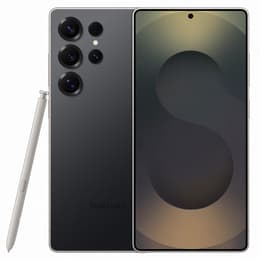
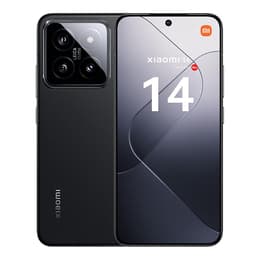
The Samsung Galaxy S25 Ultra, released in early 2025, and the Xiaomi 14, launched globally in early 2024, represent two distinct approaches to high-end Android smartphones. While both devices offer premium experiences, the Galaxy S25 Ultra emphasizes a larger display and advanced camera versatility, whereas the Xiaomi 14 focuses on a more compact form factor with a strong emphasis on its co-engineered camera system. Both operate on the Android platform, but with different custom user interfaces.

Scores

Durability

When considering the long-term usability of these devices, their release timelines and software support policies are key factors. The Galaxy S25 Ultra, being a more recent release, generally offers a longer period of software updates compared to the Xiaomi 14.

  • Release Timeline: The Galaxy S25 Ultra was announced in January 2025 and released in February 2025, making it a newer device. The Xiaomi 14 saw its global launch in February 2024, following its China release in late 2023.
  • Software Longevity: Samsung typically provides extensive software support for its flagship devices, with the Galaxy S25 Ultra expected to receive up to seven major Android operating system upgrades. The Xiaomi 14 is promised four generations of Android OS upgrades and five years of security patches. This difference means the Galaxy S25 Ultra will likely maintain software currency for a longer duration.
  • Durability Features: Both phones feature robust builds with IP68 ratings for dust and water resistance, indicating resilience against immersion in fresh water up to 1.5 meters for 30 minutes. The Galaxy S25 Ultra utilizes Corning Gorilla Armor 2 on its display and back, offering enhanced scratch resistance and anti-reflective properties. The Xiaomi 14 is protected by Gorilla Glass Victus. User reports suggest the Galaxy S25 Ultra's Gorilla Armor 2 may scratch at similar levels to previous generations, while the Xiaomi 14's display has been noted for good scratch resistance in long-term use.

Year of Release

2025

2023

Compatible with latest Update

Yes

Yes

OS

Android

Android

Foldable

No

No

Performance

Both the Galaxy S25 Ultra and the Xiaomi 14 are equipped with powerful processors designed for demanding tasks, though they feature different generations of chipsets.

  • Processing Power: The Galaxy S25 Ultra is powered by the Qualcomm Snapdragon 8 Elite, a chipset customized for Samsung, which offers significant improvements in CPU, GPU, and AI performance. The Xiaomi 14 features the Qualcomm Snapdragon 8 Gen 3. Both processors handle intensive applications, multitasking, and graphic-heavy games smoothly.
  • Multitasking and Responsiveness: The Galaxy S25 Ultra typically comes with 12GB of RAM in most regions, with some markets offering 16GB, ensuring fluid transitions between applications and efficient handling of multiple processes simultaneously. The Xiaomi 14 offers configurations with 8GB, 12GB, or 16GB of RAM. Both devices provide a responsive user experience, though some users have reported that the Xiaomi 14 can experience overheating during extended gaming sessions.
  • Storage Options: The Galaxy S25 Ultra is available with 256GB, 512GB, and 1TB storage capacities. The Xiaomi 14 also offers various storage configurations, including 256GB, 512GB, and 1TB.

Memory (GB)

12 GB

16 GB

Screen quality

The visual experience on both smartphones is a highlight, with each offering a high-quality display, though they differ in size and specific characteristics.

  • Display Technology and Size: The Galaxy S25 Ultra features a large 6.9-inch Dynamic LTPO AMOLED 2X display, providing an expansive viewing area. The Xiaomi 14 has a more compact 6.36-inch LTPO AMOLED display. Both displays offer vibrant colors and deep blacks.
  • Resolution and Brightness: The Galaxy S25 Ultra boasts a QHD+ resolution (3120 x 1440 pixels) with a pixel density of approximately 498 ppi, and a peak brightness of 2600 nits. The Xiaomi 14 offers a 1.5K resolution (2670x1200 pixels) with a pixel density of 460 ppi and an impressive peak brightness of 3000 nits. Both provide excellent clarity and visibility in various lighting conditions, including bright outdoor environments.
  • Refresh Rate and Smoothness: Both devices feature adaptive refresh rates ranging from 1Hz to 120Hz, ensuring smooth scrolling and fluid animations while optimizing power consumption.

Resolution

1080 x 2340 pixels

1200 x 2670

Audiovisual

Both the Galaxy S25 Ultra and the Xiaomi 14 offer advanced camera systems, each with unique strengths and features for photography and videography enthusiasts.

  • Rear Camera Systems: The Galaxy S25 Ultra is equipped with a versatile quad-camera setup, including a 200MP main sensor, a 50MP ultrawide lens, a 10MP telephoto lens with 3x optical zoom, and a 50MP periscope telephoto lens offering 5x optical zoom and 10x optical quality zoom. The Xiaomi 14 features a Leica co-engineered triple-camera system, with all three lenses being 50MP: a main sensor (Light Fusion 900), an ultrawide, and a telephoto lens with 3.2x optical zoom and a floating lens design.
  • Photography and Videography Features: The Galaxy S25 Ultra supports 8K video recording, 4K 30fps HDR dual recording, log format video capture, and 50MP macro photos using its ultrawide lens. The Xiaomi 14 also offers 8K video recording (at 24fps), 4K video recording with its front camera, 10-bit LOG video, and end-to-end Dolby Vision support for enhanced video quality. The Xiaomi 14's ultrawide and selfie cameras do not feature autofocus.
  • Front Camera: The Galaxy S25 Ultra includes a 12MP front-facing camera. The Xiaomi 14 is equipped with a 32MP front camera.

Front camera

8K@24/30fps

32 megapixels

Miscellaneous

Beyond core performance and display, several other features contribute to the overall user experience and differentiate these two flagship smartphones.

  • Connectivity and Ports: Both devices support 5G connectivity and the latest Wi-Fi 7 standard, ensuring fast and reliable wireless communication. They also feature Bluetooth 5.4. The Galaxy S25 Ultra includes an integrated S-Pen stylus, offering precise input and productivity features.
  • Biometric Security and Design: The Galaxy S25 Ultra incorporates an ultrasonic in-screen fingerprint sensor. The Xiaomi 14 also features an under-display optical fingerprint sensor. The Galaxy S25 Ultra has a titanium frame and a glass back, with dimensions of 162.8 x 77.6 x 8.2 mm and a weight of 218g. The Xiaomi 14 has an aluminum frame and glass back, with more compact dimensions of 152.8 x 71.5 x 8.2 mm and a lighter weight of 193g.
  • Battery and Charging: The Xiaomi 14 is equipped with a 4610 mAh battery and supports 90W wired fast charging, 50W wireless charging, and 10W reverse wireless charging. The Galaxy S25 Ultra has a rated minimum battery capacity of 4,855mAh.

Weight

2 g

188 g

Screen size (in)

6.9

6.36

Network

5G

5G

SIM card

Physical SIM + eSIM

Dual Physical SIM

Carrier compatibility

Unlocked

Unlocked

User sentiment for both the Samsung Galaxy S25 Ultra and the Xiaomi 14 highlights their respective strengths. The Galaxy S25 Ultra is frequently praised for its expansive and vibrant display, its highly versatile camera system with extensive zoom capabilities, and the integrated S-Pen, which enhances productivity for many users. Common criticisms sometimes point to its larger size and weight, which might not appeal to those preferring a more compact device. Users appreciate its long-term software support, offering peace of mind for extended use.

The Xiaomi 14 receives commendation for its more manageable size, its bright and clear display, and its Leica-tuned camera system, which delivers consistent color science across its lenses. Its fast charging capabilities are also a frequent highlight. Some users have noted potential for the device to warm up during prolonged intensive tasks, such as gaming. The software update policy, while good, is not as extensive as Samsung's.

Users prioritizing a large, feature-rich display, advanced camera versatility with significant zoom, and the utility of a stylus will find the Galaxy S25 Ultra well-suited to their needs. Its extended software support also makes it a strong contender for those seeking maximum longevity from their device. Conversely, users who prefer a more compact form factor, a highly capable camera system with a focus on consistent image quality, and very fast charging will likely lean towards the Xiaomi 14. Both devices offer robust performance for everyday tasks and demanding applications.

For those considering either of these powerful smartphones, exploring quality-assured refurbished options can provide an eco-friendly alternative, allowing access to premium technology while making a sustainable choice.


See all articles

Our recent comparisons