

Google Pixel 8 Vs Xiaomi 14

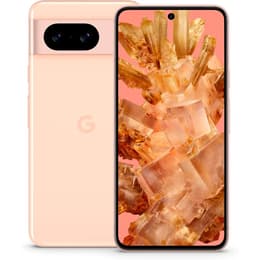
Google Pixel 8
Google Pixel 8
Starting at

Refurbished price:247.59

Versus €819.97 new

See options
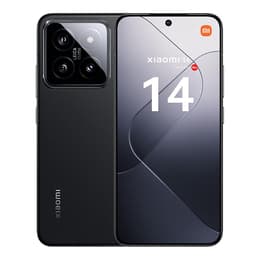
Xiaomi 14
Xiaomi 14
Starting at

Refurbished price:385.00

Versus €1,099.00 new

See options

Ratings

The Google Pixel 8 and the Xiaomi 14 are contemporary flagship smartphones, both released in late 2023, offering distinct approaches to the premium Android experience. While the Pixel 8 emphasizes a streamlined software experience and advanced computational photography, the Xiaomi 14 focuses on powerful hardware and versatile camera capabilities. Both devices run on the Android operating system, but they feature different user interfaces and software philosophies.

Scores

Durability

When considering the long-term usability of these devices, their release timelines and software support policies are key factors.

  • Release and Software Support: The Google Pixel 8 was officially launched in October 2023 and is notable for its extended software commitment, promising seven years of OS upgrades, security updates, and feature drops, extending support until October 2030. This provides a longer period of guaranteed updates compared to many other Android devices. The Xiaomi 14, also released in late 2023 (globally in February 2024), offers four years of OS updates and five years of security updates.
  • Repairability: The Pixel 8 generally receives a moderate repairability score, with some assessments giving it a 7 out of 10, noting that self-repairs are possible but can be challenging for beginners. Other evaluations rate it around 5.5 out of 10, citing difficulties with battery removal and a soldered charging port. Google supports repairability by providing public service manuals and OEM replacement parts. The Xiaomi 14 has a slightly higher repairability score, often rated around 8.0 out of 10, with pull tabs for battery removal being a positive aspect, though adhesive for the back cover and battery can make disassembly tricky.
  • Practical Lifespan: Both devices are built with durable materials and IP68 ratings for dust and water resistance, suggesting good physical longevity. The Pixel 8's longer software support means it will receive new features and security patches for a more extended period, potentially making it a more viable option for users who keep their phones for many years.

Year of Release

2023

2023

Compatible with latest Update

Yes

Yes

OS

Android

Android

Foldable

No

No

Performance

The performance of both smartphones is designed to handle demanding applications and multitasking, though they achieve this with different underlying architectures.

  • Processing Power: The Google Pixel 8 is equipped with a processor optimized for artificial intelligence tasks, which contributes to its advanced computational photography and on-device AI features. It delivers solid performance for everyday tasks and gaming. The Xiaomi 14 features a current-generation processor known for its high raw processing power, enabling smooth operation and strong performance in benchmarks.
  • Multitasking and Responsiveness: Both devices offer ample memory configurations, with the Pixel 8 typically featuring 8GB of RAM, while the Xiaomi 14 is available with 8GB, 12GB, or 16GB of RAM. This allows for efficient multitasking and quick app switching on both phones. Users generally report a responsive and fluid experience with both operating systems.
  • Battery Behavior: The Pixel 8 houses a 4575mAh battery, with user experiences varying; some find it sufficient for a full day of moderate use, while heavy users may require more frequent charging. The Xiaomi 14 comes with a 4610mAh battery and is often praised for its robust battery life, frequently lasting a full day with significant usage. The Xiaomi 14 also supports significantly faster wired and wireless charging speeds compared to the Pixel 8.

Memory (GB)

8 GB

16 GB

Screen quality

The visual experience on both the Google Pixel 8 and Xiaomi 14 is delivered through high-quality displays, each with specific characteristics.

  • Display Technology and Clarity: The Google Pixel 8 features a 6.2-inch OLED display with a Full HD+ resolution (1080x2400 pixels), providing deep blacks and vibrant colors. The Xiaomi 14 offers a slightly larger 6.36-inch LTPO AMOLED display with a higher resolution of 1200x2670 pixels, resulting in a sharper image. Both displays are protected by Gorilla Glass Victus, with the Xiaomi 14 using the newer Gorilla Glass Victus 2.
  • Brightness and Smoothness: Both phones feature a 120Hz refresh rate for smooth scrolling and animations. The Pixel 8's display can reach a peak brightness of 2000 nits, making it suitable for outdoor visibility. The Xiaomi 14 surpasses this with a peak brightness of 3000 nits, offering exceptional visibility even in bright sunlight. The Xiaomi 14's LTPO technology also allows for an adaptive refresh rate, which can contribute to power efficiency.
  • Viewing Experience: The Pixel 8's display is noted for its vibrant and sharp output, offering a respectable viewing experience. The Xiaomi 14's display is described as bright, punchy, and very responsive, providing a first-class visual experience.

Resolution

1080 x 2400

1200 x 2670

Screen type

OLED

LTPO OLED

Audiovisual

Both smartphones are recognized for their camera systems, each bringing different strengths to photography and videography.

  • Rear Camera System: The Google Pixel 8 features a dual-camera setup with a 50-megapixel main sensor and a 12-megapixel ultrawide lens. The main sensor is designed to capture more light, enhancing image quality. The Xiaomi 14 boasts a versatile triple-camera system, including a 50-megapixel main sensor, a 50-megapixel ultrawide lens, and a 50-megapixel telephoto lens with 3.2x optical zoom. The Xiaomi 14's camera system benefits from Leica's optical engineering and image processing expertise.
  • Photography Performance: The Pixel 8 is highly regarded for its impressive photo quality, particularly in low-light conditions, and its advanced computational photography features like 'Best Take'. It produces detailed images with good dynamic range. The Xiaomi 14 is also praised for its camera capabilities, delivering detailed images with consistent colors across its lenses. Some users find the Xiaomi 14's ultrawide camera to produce preferred results.
  • Video and Front Camera: The Pixel 8 offers good video quality, though some users note that lighting can be inconsistent and videos might appear grainier compared to some competitors. Its selfie camera is 10.5-megapixel. The Xiaomi 14 is noted for its excellent video performance, with smooth zooming and consistent colors, and can record up to 8K resolution. Its 32-megapixel front camera can record 4K video, though some find selfie images to be softer and lacking autofocus.

Main camera

50 megapixels

50 megapixels

Front camera

10.5 megapixels

32 megapixels

Miscellaneous

Beyond core specifications, several practical elements differentiate the user experience of these two devices.

  • Connectivity and Ports: Both phones support modern connectivity standards, including 5G networks. The Pixel 8 supports Wi-Fi 7 and Bluetooth 5.3, while the Xiaomi 14 supports Wi-Fi 6 (802.11ax) and Bluetooth 5.4. Both utilize a USB-C port for charging and data transfer.
  • Biometric Security: Both devices incorporate in-display optical fingerprint sensors for secure unlocking. User feedback on the Pixel 8's fingerprint sensor indicates it can sometimes be slow or inaccurate, and its facial recognition may struggle in less-than-ideal lighting. The Xiaomi 14's fingerprint sensor is often described as very fast and responsive.
  • Design and Handling: The Pixel 8 features a compact design with rounded edges, making it comfortable to hold, though its glossy back can be prone to fingerprints and feel slippery. It weighs 187 grams. The Xiaomi 14 is slightly taller and wider, with flat sides and chamfered edges, and weighs 193 grams. Both phones are IP68 rated for dust and water resistance.

Weight

187 g

188 g

Screen size (in)

6.2

6.36

Network

5G

5G

SIM card

Physical SIM + eSIM

Dual Physical SIM

Carrier compatibility

Unlocked

Unlocked

The Google Pixel 8 and Xiaomi 14 each present a compelling package for different user preferences. The Pixel 8 is frequently praised for its exceptional camera system, particularly its computational photography capabilities and low-light performance, making it a strong choice for users who prioritize photography and a clean, AI-enhanced Android experience. Its commitment to seven years of software updates also stands out, offering extended longevity for those who keep their devices for many years. However, some users have noted mixed battery life and slower charging speeds as potential drawbacks.

The Xiaomi 14 is often lauded for its powerful performance, vibrant and bright display, and very fast charging capabilities. Its versatile triple-camera system, co-engineered with Leica, delivers detailed and color-consistent images, with some users even preferring its video quality over other flagships. Potential concerns for some users include reports of the device warming up during intensive tasks like gaming.

Users prioritizing a compact form factor, a long software support window, and advanced AI-driven camera features may find the Google Pixel 8 well-suited to their needs. Conversely, those who value raw performance, a brighter, higher-resolution display, rapid charging, and a comprehensive camera system with optical zoom might lean towards the Xiaomi 14. Both devices represent excellent choices, and considering a quality-assured refurbished option for either model can be a sustainable way to enjoy these advanced features.
See all articles

Our recent comparisons