

iPhone 12 Vs Xiaomi 14

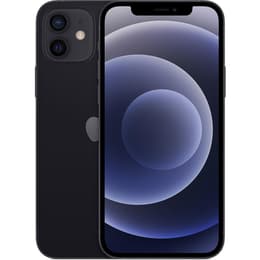
iPhone 12
iPhone 12
Starting at

Refurbished price:174.00

Versus €829.00 new

See options
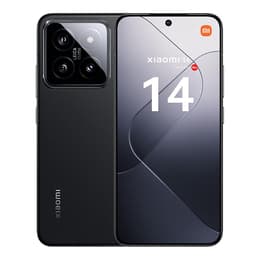
Xiaomi 14
Xiaomi 14
Starting at

Refurbished price:384.00

Versus €1,099.00 new

See options

Ratings

The iPhone 12 (2020) and the Xiaomi 14 (2023/2024) represent different generations in the smartphone landscape, offering distinct experiences rooted in their respective ecosystems. While the iPhone 12 runs on Apple's iOS, the Xiaomi 14 operates on Android with Xiaomi's HyperOS overlay. The primary differentiators lie in their release timelines, display technologies, and camera system philosophies, catering to varied user preferences.

Scores

Durability

When considering the practical lifespan of these devices, their release timelines and manufacturer support policies are key factors.

  • Release Timeline: The iPhone 12 was released in October 2020, making it an older device compared to the Xiaomi 14, which saw its China release in October 2023 and global launch in February 2024. This age difference inherently impacts their remaining software support and expected practical lifespan.
  • Software Longevity: Apple typically provides major iOS updates for iPhones for approximately five to six years, with security updates often extending longer. The iPhone 12 is expected to receive software support until around 2027-2030. The Xiaomi 14, being a newer Android device, is promised 4 years of OS updates and 5 years of security updates. This means the Xiaomi 14 will likely receive newer Android versions for a longer period from its release date than the iPhone 12 will receive new iOS versions from its current point in time.
  • Repairability: The iPhone 12 received a repairability score of 6 out of 10 from iFixit, though challenges exist with proprietary tools for full repairs, particularly for components like cameras and screens. The Xiaomi 14 has a higher reported repairability score of 8 out of 10, noted for features like pull tabs for battery removal, making some repairs more accessible.

Year of Release

2020

2023

Compatible with latest Update

Yes

Yes

OS

iOS

Android

Foldable

No

No

Performance

The performance of a smartphone is crucial for daily operations, influencing everything from app responsiveness to multitasking capabilities.

  • Processor Capabilities: The iPhone 12, powered by its custom-designed processor, handles everyday tasks, demanding applications, and gaming smoothly. The Xiaomi 14, featuring a more recent generation processor, offers enhanced capabilities for intensive tasks, complex multitasking, and graphically demanding games, providing a noticeably snappier experience due to its newer architecture.
  • Multitasking and Storage: The iPhone 12 comes with 4GB of RAM and storage options up to 256GB, which is sufficient for typical user needs and app management. The Xiaomi 14 offers more generous RAM configurations, starting from 8GB and going up to 16GB, alongside storage options up to 1TB, allowing for more aggressive multitasking and storing a larger volume of data and applications.
  • Battery Behavior: The iPhone 12's battery capacity is around 2,815 mAh, with real-world usage often lasting a full day under moderate use, though 5G connectivity can reduce endurance. The Xiaomi 14 features a larger 4610 mAh battery, often providing a full day of use and sometimes extending to a day and a half for lighter users. It also supports significantly faster wired and wireless charging.

Memory (GB)

4 GB

16 GB

Screen quality

The display is a primary interface for users, and both devices offer distinct visual experiences.

  • Display Technology and Clarity: The iPhone 12 features a 6.1-inch Super Retina XDR OLED display, providing deep blacks and vibrant colors with a resolution of 2532 x 1170 pixels, resulting in a clear image. The Xiaomi 14 boasts a slightly larger 6.36-inch LTPO AMOLED display with a resolution of 2670x1200 pixels, also delivering crisp visuals and rich colors.
  • Brightness and Refresh Rate: The iPhone 12 offers a typical maximum brightness of 625 nits, peaking at 1,200 nits for HDR content, and a standard 60Hz refresh rate. The Xiaomi 14 significantly surpasses this with a peak brightness of 3,000 nits, making it highly visible even in bright outdoor conditions, and features an adaptive 1-120Hz LTPO refresh rate for smoother scrolling and more fluid animations.
  • Viewing Experience: Users prioritizing a consistently smooth visual experience and exceptional outdoor visibility may find the Xiaomi 14's display more appealing due to its higher refresh rate and brightness. The iPhone 12 still offers a high-quality OLED panel suitable for most viewing scenarios.

Resolution

1170 x 2532

1200 x 2670

Screen type

Super Retina XDR OLED

LTPO OLED

Audiovisual

Both smartphones offer capable camera systems, but with different strengths and features for capturing photos and videos.

  • Camera System Configuration: The iPhone 12 features a dual 12MP rear camera system, comprising a wide and an ultra-wide lens, along with a 12MP front camera. The Xiaomi 14 comes with a more versatile triple 50MP rear camera setup, including wide, ultra-wide, and telephoto lenses, co-engineered with Leica, and a 32MP front camera.
  • Photography Performance: The iPhone 12 excels in everyday photography and offers a capable Night mode for improved low-light performance across all its cameras. The Xiaomi 14 is praised for its excellent low-light capabilities, vibrant color reproduction, and detailed images, particularly benefiting from its larger sensor and wide aperture lenses. Its telephoto lens also provides optical zoom capabilities not present on the standard iPhone 12.
  • Video Recording and Audio: Both devices support 4K video recording. The iPhone 12 offers good video quality and stabilization. The Xiaomi 14 can record up to 8K video at 24fps with its main camera and 4K at 60fps with secondary cameras, providing more resolution options for videographers. User reviews suggest the Xiaomi 14 produces clean video footage with good stabilization.

Main camera

12 megapixels

50 megapixels

Front camera

12 megapixels

32 megapixels

Miscellaneous

Beyond core features, several practical elements contribute to the overall user experience and device utility.

  • Connectivity and Ports: Both devices support 5G connectivity and Wi-Fi 6 for fast wireless internet. The iPhone 12 uses a Lightning port for charging and data transfer, while the Xiaomi 14 features a more universal USB-C port. The Xiaomi 14 also includes Bluetooth 5.4, a newer standard than the iPhone 12's Bluetooth 5.0.
  • Biometric Security and Build: The iPhone 12 relies on Face ID for secure authentication. The Xiaomi 14 incorporates an under-display optical fingerprint sensor in addition to face recognition. Both phones feature an IP68 rating for dust and water resistance. The iPhone 12 has an aluminum frame and a Ceramic Shield front for durability. The Xiaomi 14 uses an aluminum alloy body with a glass back, with some variants offering a leather finish.
  • Dimensions and Handling: The iPhone 12 measures 146.7 x 71.5 x 7.4mm and weighs 162g, offering a compact and relatively light form factor. The Xiaomi 14 is slightly larger and heavier at 152.8 x 71.5 x 8.2mm and 193g.

Weight

164 g

188 g

Screen size (in)

6.1

6.36

Network

5G

5G

SIM card

Physical SIM + eSIM

Dual Physical SIM

Carrier compatibility

Unlocked

Unlocked

Users often praise the iPhone 12 for its consistent performance, reliable software experience, and capable camera system, particularly its low-light photography with Night mode. Some common criticisms have included its battery life, especially when using 5G, and the standard 60Hz refresh rate of its display.

The Xiaomi 14 is frequently lauded for its vibrant and smooth 120Hz display, exceptional peak brightness, and its versatile Leica-engineered camera system, which performs strongly in various lighting conditions. Its fast charging capabilities and robust processor are also often highlighted as significant advantages. Some users might note its slightly larger size and weight compared to more compact alternatives.

Users prioritizing a long-term software support commitment and a familiar, streamlined operating system may find the iPhone 12 a suitable choice. Those who value cutting-edge display technology, superior camera versatility, faster charging, and a more powerful processor for demanding applications may lean towards the Xiaomi 14. For individuals seeking an eco-friendly, quality-assured refurbished option, both devices can be excellent choices, offering a way to extend their lifecycle and reduce electronic waste.


See all articles

Our recent comparisons