
Galaxy S25 Ultra Vs iPhone 15

Galaxy S25 Ultra
Galaxy S25 Ultra
Starting at

Refurbished price:735.00

Versus €1,408.78 new

See options
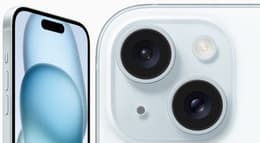
iPhone 15
iPhone 15
Starting at

Refurbished price:399.00

Versus €879.00 new

See options

Ratings

The Samsung Galaxy S25 Ultra, released in early 2025, and the Apple iPhone 15, launched in late 2023, represent distinct approaches to high-end smartphone design and functionality. While both devices offer premium experiences, they cater to different user preferences through their respective operating systems and hardware philosophies. The Galaxy S25 Ultra emphasizes a larger display, advanced camera system, and integrated stylus, whereas the iPhone 15 focuses on a streamlined user experience within the iOS ecosystem.

Scores

Durability

Evaluating the practical lifespan of a smartphone involves considering its physical resilience and the duration of software support it receives. Both the Galaxy S25 Ultra and the iPhone 15 are built with robust materials and offer significant software longevity.

  • Release Timeline: The Galaxy S25 Ultra was released in February 2025, making it a newer device compared to the iPhone 15, which launched in September 2023. This difference in release dates inherently means the Galaxy S25 Ultra will receive software updates for a longer period into the future.
  • Software Support: Samsung has committed to providing up to seven major Android OS updates for the Galaxy S25 Ultra, extending its software support through 2032. The iPhone 15, running on iOS, typically receives major updates for approximately five to six years from its release. Apple has also indicated that iPhone 15 models are designed to retain 80% of their original battery capacity after 1,000 charge cycles, an improvement over previous models.
  • Durability Features: The Galaxy S25 Ultra features a titanium frame and Corning Gorilla Armor 2 for enhanced protection. While some tests suggest Gorilla Armor 2 might offer improved shatter resistance, its scratch resistance may be comparable to or slightly less than its predecessor. The iPhone 15 incorporates a Ceramic Shield front and a color-infused glass back within an aluminum design. Both devices carry an IP68 rating for dust and water resistance, allowing submersion up to 6 meters for 30 minutes.

Year of Release

2025

2023

Compatible with latest Update

Yes

Yes

OS

Android

iOS

Foldable

No

No

Performance

Both the Galaxy S25 Ultra and the iPhone 15 are equipped with powerful internal components designed for smooth operation, but they differ in their underlying architecture and available memory configurations.

  • Processing Power: The Galaxy S25 Ultra is powered by a current-generation processor customized for Samsung, offering significant improvements in CPU, GPU, and AI performance, which translates to smooth handling of demanding applications and multitasking. The iPhone 15 utilizes a powerful chip from the previous year's Pro models, providing robust performance for everyday tasks, gaming, and complex computations within the iOS environment.
  • Multitasking and Storage: The Galaxy S25 Ultra typically comes with 12GB of RAM in most regions, with some offering 16GB, facilitating extensive multitasking and efficient app switching. The iPhone 15 generally features 6GB of RAM, which, combined with iOS optimization, ensures responsive performance for most users. Both devices offer storage options ranging from 128GB to 1TB, providing ample space for applications, media, and documents.
  • Battery Performance: The Galaxy S25 Ultra is equipped with a 5000 mAh battery, delivering extended usage, with tests showing around 17 to 18 hours of typical use. Users often report comfortable all-day usage even with moderate activity. The iPhone 15, with its 3349 mAh battery, provides approximately 11 hours of battery life in typical usage scenarios, offering up to 20 hours of video playback.

Memory (GB)

12 GB

6 GB

Screen quality

The visual experience on both devices is vibrant and clear, though the Galaxy S25 Ultra offers a larger and more advanced display with a higher refresh rate.

  • Display Technology and Size: The Galaxy S25 Ultra features a large 6.9-inch Dynamic LTPO AMOLED 2X display, providing rich colors and deep blacks. The iPhone 15 comes with a 6.1-inch Super Retina XDR OLED display, also known for its excellent color reproduction and contrast.
  • Resolution and Clarity: The Galaxy S25 Ultra boasts a resolution of 1440 x 3120 pixels, resulting in a sharp pixel density of approximately 498 pixels per inch (ppi). The iPhone 15 offers a resolution of 2556 x 1179 pixels, with a pixel density of about 460 ppi, ensuring clear and detailed visuals.
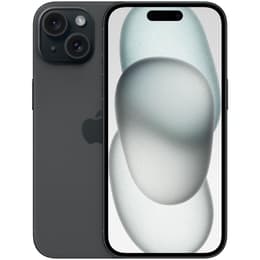
  • Brightness and Smoothness: The Galaxy S25 Ultra's display can reach a peak brightness of 2600 nits, making it highly visible even in bright outdoor conditions, and features a variable refresh rate of 1-120Hz for exceptionally smooth scrolling and animations. The iPhone 15 has a peak outdoor brightness of 2000 nits and a standard 60Hz refresh rate, which provides a consistent visual experience. The iPhone 15 also integrates the Dynamic Island for interactive alerts and activities.

Resolution

1080 x 2340 pixels

1179 x 2556

Audiovisual

Both smartphones deliver high-quality imaging, but the Galaxy S25 Ultra offers a more versatile and feature-rich camera system with a greater range of optical zoom capabilities.

  • Rear Camera Systems: The Galaxy S25 Ultra features a quad-camera setup, including a 200MP main sensor, a 50MP ultrawide lens, a 10MP telephoto lens with 3x optical zoom, and a 50MP periscope telephoto lens offering 5x optical zoom, which can extend to 10x optical quality zoom. The iPhone 15 has a dual-camera system, comprising a 48MP main camera with sensor-shift optical image stabilization and a 12MP ultrawide camera. The 48MP main sensor also enables a 2x telephoto option through a sensor crop.
  • Photography and Video Features: The Galaxy S25 Ultra's camera system supports 8K video recording at 30 frames per second (fps) across its main, ultrawide, and 50MP telephoto lenses, and includes features like a Quad Tele System for flexible zoom levels and 10-bit HDR video. The iPhone 15 offers 4K video recording at up to 60fps, Cinematic mode for depth-of-field effects, and Action mode for stabilized video. Both devices excel in low-light conditions and offer advanced computational photography features like Photonic Engine (iPhone) and enhanced image processing (Galaxy).
  • Front Camera and Audio: Both phones are equipped with a 12MP front-facing camera for selfies and video calls. For audio, both devices feature stereo speakers, providing a rich sound experience for media consumption.

Front camera

8K@24/30fps

12 megapixels

Miscellaneous

Beyond core performance and imaging, several practical elements differentiate the user experience between these two devices.

  • Connectivity and Ports: The Galaxy S25 Ultra supports the latest Wi-Fi 7 standard, alongside 5G connectivity, offering potentially faster wireless speeds. The iPhone 15 supports Wi-Fi 6 and 5G. Both devices have transitioned to USB-C ports for charging and data transfer, though the iPhone 15's USB-C port operates at USB 2.0 speeds.
  • Biometric Security and Navigation: The Galaxy S25 Ultra typically uses an in-display fingerprint sensor for secure unlocking, in addition to facial recognition. The iPhone 15 relies on Face ID, Apple's facial recognition system. Both devices offer precise location services and a suite of sensors for various functionalities.
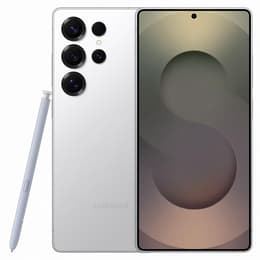
  • Design and Ergonomics: The Galaxy S25 Ultra is a larger and heavier device, measuring 162.8 x 77.6 x 8.2 mm and weighing 218g, which might appeal to users who prefer a substantial feel and a larger screen for content consumption or productivity. The iPhone 15 is more compact and lighter at 147.6 x 71.6 x 7.8 mm and 171g, making it easier for one-handed use. A key differentiator for the Galaxy S25 Ultra is its integrated S Pen, offering precise input for notes, drawings, and navigation.

Weight

2 g

171 g

Screen size (in)

6.9

6.1

Network

5G

5G

SIM card

Physical SIM + eSIM

eSIM

Carrier compatibility

Unlocked

Unlocked

Connector

USB-C

USB-C (USB 2)

The Samsung Galaxy S25 Ultra and the iPhone 15 cater to different user priorities, each excelling in specific areas. Users often praise the Galaxy S25 Ultra for its expansive and vibrant display, its highly versatile camera system with extensive zoom capabilities, and the productivity enhancements offered by the integrated S Pen. Its long-term software support and robust battery life are also frequently highlighted as significant advantages. Some users, however, might find its larger size and weight less convenient for everyday portability.

Conversely, the iPhone 15 is often lauded for its intuitive iOS operating system, consistent performance, and the seamless integration within Apple's ecosystem. Its more compact form factor is a draw for those preferring a device that is easier to handle. While its camera system is highly capable for most users, some advanced photographers might note the absence of a dedicated telephoto lens compared to its Pro counterparts or the Galaxy S25 Ultra. The 60Hz refresh rate of its display is also a point of discussion for users accustomed to smoother scrolling experiences on higher refresh rate screens.

Users prioritizing a large, high-refresh-rate display, a comprehensive and flexible camera system with advanced zoom, an integrated stylus for productivity, and extended software support will find the Galaxy S25 Ultra well-suited to their needs. Those who value a more compact device, the simplicity and security of the iOS ecosystem, and a consistently polished user experience may lean towards the iPhone 15. Both devices represent excellent choices, and for those considering a more sustainable option, quality-assured refurbished alternatives are available, offering an eco-friendly way to acquire either of these powerful smartphones.

See all articles

Our recent comparisons