

Compare models
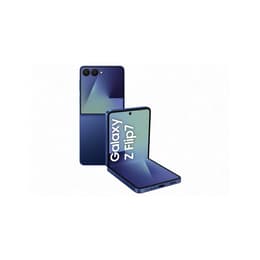
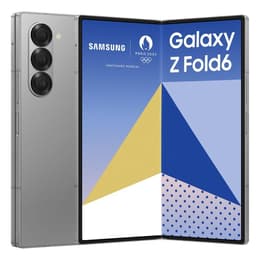
Galaxy Z Flip7 Vs Galaxy Z Fold6
- 1-year minimum warranty
- Free delivery on all orders
- Free 30-day returns
Differences at a glance
The Samsung Galaxy Z Flip7 (2025) and the Samsung Galaxy Z Fold6 (2024) represent two distinct visions of foldable smartphone engineering. While the Galaxy Z Flip7 features a compact clamshell design that folds down into a pocket-friendly square, the Galaxy Z Fold6 unfolds into a tablet-sized workspace. Both devices run on the Android operating system paired with Samsung's custom interface, offering tailored multitasking tools for flexible screens, though they cater to entirely different daily workflows.
Available Models
Colour
Storage (GB)
Scores
Durability
When evaluating structural durability and software longevity, both models offer robust build qualities backed by extended update schedules, though their physical form factors invite different long-term wear considerations.
- Release timeline and software support: The Galaxy Z Fold6 launched in mid-2024 with Android 14, while the Galaxy Z Flip7 debuted in mid-2025 with Android 16, giving the newer flip model an advantage in total supported operating system upgrades. Both are slated for multi-year software maintenance.
- Physical resilience and repairability: Each device incorporates modern hinge mechanisms and reinforced aluminum frames designed to withstand daily folding actions. Practical lifespan largely depends on how the flexible inner screens are handled over years of frequent opening and closing.
Year of Release
2025
2024
Compatible with latest Update
Yes
Yes
OS
Android
Android
Foldable
Yes
Yes
Performance
Underneath their folding exteriors, both smartphones deliver snappy execution for demanding applications, multitasking routines, and casual gaming sessions without noticeable stutter.
- Processor capability and multitasking: Both devices are equipped with robust, current-generation processing architecture paired with ample random access memory, ensuring smooth split-screen use and quick app transitions.
- Storage and power behavior: Available in spacious storage tiers starting at 256GB, these devices manage energy differently; the more compact battery in the Galaxy Z Fold6 powers a massive inner canvas, while the Galaxy Z Flip7 balances its power cell across a smaller footprint for standard daily endurance.
Screen quality
Display technology is the core attraction of both models, offering vibrant panels that adapt seamlessly between folded and unfolded states.
- Display technology and brightness: Both smartphones utilize dynamic organic light-emitting diode technology capable of reaching high peak outdoor brightness levels, ensuring sharp contrast, deep blacks, and clear visibility under direct sunlight.
- Refresh rate and viewing area: Featuring adaptive 120Hz refresh rates, scrolling and motion remain fluid across all screens. The Galaxy Z Fold6 provides a wide tablet workspace when opened, whereas the Galaxy Z Flip7 focuses on a tall primary screen paired with an expansive outer cover window for quick interactions.
Resolution
1080x2520
1856 x 2160
Audiovisual
Imaging capabilities across both devices cater to everyday photography, video recording, and media consumption through versatile multi-lens configurations.
- Camera hardware and low-light performance: Both feature a reliable 50-megapixel main sensor alongside an ultra-wide lens, delivering crisp everyday shots and capable low-light processing aided by computational photography.
- Media and audio output: Stereo speakers on both models offer clear sound separation for streaming videos and calls, while the folding designs allow hands-free tripod-style placement for recording stable videos or taking selfies.
Front camera
10 megapixels
4 megapixels
Miscellaneous
Practical daily usability is shaped by physical dimensions, connectivity standards, and biometric security features built into each chassis.
- Handling and dimensions: The Galaxy Z Fold6 is heavier and wider to accommodate its dual-screen tablet format, whereas the lighter Galaxy Z Flip7 slips easily into tight pockets when folded shut.
- Connectivity and security: Both support rapid 5G cellular networks, modern wireless standards, and reliable biometric authentication through side-mounted fingerprint scanners and facial recognition. Choosing a quality-assured refurbished option provides a sustainable choice for consumers interested in these advanced form factors.
Weight
188 g
239 g
Screen size (in)
6.9
7.6
Network
5G
5G
SIM card
Physical SIM + eSIM
Dual Physical SIM + eSIM
Carrier compatibility
Unlocked
Unlocked
What the community thinks
Deciding between the Samsung Galaxy Z Flip7 and the Galaxy Z Fold6 comes down to how you plan to use a folding screen in daily life. Users prioritizing pocketability, one-handed convenience when closed, and a lighter physical profile frequently gravitate toward the clamshell design of the Galaxy Z Flip7. Conversely, users prioritizing multitasking productivity, a large tablet-style viewing area for documents or media, and expanded workspace lean toward the Galaxy Z Fold6.
Reviewers and long-term owners often praise the refined hinge mechanisms and vibrant outdoor displays on both models, while noting that foldable screens require careful handling compared to traditional glass smartphones. Exploring a quality-assured refurbished option through platforms like Back Market offers an eco-friendly alternative for acquiring these sophisticated devices. Ultimately, evaluating your personal workflow will determine which form factor best supports your daily habits.