
iPhone 15 Vs Xiaomi 14

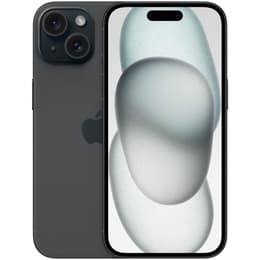
iPhone 15
iPhone 15
Starting at

Refurbished price:399.00

Versus €879.00 new

See options
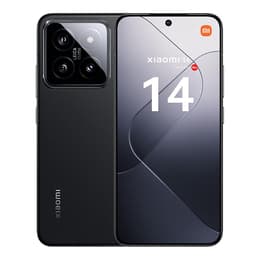
Xiaomi 14
Xiaomi 14
Starting at

Refurbished price:386.00

Versus €1,099.00 new

See options

Ratings

The iPhone 15, released in September 2023, and the Xiaomi 14, with its global launch in February 2024, represent two distinct approaches to flagship smartphone design and functionality. While both devices offer advanced mobile experiences, they differentiate themselves through their operating systems, camera philosophies, and display technologies. The iPhone 15 operates on Apple's iOS, known for its integrated ecosystem, while the Xiaomi 14 runs on HyperOS, based on Android, offering a more customizable experience.

Scores

Durability

When considering the long-term usability of these devices, their release timelines and software support are key factors.

  • Release Timeline: The iPhone 15 was introduced in September 2023, while the Xiaomi 14 saw its global release in February 2024. This difference means the iPhone 15 has been available for a longer period.
  • Software Longevity: Apple typically provides iOS updates for its devices for approximately five to six years from their release date. The iPhone 15 launched with iOS 17. Xiaomi has committed to four generations of Android OS upgrades and five years of security patches for the Xiaomi 14, which launched with HyperOS based on Android 14. This suggests a comparable, though potentially slightly shorter, period of major OS updates for the Xiaomi 14 compared to the iPhone 15.
  • Repairability: The iPhone 15 has seen improvements in repairability, with some reports indicating a score of 7 out of 10, allowing for easier part replacement and software calibration for non-Pro models. The Xiaomi 14 generally receives a repairability score of 8.0 out of 10, indicating a design that facilitates component access and replacement.

Performance

Both smartphones are equipped with powerful internal components designed to handle demanding applications and multitasking efficiently.

  • Processing Capabilities: The iPhone 15 features a processor that delivers robust performance for everyday tasks, gaming, and complex applications, ensuring smooth operation and quick app loading. The Xiaomi 14 incorporates a current-generation processor that provides substantial power for intensive gaming, advanced photography processing, and seamless multitasking, with users reporting smooth performance even under heavy load.
  • Storage and Memory: The iPhone 15 is available with storage options of 128GB, 256GB, and 512GB, paired with 6GB of RAM. The Xiaomi 14 offers more varied configurations, including 256GB, 512GB, and 1TB of storage, alongside 8GB, 12GB, or 16GB of RAM, providing greater flexibility for users with higher storage and multitasking demands.
  • Battery Behavior: The iPhone 15 offers up to 20 hours of video playback on a single charge. The Xiaomi 14, with its 4610 mAh battery, is reported by users to last a full day or even a day and a half with typical usage, and it supports fast wired and wireless charging.

Memory (GB)

6 GB

16 GB

Screen quality

The visual experience on both devices is delivered through high-quality displays, each with distinct characteristics.

  • Display Technology and Clarity: The iPhone 15 features a 6.1-inch Super Retina XDR OLED display, offering deep blacks and vibrant colors with a resolution of 2556x1179 pixels and a pixel density of approximately 460 pixels per inch. The Xiaomi 14 comes with a slightly larger 6.36-inch LTPO AMOLED display, providing a resolution of 2670x1200 pixels and a similar pixel density of 460 pixels per inch, also delivering clear and detailed visuals.
  • Brightness and Refresh Rate: The iPhone 15's display reaches a peak brightness of 2000 nits for outdoor visibility and has a standard 60Hz refresh rate. The Xiaomi 14 surpasses this with a peak brightness of 3000 nits, ensuring excellent visibility even in bright conditions, and features an adaptive refresh rate that can dynamically adjust from 1Hz to 120Hz for smoother scrolling and more fluid animations.
  • Special Features: The iPhone 15 incorporates the Dynamic Island, an interactive area around the front camera that displays alerts and live activities. The Xiaomi 14's display is designed for high color accuracy and supports HDR10+ and Dolby Vision for enhanced media consumption.

Audiovisual

Both smartphones offer advanced camera systems, each with unique strengths for capturing photos and videos.

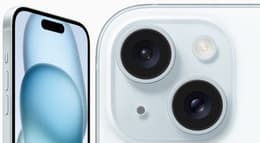
  • Rear Camera Systems: The iPhone 15 is equipped with a dual-camera setup, featuring a 48MP main camera with a wide f/1.6 aperture and sensor-shift optical image stabilization, capable of 2x telephoto zoom through its sensor, alongside a 12MP ultrawide camera with an f/2.4 aperture. The Xiaomi 14 boasts a triple-camera system co-engineered with Leica, including a 50MP main camera with a wide f/1.6 aperture and optical image stabilization, a 50MP ultrawide camera with an f/2.2 aperture, and a 50MP telephoto lens offering 3.2x optical zoom and optical image stabilization.
  • Photography Performance: The iPhone 15's main camera excels in capturing detailed images, especially in good lighting, and offers improved low-light performance compared to its predecessors. The Xiaomi 14's Leica-tuned cameras are noted for their ability to produce images with rich detail and dynamic range across various lighting conditions, with users praising its versatile photography capabilities.
  • Video Recording and Front Camera: The iPhone 15 supports 4K video recording at various frame rates and features a 12MP front camera with an f/1.9 aperture. The Xiaomi 14 offers up to 8K video recording and includes a 32MP front camera with an f/2.5 aperture, capable of 4K video recording.

Miscellaneous

Beyond core performance and display, several other features contribute to the overall user experience of these devices.

  • Connectivity and Ports: The iPhone 15 supports 5G cellular connectivity, Wi-Fi 6, and Bluetooth 5.3, and notably features a USB-C port for charging and data transfer. The Xiaomi 14 also offers 5G connectivity, but steps up to Wi-Fi 7 and Bluetooth 5.4, and includes a USB-C port (USB 3.2 Gen 1) for versatile connectivity.
  • Biometric Security: The iPhone 15 relies on Face ID for secure facial recognition. The Xiaomi 14 utilizes an in-display optical fingerprint sensor for biometric authentication.
  • Design and Build: The iPhone 15 features an aluminum design with a Ceramic Shield front and a color-infused glass back, weighing 171 grams and measuring 147.6 x 71.6 x 7.8 mm. The Xiaomi 14 has an aluminum frame and a glass back, weighing 193 grams and measuring 152.8 x 71.5 x 8.2 mm, making it slightly larger and heavier. Both devices carry an IP68 rating for dust and water resistance.

Screen size (in)

6.1

6.36

Network

5G

5G

SIM card

eSIM

Dual Physical SIM

Carrier compatibility

Unlocked

Unlocked

User feedback for the iPhone 15 often highlights its consistent performance, the intuitive nature of iOS, and the improved camera capabilities, particularly the new 48MP main sensor and the Dynamic Island integration. Some common criticisms include the 60Hz refresh rate, which some users find less fluid compared to higher refresh rate displays on other devices. Users generally appreciate the iPhone 15 for its reliable ecosystem and strong software support.

For the Xiaomi 14, common praise points revolve around its vibrant and smooth 120Hz LTPO AMOLED display, the versatile Leica-engineered camera system, and its fast charging capabilities. Users also frequently commend its powerful processor for handling demanding tasks. Some criticisms occasionally mention its slightly larger size and weight compared to some competitors, and the learning curve for HyperOS for those new to Xiaomi's interface. Overall, the Xiaomi 14 is often seen as a strong contender for users prioritizing cutting-edge display technology and advanced camera features.

Users prioritizing a highly integrated ecosystem, consistent software updates, and a compact form factor may find the iPhone 15 well-suited to their needs. Conversely, users who value a high refresh rate display, extensive camera versatility, faster charging, and a more customizable Android experience might lean towards the Xiaomi 14. Both devices offer compelling features, and considering a quality-assured refurbished option for either model can provide an eco-friendly alternative for making an informed choice.

See all articles

Our recent comparisons