

Galaxy A33 5G Vs Galaxy S21 Ultra 5G

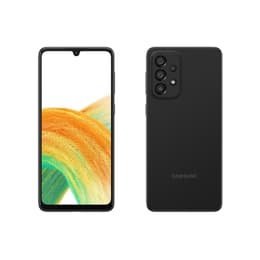
Galaxy A33 5G
Galaxy A33 5G
Starting at

Refurbished price:100.00

Versus €389.00 new

See options
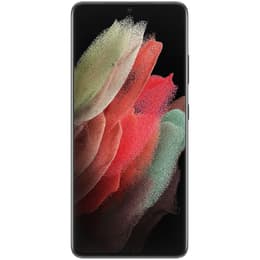
Galaxy S21 Ultra 5G
Galaxy S21 Ultra 5G
Starting at

Refurbished price:228.00

Versus €1,297.00 new

See options

Ratings

The Samsung Galaxy A33 5G, released in April 2022, and the Samsung Galaxy S21 Ultra 5G, launched in January 2021, represent distinct offerings within Samsung's smartphone portfolio. While both operate on the Android platform and support 5G connectivity, the S21 Ultra 5G was a flagship device designed for premium performance and advanced features, whereas the A33 5G was positioned as a capable mid-range option. Key differences lie in their display technology, camera systems, and overall processing power, catering to different user priorities.

Scores

Durability

The longevity of a smartphone is influenced by its initial release date, software support, and physical durability. These two devices, released about a year apart, have different trajectories for software updates and build quality.

  • Software Support: The Galaxy A33 5G launched with Android 12 and was promised four generations of Android OS updates and five years of security updates, extending its software lifespan significantly, potentially up to Android 16. The Galaxy S21 Ultra 5G, initially released with Android 11, received an extension to four major Android updates, with its last major update being Android 15. Security updates for the S21 Ultra 5G concluded around January/February 2026. This means the A33 5G will receive software support for a longer period from the current date.
  • Physical Durability: The Galaxy A33 5G features Gorilla Glass 5 on its display and an IP67 rating for dust and water resistance, offering protection against submersion in up to 1 meter of freshwater for 30 minutes. The Galaxy S21 Ultra 5G boasts Gorilla Glass Victus on both its front and back, along with an IP68 rating, providing enhanced resistance to dust and water, allowing submersion in up to 1.5 meters for 30 minutes.
  • Repairability: The Galaxy A33 5G has a reported repairability score of 7.75 out of 10, indicating it is relatively straightforward to disassemble for repairs. Information on the S21 Ultra's repairability is less readily available, but its more complex flagship design often suggests a more challenging repair process.

Year of Release

2022

2021

Compatible with latest Update

Yes

Yes

OS

Android

Android

Foldable

No

No

Performance

Performance is a key differentiator, impacting how smoothly applications run, how quickly tasks are completed, and the overall responsiveness of the device. Both devices offer capable performance for their respective categories.

  • Processing Power: The Galaxy A33 5G is equipped with an octa-core processor designed for efficient everyday use, handling common applications and multitasking without significant delays. The Galaxy S21 Ultra 5G features a more powerful 5nm octa-core processor, enabling it to manage demanding applications, intensive gaming, and complex tasks with greater speed and fluidity.
  • Multitasking and Storage: The A33 5G typically comes with 6GB or 8GB of RAM, which is sufficient for most users to switch between several apps. It offers 128GB or 256GB of internal storage, expandable via a microSD card up to 1TB. The S21 Ultra 5G offers higher RAM configurations, typically 12GB or 16GB, allowing for more aggressive multitasking and keeping more applications open in the background. It comes with 128GB, 256GB, or 512GB of internal storage, but lacks a microSD card slot for expansion.
  • Battery Behavior: Both devices house a 5000 mAh battery. Users of the A33 5G often report that its battery can comfortably last a full day, with some lighter users extending it to two days. The S21 Ultra 5G's battery life is also generally strong, often providing a full day of use, though its higher resolution and adaptive refresh rate display can consume more power, especially with heavy usage.

Memory (GB)

6 GB

12 GB

Screen quality

The display is a primary interface for smartphone interaction, and both models offer vibrant viewing experiences, though with notable differences in technology and capabilities.

  • Display Technology and Clarity: The Galaxy A33 5G features a 6.4-inch Super AMOLED display with a Full HD+ resolution (1080x2400 pixels), providing clear and colorful visuals for everyday content. The Galaxy S21 Ultra 5G steps up with a larger 6.8-inch Dynamic AMOLED 2X display at a Quad HD+ resolution (3200x1440 pixels), offering significantly sharper details and a more immersive viewing experience.
  • Brightness and Refresh Rate: The A33 5G features a 90Hz refresh rate, which provides smoother scrolling and animations compared to standard 60Hz displays. Its peak brightness is generally sufficient for outdoor visibility. The S21 Ultra 5G offers an adaptive refresh rate that can dynamically adjust from 10Hz to 120Hz, providing exceptional smoothness while optimizing power consumption. It also boasts a higher peak brightness of up to 1500 nits, ensuring excellent visibility even in bright outdoor conditions.
  • Screen Protection: The A33 5G's display is protected by Corning Gorilla Glass 5. The S21 Ultra 5G features the more advanced Gorilla Glass Victus on both its front and back, offering enhanced scratch and drop resistance.

Resolution

1080 x 2400

1440 x 3200

Screen type

Super AMOLED

Dynamic AMOLED 2X

Audiovisual

Camera capabilities are often a deciding factor for many users, and both devices offer versatile camera systems, with the S21 Ultra 5G providing a more advanced and comprehensive setup.

  • Rear Camera System: The Galaxy A33 5G includes a quad-camera setup with a 48 MP main sensor with optical image stabilization (OIS), an 8 MP ultrawide lens, a 5 MP macro lens, and a 2 MP depth sensor. The Galaxy S21 Ultra 5G features a more sophisticated quad-camera array, including a 108 MP main sensor with OIS, a 12 MP ultrawide lens, a 10 MP telephoto lens with 3x optical zoom, and a 10 MP periscope telephoto lens offering 10x optical zoom, complemented by a Laser AF sensor for improved focusing.
  • Photography Performance: The A33 5G delivers good results in well-lit conditions, with its OIS helping to produce clearer photos. Its ultrawide and macro lenses offer additional versatility for different shots. The S21 Ultra 5G excels in various lighting conditions, offering superior detail, dynamic range, and low-light performance due to its larger sensors and advanced processing. Its dual telephoto lenses provide significant zoom capabilities, from close-up portraits to distant subjects.
  • Front Camera and Video Recording: For selfies, the A33 5G has a 13 MP front camera. The S21 Ultra 5G features a higher-resolution 40 MP front camera, capable of capturing more detailed self-portraits. The A33 5G can record video up to 4K at 30 frames per second (fps). The S21 Ultra 5G supports video recording up to 8K at 24fps and 4K at 60fps, offering higher resolution and smoother motion capture.

Main camera

48 megapixels

108 megapixels

Front camera

13 megapixels

40 megapixels

Miscellaneous

Beyond core performance and display, several practical features contribute to the overall user experience and device utility.

  • Connectivity and Ports: Both devices support 5G connectivity for fast mobile data. The Galaxy A33 5G includes Wi-Fi 802.11 a/b/g/n/ac and Bluetooth 5.1. The Galaxy S21 Ultra 5G offers more advanced connectivity with Wi-Fi 6E and Bluetooth 5.2, providing potentially faster and more stable wireless connections. Both utilize a USB-C port for charging and data transfer, but the A33 5G uses USB 2.0 while the S21 Ultra 5G uses a faster standard. The A33 5G notably lacks a 3.5mm headphone jack.
  • Biometrics and Sensors: Both phones feature an in-display fingerprint sensor for secure unlocking. The S21 Ultra 5G also supports the S-Pen stylus, offering additional functionality for note-taking and drawing, though the S-Pen is sold separately.
  • Design and Handling: The Galaxy A33 5G has dimensions of 159.7 x 74 x 8.1 mm and weighs 186g, featuring a matte plastic back and Gorilla Glass 5 front. The Galaxy S21 Ultra 5G is a larger and heavier device at 165.1 x 75.6 x 8.9 mm and weighing 227g or 229g, constructed with a glass front and back (Gorilla Glass Victus) and an aluminum frame. The S21 Ultra 5G's larger size and weight contribute to a more substantial in-hand feel, while the A33 5G offers a lighter and potentially more manageable form factor.

Weight

186 g

227 g

Screen size (in)

6.4

6.8

Network

5G

5G

SIM card

Dual Physical SIM

Physical SIM + eSIM

Carrier compatibility

Unlocked

Unlocked

User feedback for the Galaxy A33 5G often praises its reliable battery life, vibrant Super AMOLED display, and the promise of extended software updates, making it a solid choice for everyday use. Some users note that its performance is adequate for general tasks but may not satisfy those seeking top-tier speed for demanding applications. The absence of a headphone jack and the inclusion of a plastic back are sometimes mentioned as minor drawbacks.

The Galaxy S21 Ultra 5G, on the other hand, is frequently lauded for its exceptional camera system, particularly its versatile zoom capabilities and high-resolution main sensor. Its stunning QHD+ adaptive 120Hz display and premium build quality also receive high praise. Criticisms sometimes point to its larger size and weight, and while its battery life is generally good, heavy use of its advanced display settings can lead to quicker drainage. The lack of expandable storage is also a common point of discussion among users.

Users prioritizing long-term software support and a more compact, lightweight design for general daily tasks and media consumption may find the Galaxy A33 5G well-suited to their needs. Its robust update policy ensures it remains current for an extended period. Conversely, users who demand a top-tier camera experience, a larger and more advanced display, and superior overall performance for gaming or intensive applications will likely lean towards the Galaxy S21 Ultra 5G. Its premium features cater to those seeking a more comprehensive smartphone experience.

For those considering either device, exploring quality-assured refurbished options can provide an eco-friendly alternative, offering access to these features while contributing to a more sustainable consumption model.


See all articles

Our recent comparisons