


Google Pixel 6A Vs Xiaomi 12T Pro

Google Pixel 6A
Google Pixel 6A
Starting at

Refurbished price:143.00

Versus €459.00 new

See options
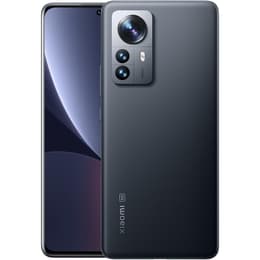
Xiaomi 12T Pro
Xiaomi 12T Pro
Starting at

Refurbished price:201.00

Versus €1,199.00 new

See options

Ratings

The Google Pixel 6A, released in July 2022, and the Xiaomi 12T Pro, launched in October 2022, are both Android smartphones offering distinct user experiences. While the Pixel 6A emphasizes Google's integrated software and advanced computational photography, the Xiaomi 12T Pro focuses on high-resolution camera hardware and rapid charging capabilities. Both devices operate on the Android platform, providing access to a wide ecosystem of applications and services.

Scores

Durability

When considering the long-term usability of these devices, their release timelines and software support are key factors.

  • Software Support: The Google Pixel 6A is set to receive five years of both operating system and security updates from its July 2022 release, extending its software longevity until July 2027. The Xiaomi 12T Pro, released in October 2022, typically receives three major Android OS updates and four years of security patches.
  • Repairability: The Pixel 6A generally scores well in repairability, with ratings around 6.5 to 7 out of 10, indicating that components like the battery and display are relatively accessible for servicing. The Xiaomi 12T Pro also demonstrates good repairability, often scoring around 7 to 7.6 out of 10.
  • Physical Durability: The Pixel 6A features an IP67 rating for dust and water resistance, offering protection against immersion in water. The Xiaomi 12T Pro comes with an IP53 rating, providing dust and splash resistance. The Pixel 6A's display is protected by Gorilla Glass 3, while the Xiaomi 12T Pro uses the more recent Gorilla Glass 5 for its front panel.

Year of Release

2022

2022

Compatible with latest Update

Yes

Yes

OS

Android

Android

Foldable

No

No

Performance

The performance of a smartphone significantly impacts daily usage, from app responsiveness to handling demanding tasks.

  • Processing Power: The Google Pixel 6A is equipped with Google's custom-designed processor, which provides a smooth and responsive experience for everyday applications and multitasking. This processor is optimized for AI and machine learning tasks, enhancing features like computational photography. The Xiaomi 12T Pro features a powerful current-generation processor, enabling it to handle demanding applications and graphic-intensive games with fluidity.
  • Multitasking and Storage: The Pixel 6A typically comes with 6GB of RAM and 128GB of internal storage, offering sufficient capacity for most users' apps and files. The Xiaomi 12T Pro is available with 8GB or 12GB of RAM and storage options of 128GB or 256GB, providing more headroom for extensive multitasking and larger media libraries.
  • Real-world Usage: Users generally report that the Pixel 6A delivers consistent performance, with minimal lag during typical use. The Xiaomi 12T Pro is noted for its strong performance in benchmarks and real-world scenarios, with smooth gameplay and seamless navigation, though some reports mention warmth during prolonged heavy use.

Memory (GB)

6 GB

8 GB

Screen quality

The display is a primary interface for smartphone interaction, and both devices offer distinct visual experiences.

  • Display Technology and Size: The Google Pixel 6A features a 6.1-inch OLED display, known for its deep blacks and vibrant colors. The Xiaomi 12T Pro offers a larger 6.67-inch CrystalRes AMOLED display, which also provides rich colors and contrast.
  • Resolution and Clarity: The Pixel 6A has an FHD+ resolution of 2400 x 1080 pixels, delivering clear visuals for general content consumption. The Xiaomi 12T Pro boasts a higher 1220p resolution (2712 x 1220 pixels), contributing to sharper details on its larger screen.
  • Refresh Rate and Brightness: The Pixel 6A's display operates at a standard 60Hz refresh rate. In contrast, the Xiaomi 12T Pro features a 120Hz refresh rate and a 480Hz touch sampling rate, resulting in smoother scrolling and more responsive touch interactions. The Xiaomi 12T Pro also offers high brightness levels, enhancing visibility in various lighting conditions.

Resolution

1080 x 2400

1220 x 2712

Screen type

OLED

AMOLED

Audiovisual

Both smartphones offer capable camera systems, though they approach photography with different strengths.

  • Rear Camera Systems: The Google Pixel 6A includes a dual-camera setup with a 12.2-megapixel main sensor and a 12-megapixel ultrawide sensor. It excels in computational photography, leveraging software to produce high-quality images, particularly in challenging lighting. The Xiaomi 12T Pro features a triple-camera system, highlighted by a 200-megapixel main sensor, complemented by an 8-megapixel ultra-wide and a 2-megapixel macro lens.
  • Photography Performance: The Pixel 6A is praised for its consistent image quality, accurate color reproduction, and effective features like Night Sight and Magic Eraser. The Xiaomi 12T Pro's 200-megapixel main camera captures a high level of detail, and users report fast shutter speeds. However, its secondary ultra-wide and macro lenses are noted to be less capable.
  • Video and Audio: The Pixel 6A can record 4K video at up to 60 frames per second. The Xiaomi 12T Pro supports video recording up to 8K at 24 frames per second, and 4K at 60 frames per second. For audio, the Xiaomi 12T Pro features stereo speakers tuned by Harman Kardon with Dolby Atmos support, providing an enhanced media consumption experience.

Main camera

12.2 megapixels

200 megapixels

Front camera

8 megapixels

20 megapixels

Miscellaneous

Beyond core specifications, several practical features contribute to the overall user experience.

  • Connectivity and Ports: Both devices support 5G connectivity. The Google Pixel 6A includes a USB-C port and supports both mmWave and Sub-6GHz 5G bands. The Xiaomi 12T Pro also features a USB-C 2.0 port and offers dual SIM capabilities, including eSIM support in some regions. Neither device includes a 3.5mm headphone jack or wireless charging.
  • Biometric Security: Both smartphones incorporate an in-display fingerprint sensor for secure unlocking.
  • Design and Handling: The Pixel 6A has a compact design, weighing approximately 178 grams. The Xiaomi 12T Pro is a larger device, weighing around 205 grams. The Pixel 6A features a plastic back, while the Xiaomi 12T Pro has a glass back and a plastic frame.

Weight

178 g

204 g

Screen size (in)

6.1

6.67

Network

5G

5G

SIM card

Physical SIM + eSIM

Dual Physical SIM

Carrier compatibility

Unlocked

Unlocked

The Google Pixel 6A and Xiaomi 12T Pro cater to different user priorities within the Android smartphone market. The Pixel 6A is frequently praised for its exceptional camera performance, driven by Google's advanced software processing, and its commitment to extended software updates, ensuring long-term usability. Users appreciate its consistent and smooth software experience. However, some common criticisms include its 60Hz display refresh rate and slower wired charging speeds compared to competitors.

The Xiaomi 12T Pro, on the other hand, garners positive feedback for its powerful processing capabilities, making it well-suited for demanding applications and gaming. Its ultra-fast wired charging is a significant advantage for users who need to quickly top up their device. The high-resolution main camera is also a highlight, though the performance of its secondary cameras sometimes receives less favorable mentions. The absence of wireless charging and a lower IP rating are noted as areas where it differs from some other devices in its category.

Users prioritizing a consistently excellent camera experience, long-term software support, and a compact form factor may find the Google Pixel 6A well-suited to their needs. Conversely, individuals who value raw processing power, a high refresh rate display, and extremely fast charging will likely lean towards the Xiaomi 12T Pro. Both devices offer compelling features, and choosing between them depends on which aspects align best with individual usage patterns. For those looking for a more sustainable choice, considering a quality-assured refurbished option for either model can provide an eco-friendly alternative.


See all articles

Our recent comparisons