

Compare models

Galaxy S22 Ultra 5G Vs iPhone 16

  • 1-year minimum warranty
  • Free delivery on all orders
  • Free 30-day returns
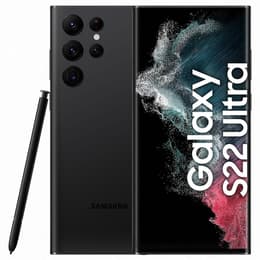
Galaxy S22 Ultra 5G
Galaxy S22 Ultra 5G
Starting at

Refurbished price:297.53

Versus €1,459.00 new

See options
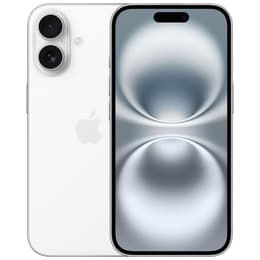
iPhone 16
iPhone 16
Starting at

Refurbished price:556.00

Versus €879.00 new

See options

Differences at a glance

The Samsung Galaxy S22 Ultra 5G, released in February 2022, and the iPhone 16, launched in September 2024, represent different generations and ecosystems within the smartphone market. While the Galaxy S22 Ultra offers a comprehensive Android experience with an integrated stylus, the iPhone 16 provides Apple's latest iOS innovations with a focus on enhanced performance and camera capabilities. These devices cater to distinct user preferences, with key differences in their operating systems, hardware, and unique features.

Scores

Durability

When considering the longevity of these devices, their respective release timelines and software support policies are important factors.

  • Release Timeline: The Galaxy S22 Ultra 5G was released in early 2022, making it a more mature device compared to the iPhone 16, which debuted in late 2024. This age difference directly impacts their remaining software support windows.
  • Software Longevity: Apple typically provides major iOS updates for its devices for approximately five to seven years from their release. The iPhone 16, having launched with iOS 18, is expected to receive software support until at least 2029, and potentially longer for security updates. The Galaxy S22 Ultra, launched with Android 12, has received updates to Android 14 and is expected to continue receiving security updates for a total of five years from its release, meaning its major OS update cycle is nearing its end.
  • Physical Durability: Both devices feature robust builds. The Galaxy S22 Ultra incorporates Gorilla Glass Victus+ on its front and back, along with an Armor Aluminum frame, offering resistance against drops and scratches. The iPhone 16 also features durable glass and an aluminum frame, with IP68 water and dust resistance, similar to the S22 Ultra.

Year of Release

2022

2024

Compatible with latest Update

Yes

Yes

Foldable

No

No

Performance

The performance of a smartphone is crucial for daily tasks, from navigating apps to demanding gaming sessions. Both devices offer capable performance, though the iPhone 16 benefits from newer internal components.

  • Processing Power: The iPhone 16 is equipped with a newer generation processor, which provides a notable increase in speed and efficiency compared to the Galaxy S22 Ultra's processor. This translates to smoother app loading, more fluid multitasking, and enhanced performance in graphically intensive applications and games.
  • Multitasking and Responsiveness: The iPhone 16's optimized software and hardware integration contribute to a highly responsive user experience, handling multiple applications simultaneously without noticeable slowdowns. The Galaxy S22 Ultra, while still performing well for most tasks, may show its age in direct comparison with the latest applications and heavy multitasking scenarios.
  • Storage and RAM: Both devices offer various storage configurations, typically ranging from 128GB to 512GB for the iPhone 16, and up to 1TB for the Galaxy S22 Ultra. The iPhone 16 comes with 8GB of RAM, while the Galaxy S22 Ultra was available with 8GB or 12GB of RAM, which can influence the number of apps kept active in memory.

Memory (GB)

12 GB

8 GB

Screen quality

The visual experience is a primary interaction point for users, and both the Galaxy S22 Ultra and iPhone 16 offer high-quality displays with distinct characteristics.

  • Display Technology and Clarity: The Galaxy S22 Ultra features a 6.8-inch Dynamic AMOLED 2X display with a Quad HD+ resolution (3088 x 1440 pixels), resulting in a high pixel density and sharp visuals. The iPhone 16 features a 6.1-inch Super Retina XDR OLED display with a resolution of 2556 x 1179 pixels, offering vibrant colors and deep blacks.
  • Brightness and Refresh Rate: The Galaxy S22 Ultra boasts a peak brightness of up to 1750 nits, making it highly visible even in bright outdoor conditions, and an adaptive 120Hz refresh rate for smooth scrolling and animations. The iPhone 16's OLED display also offers excellent brightness and color accuracy, with a smooth refresh rate for a fluid visual experience.
  • Viewing Experience: The larger screen size of the Galaxy S22 Ultra provides a more expansive canvas for media consumption and productivity, especially when utilizing its integrated S Pen. The iPhone 16 offers a more compact form factor, which some users may find easier for one-handed use.

Resolution

1440 x 3088

1179 x 2556

Screen type

Dynamic AMOLED 2X

Super Retina XDR OLED

Audiovisual

Both smartphones provide advanced camera systems designed to capture high-quality photos and videos, though they approach mobile photography with different hardware configurations and software optimizations.

  • Rear Camera System: The Galaxy S22 Ultra features a versatile quad-camera setup, including a 108MP main sensor, a 12MP ultrawide lens, a 10MP telephoto lens with 3x optical zoom, and a 10MP periscope telephoto lens offering 10x optical zoom. The iPhone 16 comes with a dual-camera system, featuring a 48MP main camera and a 12MP ultrawide camera, arranged in a vertical layout.
  • Photography Performance: The Galaxy S22 Ultra is known for its impressive zoom capabilities and detailed shots, particularly with its 108MP sensor and advanced telephoto lenses. The iPhone 16, while having fewer lenses, benefits from newer sensor technology and computational photography enhancements, offering strong low-light performance and improved image processing. The iPhone 16 also introduced macro photography for the first time on its non-Pro models.
  • Video Recording: The Galaxy S22 Ultra is capable of recording video at up to 8K resolution at 24 frames per second. The iPhone 16 offers advanced video capabilities, including spatial video recording, which allows for immersive playback on compatible devices. Both devices provide excellent video stabilization and quality for everyday use.

Main camera

108 megapixels

48 megapixels

Front camera

40 megapixels

12 megapixels

Miscellaneous

Beyond the core specifications, several other features contribute to the overall user experience and differentiate these two devices.

  • Unique Features: A significant differentiator for the Galaxy S22 Ultra is its integrated S Pen, offering precise input for note-taking, drawing, and navigation with a low latency of 2.8ms. The iPhone 16 introduces a new Capture Button across all models, designed to enhance the photography experience with tactile controls for focusing and shooting.
  • Connectivity and Ports: Both devices support 5G connectivity for fast mobile data. The Galaxy S22 Ultra supports Wi-Fi 6E and Bluetooth 5.2, with a USB-C 3.2 port. The iPhone 16 features Wi-Fi 7 and Bluetooth 5.3, and utilizes a USB-C port, though with USB 2.0 speeds for data transfer on the base model.
  • Design and Ergonomics: The Galaxy S22 Ultra has a larger form factor, measuring 163.3 x 77.9 x 8.9 mm and weighing 228g, which accommodates its expansive display and S Pen. The iPhone 16 is more compact at 147.6 × 71.6 × 7.8 mm and lighter at 170g, making it potentially more comfortable for users who prefer a smaller device.

Weight

228 g

170 g

Screen size (in)

6.8

6.1

Network

5G

5G

SIM card

Dual Physical SIM + eSIM

eSIM

Carrier compatibility

Unlocked

Unlocked

Connector

USB-C

USB-C (USB 2)

What the community thinks

The Samsung Galaxy S22 Ultra 5G and the iPhone 16 cater to different user needs and preferences, reflecting their respective ecosystems and release cycles. Users often praise the Galaxy S22 Ultra for its versatile camera system, particularly its zoom capabilities, and the unique productivity features offered by the integrated S Pen. Its large, vibrant display is also a frequent highlight for media consumption and multitasking. Some users, however, have noted that its battery life, while substantial, can be challenged by heavy usage over time, and as an older device, its software update cycle is naturally shorter.

The iPhone 16, being a newer release, is generally lauded for its significant performance improvements, ensuring a smooth and responsive experience across all applications. Its enhanced camera system, with new features like macro photography and spatial video recording, receives positive feedback for its image quality and creative potential. Users also appreciate the extended software support that comes with a newer iPhone model. Some discussions around the iPhone 16 have touched upon its battery life, which, while improved over its predecessor, may still require careful management for very heavy users, though the Pro Max variant has shown exceptional endurance.

Users prioritizing a comprehensive Android experience with advanced camera zoom and an integrated stylus for productivity may find the Galaxy S22 Ultra 5G well-suited to their needs. Conversely, those who value the latest iOS features, superior processing power, and a more compact design with a longer software support window will likely lean towards the iPhone 16. Both devices offer robust performance and features, and for those seeking a sustainable choice, quality-assured refurbished options are available for both models, providing an eco-friendly alternative.