
Google Pixel 8 Pro Vs iPhone 14 Pro

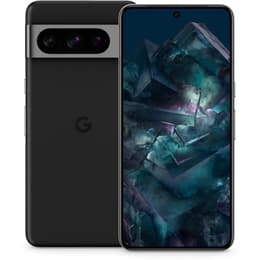
Google Pixel 8 Pro
Google Pixel 8 Pro
Starting at

Refurbished price:293.00

Versus €1,099.00 new

See options
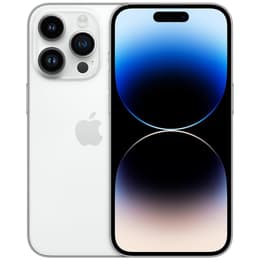
iPhone 14 Pro
iPhone 14 Pro
Starting at

Refurbished price:424.00

Versus €1,339.00 new

See options

Ratings

The Google Pixel 8 Pro, released in October 2023, and the iPhone 14 Pro, launched in September 2022, represent high-end smartphone offerings from their respective manufacturers. While both devices deliver premium experiences, they cater to different user preferences through their distinct operating systems and hardware philosophies. The Pixel 8 Pro runs on Android, emphasizing advanced computational photography and AI-driven features, whereas the iPhone 14 Pro operates on iOS, known for its integrated ecosystem and robust performance.

Scores

Durability

When considering the long-term usability of these devices, their release timelines and software support are key factors. The Google Pixel 8 Pro, being a year newer, benefits from a longer guaranteed software support period compared to its Apple counterpart.

  • Release Timeline: The Pixel 8 Pro was released in October 2023, making it a more recent device than the iPhone 14 Pro, which launched in September 2022. This difference in release date inherently provides the Pixel 8 Pro with a longer period before it reaches end-of-life for software updates.
  • OS Support Duration: Google has committed to providing seven years of operating system and security updates for the Pixel 8 Pro. In contrast, Apple typically offers 5-6 years of iOS updates for its devices, meaning the iPhone 14 Pro will likely receive software support for a shorter duration than the Pixel 8 Pro.
  • Practical Lifespan: Both devices are built with durable materials and an IP68 rating for dust and water resistance. However, the Pixel 8 Pro's extended software support suggests a longer practical lifespan for users who prioritize having the latest software features and security patches.

Year of Release

2023

2022

Compatible with latest Update

Yes

Yes

Foldable

No

No

Performance

Both the Google Pixel 8 Pro and the iPhone 14 Pro offer robust performance suitable for demanding applications and multitasking, though they achieve this through different hardware and software optimizations.

  • Processor Capabilities: The Pixel 8 Pro handles demanding apps and multitasking smoothly, leveraging its advanced processor to power its AI features and computational photography. The iPhone 14 Pro also delivers strong performance, ensuring fluid navigation, quick app launches, and efficient handling of graphics-intensive tasks.
  • Battery Behavior: The Pixel 8 Pro features a larger 5050 mAh battery, with many users reporting all-day battery life under typical usage. The iPhone 14 Pro, with a 3200 mAh battery, generally provides a full day of use for most users, though some reports indicate it may require more frequent charging with heavy use, particularly for gaming.
  • Storage Options: Both devices offer a range of storage configurations, starting from 128GB and extending to 1TB, allowing users to choose based on their storage needs for apps, photos, and videos.

Memory (GB)

12 GB

6 GB

Screen quality

The visual experience on both the Google Pixel 8 Pro and the iPhone 14 Pro is characterized by vibrant colors, deep blacks, and high clarity, thanks to their advanced display technologies.

  • Display Technology: Both smartphones feature OLED displays, providing excellent contrast and true blacks. The Pixel 8 Pro uses an LTPO OLED panel, while the iPhone 14 Pro features a Super Retina XDR OLED display with LTPO technology.
  • Brightness and Clarity: The Pixel 8 Pro offers a peak brightness of up to 2400 nits, ensuring good visibility even in bright outdoor conditions. The iPhone 14 Pro reaches a peak brightness of 2000 nits outdoors, also providing clear viewing in various lighting environments. Both displays offer high resolution, with the iPhone 14 Pro at 2556x1179 pixels (460 ppi) and the Pixel 8 Pro at 1344x2992 pixels (489 ppi).
  • Refresh Rate and Size: Both devices feature adaptive refresh rates up to 120Hz, contributing to smooth scrolling and responsive interactions. The Pixel 8 Pro has a 6.7-inch display, offering a slightly larger viewing area compared to the iPhone 14 Pro's 6.1-inch display.

Resolution

1344 x 2992

1179 x 2556

Screen type

LTPO OLED

LTPO Super Retina XDR OLED

Audiovisual

Both the Google Pixel 8 Pro and the iPhone 14 Pro are recognized for their advanced camera systems, each excelling in different aspects of photography and videography.

  • Camera System Capabilities: The Pixel 8 Pro features a versatile triple-camera setup, including a 50MP main sensor, a 48MP ultrawide lens, and a 48MP telephoto lens with 5x optical zoom. The iPhone 14 Pro also has a triple-camera system, with a 48MP main sensor that uses pixel binning to produce 12MP photos, a 12MP ultrawide, and a 12MP telephoto lens with 3x optical zoom.
  • Photography Performance: The Pixel 8 Pro emphasizes computational photography and AI-driven enhancements, offering features like improved low-light performance with Night Sight, and advanced editing tools. It also provides a Pro mode for manual controls and 50MP RAW capture. The iPhone 14 Pro's camera system, enhanced by its Photonic Engine, delivers strong low-light performance and detailed images, with a focus on consistent image quality across its lenses.
  • Video Recording Quality: Both devices support 4K video recording at various frame rates. The iPhone 14 Pro introduced features like Cinematic mode in 4K and Action mode for enhanced stabilization. The Pixel 8 Pro has also significantly improved its video capabilities, including features like Audio Magic Eraser for better sound quality in recordings.

Main camera

50 megapixels

48 megapixels

Front camera

10.5 megapixels

12 megapixels

Miscellaneous

Beyond their core functionalities, both the Google Pixel 8 Pro and the iPhone 14 Pro offer a range of features that enhance user experience, from connectivity to physical design.

  • Connectivity Options: Both devices support 5G cellular networks, ensuring fast mobile data speeds. The Pixel 8 Pro supports Wi-Fi 7, offering the latest in wireless connectivity, while the iPhone 14 Pro supports Wi-Fi 6. Both also include Bluetooth 5.3 and NFC for wireless accessories and mobile payments.
  • Port Types and Sensors: The Pixel 8 Pro uses a USB-C 3.2 port. The iPhone 14 Pro utilizes a Lightning port. For biometric security, the Pixel 8 Pro features an optical under-display fingerprint sensor, while the iPhone 14 Pro relies on Face ID for facial recognition. The iPhone 14 Pro also includes Emergency SOS via satellite and Crash Detection for safety.
  • Weight and Dimensions: The Pixel 8 Pro measures 162.6 x 76.5 x 8.8 mm and weighs 213 grams. The iPhone 14 Pro is more compact at 147.5 x 71.5 x 7.85 mm and weighs 206 grams. The iPhone 14 Pro also features the Dynamic Island, an interactive area around the front camera cutout.

Weight

213 g

206 g

Screen size (in)

6.7

6.1

Network

5G

5G

SIM card

Physical SIM + eSIM

Physical SIM + eSIM

Carrier compatibility

Unlocked

Unlocked

User feedback for both the Google Pixel 8 Pro and the iPhone 14 Pro highlights their respective strengths and some areas of concern. For the Pixel 8 Pro, common praise points often revolve around its advanced camera capabilities, particularly its AI-driven features and manual controls, which users find intuitive and powerful for photography. The extended software support commitment from Google is also a significant positive for many users. However, some users have expressed mixed opinions on battery life, with experiences varying depending on usage patterns.

The iPhone 14 Pro is frequently lauded for its consistent performance, the seamless integration within the Apple ecosystem, and its high-quality display with the innovative Dynamic Island. Its camera system is also highly regarded for delivering excellent image and video quality. Criticisms sometimes point to battery life, with some users noting it might not always last a full day under heavy use, especially compared to its predecessor.

Users prioritizing a longer software support lifespan and advanced AI-powered camera features, along with the Android operating system, may find the Google Pixel 8 Pro well-suited to their needs. Conversely, users who value a highly integrated ecosystem, consistent performance, and a slightly more compact design with the iOS experience might lean toward the iPhone 14 Pro. Both devices offer a premium smartphone experience, and choosing between them often comes down to individual preference for operating system and specific feature priorities. For those seeking a more sustainable choice, both models are available as quality-assured refurbished options.


See all articles

Our recent comparisons