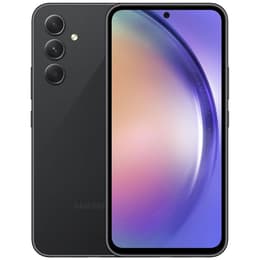
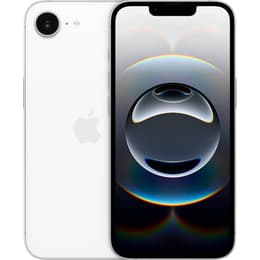


Galaxy A54 Vs iPhone 16e

Galaxy A54
Galaxy A54
Starting at

Refurbished price:178.00

Versus €527.33 new

See options
iPhone 16e
iPhone 16e
Starting at

Refurbished price:387.00

Versus €719.00 new

See options

Ratings

The Samsung Galaxy A54, released in March 2023, is an Android-based smartphone known for its balanced features. The iPhone 16E, a hypothetical model anticipated around 2026, would represent Apple's approach to an essential-tier smartphone. While the Galaxy A54 operates on Android with Samsung's One UI, the iPhone 16E would run on Apple's iOS, offering distinct user experiences and ecosystem integrations. The primary differentiators between these two devices would likely revolve around their operating systems, display technologies, and camera philosophies.

Scores

Durability

When considering the longevity of these devices, several factors come into play, including their release timelines, software support, and physical resilience.

  • Release Timeline: The Galaxy A54 was released in March 2023. The iPhone 16E, being a hypothetical model, is assumed to be released around 2026, making it a significantly newer device.
  • Software Support: The Galaxy A54 is promised 4 generations of OS updates and 5 years of security updates, extending its support until approximately 2027. Apple typically provides longer software support for its devices, often exceeding five years, which would likely give the iPhone 16E an extended software longevity compared to the Galaxy A54.
  • Durability Features: The Galaxy A54 features an IP67 rating for dust and water resistance, meaning it can withstand submersion in up to 1 meter of freshwater for 30 minutes. It also uses Gorilla Glass 5 on both the front and back for scratch resistance. The hypothetical iPhone 16E would likely feature an IP68 rating, offering protection in up to 6 meters of water for 30 minutes, and incorporate Apple's Ceramic Shield front cover for enhanced drop performance, similar to recent iPhone models.

Year of Release

2023

2025

OS

Android

iOS

Foldable

No

No

Performance

The performance of a smartphone is crucial for daily tasks, from app usage to multitasking and gaming. Both devices offer capable hardware designed for smooth operation within their respective ecosystems.

  • Processor Capabilities: The Galaxy A54 is powered by an octa-core processor, which handles everyday applications and moderate gaming smoothly. It provides a responsive experience for typical user activities. The hypothetical iPhone 16E would likely feature an A-series chip, such as the A16 Bionic, which is known for its robust performance in demanding applications and graphics-intensive tasks, offering a high level of responsiveness and efficiency.
  • Multitasking and Storage: The Galaxy A54 is available with 6GB or 8GB of RAM, allowing for efficient multitasking and app switching. It offers 128GB or 256GB of internal storage, with the added flexibility of expanding storage up to 1TB via a microSD card. The iPhone 16E would likely come with 6GB of RAM and storage options of 128GB or 256GB, without expandable storage, a common characteristic of Apple devices.
  • Battery Behavior: The Galaxy A54 is equipped with a 5000 mAh battery, designed to provide extended usage throughout the day for most users. The iPhone 16E, while potentially having a smaller battery capacity, would benefit from iOS's power optimization, aiming for all-day battery life with efficient power management features.

Memory (GB)

8 GB

8 GB

Screen quality

The display is a primary interface for smartphone interaction, and both devices offer distinct visual experiences.

  • Display Technology and Clarity: The Galaxy A54 features a 6.4-inch Super AMOLED display with a resolution of 1080 x 2340 pixels, providing vibrant colors, deep blacks, and good contrast. The hypothetical iPhone 16E would likely feature a 6.1-inch Liquid Retina IPS LCD display, offering accurate color reproduction and good viewing angles, though with less contrast compared to OLED technology.
  • Brightness and Refresh Rate: The Galaxy A54's display supports a 120Hz refresh rate for smooth scrolling and animations, and can reach a peak brightness of 1000 nits for good outdoor visibility. The iPhone 16E would likely feature a standard 60Hz refresh rate and a typical brightness of around 625 nits, similar to previous essential iPhone models, which is sufficient for most indoor and outdoor conditions.
  • Viewing Experience: The larger Super AMOLED screen of the Galaxy A54 offers an immersive experience for media consumption and gaming due to its size and vibrant colors. The iPhone 16E's display, while smaller and potentially LCD, would still provide a clear and consistent visual experience, optimized by iOS for various content types.

Resolution

1080 x 2340

2532x1170

Audiovisual

Camera capabilities are a significant consideration for many users, and both devices offer versatile systems for capturing photos and videos.

  • Rear Camera System: The Galaxy A54 features a triple rear camera setup, including a 50MP main sensor with optical image stabilization (OIS), a 12MP ultrawide lens, and a 5MP macro lens. This configuration allows for detailed everyday photos, expansive landscape shots, and close-up photography. The hypothetical iPhone 16E would likely feature a dual-camera system, consisting of a 12MP main camera with OIS and a 12MP ultrawide camera, focusing on consistent image quality and computational photography enhancements.
  • Photography Performance: The Galaxy A54 is capable of capturing sharp and vibrant images in good lighting conditions, with its OIS aiding in low-light scenarios and video stability. The iPhone 16E, with Apple's image processing, would likely excel in color accuracy, dynamic range, and overall image consistency across various lighting conditions, including improved low-light performance through software optimization.
  • Video Recording and Front Camera: Both devices support 4K video recording at 30 frames per second with their main rear cameras. The Galaxy A54 has a 32MP front camera, capable of 4K@30fps video recording. The iPhone 16E would likely feature a 12MP front camera, also capable of high-quality video recording, optimized for video calls and selfies with features like cinematic mode for video.
  • Audio Experience: The Galaxy A54 features stereo speakers with Dolby Atmos support, providing a rich audio experience for media consumption. The iPhone 16E would also offer stereo speakers, known for clear and balanced audio output.

Front camera

32 megapixels

TrueDepth 12MP

Miscellaneous

Beyond core features, several practical elements contribute to the overall user experience of a smartphone.

  • Connectivity Standards: Both the Galaxy A54 and the hypothetical iPhone 16E would support 5G cellular connectivity for fast mobile data. The Galaxy A54 supports Wi-Fi 6 and Bluetooth 5.3. The iPhone 16E would likely feature Wi-Fi 6E for potentially faster wireless speeds and Bluetooth 5.3 for efficient accessory connections.
  • Ports and Biometrics: The Galaxy A54 uses a USB-C 2.0 port for charging and data transfer and includes an in-display optical fingerprint sensor for secure unlocking. The iPhone 16E would feature a USB-C port, aligning with recent iPhone models, and would likely rely on Face ID for biometric authentication, offering secure facial recognition. Neither device would include a traditional 3.5mm headphone jack.
  • Design and Handling: The Galaxy A54 measures 158.2 x 76.7 x 8.2 mm and weighs 202g, featuring a glass back and plastic frame. The hypothetical iPhone 16E would likely be more compact and lighter, similar to the iPhone 15, with dimensions around 147.6 x 71.6 x 7.8 mm and a weight of approximately 171g, potentially featuring an aluminum frame and glass back.

Weight

202 g

167 g

Screen size (in)

6.4

6.1

Network

5G

5G

SIM card

Physical SIM + eSIM

eSIM

Carrier compatibility

Unlocked

Unlocked

Choosing between the Samsung Galaxy A54 and the hypothetical iPhone 16E involves weighing different priorities and ecosystem preferences. The Galaxy A54 is praised by users for its vibrant Super AMOLED display, reliable battery life, and versatile camera system, particularly its main sensor with OIS. Common feedback also highlights its consistent performance for everyday use and the benefit of expandable storage. Some users have noted that while its processor is competent, it might not match the raw power of flagship chipsets for the most demanding tasks.

The hypothetical iPhone 16E, on the other hand, would likely be lauded for its seamless iOS experience, strong processor performance for smooth operation, and Apple's consistent approach to camera quality and video capabilities. Users often appreciate the long-term software support and the robust security features inherent to the iOS ecosystem. Potential criticisms might include the absence of expandable storage and a standard 60Hz refresh rate display, which some users might find less fluid compared to higher refresh rate screens.

Users prioritizing a larger, high-refresh-rate AMOLED display, expandable storage, and the flexibility of the Android ecosystem may find the Galaxy A54 well-suited to their needs. Conversely, users who value a compact design, the consistent performance and long-term software support of iOS, and advanced computational photography may lean toward the iPhone 16E. Both devices offer compelling features for different user profiles, and considering a quality-assured refurbished option can be an eco-friendly alternative for either model.


See all articles

Our recent comparisons