

Galaxy A14 Vs iPhone 16 Pro

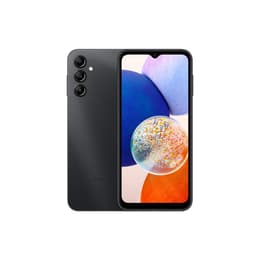
Galaxy A14
Galaxy A14
Starting at

Refurbished price:97.00

Versus €269.00 new

See options
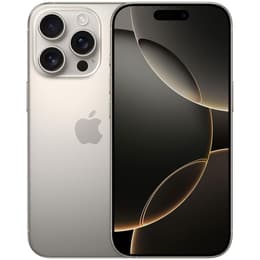
iPhone 16 Pro
iPhone 16 Pro
Starting at

Refurbished price:650.00

Versus €1,239.00 new

See options

Ratings

The Samsung Galaxy A14, released in early 2023, is an Android smartphone designed for everyday use, focusing on essential features and battery longevity. In contrast, the iPhone 16 Pro, launched in late 2024, represents Apple's high-end flagship, offering advanced performance, a sophisticated camera system, and a premium user experience. These devices cater to different user needs, primarily distinguished by their operating systems, performance capabilities, and overall feature sets.

Scores

Durability

The expected lifespan of a smartphone is influenced by its initial build quality, software support, and the availability of replacement parts. Both the Galaxy A14 and the iPhone 16 Pro offer different longevity propositions.

  • Software Support: The Galaxy A14, launching with Android 13, is expected to receive two major Android OS updates, bringing it up to Android 15, and four years of security updates, extending until 2027. The iPhone 16 Pro, running iOS 18 at launch, typically receives major iOS updates and security patches for approximately five to seven years from its release date, offering a longer period of software relevance.
  • Repairability: The Galaxy A14 has a repairability score of 8 out of 10, noted for its ease of disassembly and the use of battery pull tabs, simplifying battery replacement. The iPhone 16 Pro also shows significant improvements in repairability, achieving a score of 7 out of 10, thanks to a dual-entry design allowing access from both front and back, modular components, and battery pull tabs.
  • Practical Lifespan: Users prioritizing extended software support and a device that remains current with the latest features for many years may find the iPhone 16 Pro more suitable. For those who upgrade more frequently or require a device for a shorter, focused period, the Galaxy A14 offers a solid, functional lifespan within its support window.

Year of Release

2023

2024

Compatible with latest Update

No

Yes

Foldable

No

No

Performance

The performance capabilities of these two smartphones reflect their distinct design philosophies and target user bases, impacting how smoothly they handle various tasks.

  • Everyday Responsiveness: The Galaxy A14 is equipped with an entry-level to mid-range processor, which capably handles daily tasks like browsing, social media, and messaging. However, users may experience occasional lag or stuttering, particularly when switching between multiple applications or running more demanding apps. The iPhone 16 Pro features a current-generation A-series chip, designed to deliver exceptionally fluid performance across all applications, from casual use to intensive gaming and professional-grade creative tasks, ensuring a consistently smooth and responsive user experience.
  • Multitasking and Storage: The Galaxy A14 typically comes with 4GB or 6GB of RAM, which is sufficient for light multitasking but may require apps to reload more frequently when many are open. It offers 64GB or 128GB of internal storage, with the benefit of expandable storage via a microSD card. The iPhone 16 Pro is expected to include 8GB of RAM, facilitating seamless multitasking and keeping numerous applications active in the background without performance degradation. Storage options start from 128GB and extend up to 1TB, catering to users with extensive digital content.
  • Battery Behavior: The Galaxy A14 features a large 5000 mAh battery, which, combined with its less demanding hardware, often provides excellent battery life, with many users reporting up to two days of moderate use on a single charge. The iPhone 16 Pro's battery is optimized for all-day use, even with its powerful components and high-resolution display, with the Pro Max variant specifically noted for over 30 hours of video playback.

Memory (GB)

4 GB

8 GB

Screen quality

The visual experience on these devices differs significantly due to their display technologies and specifications, catering to varying user expectations for clarity, color, and smoothness.

  • Display Technology and Resolution: The Galaxy A14 features a 6.6-inch PLS LCD display with Full HD+ resolution (1080 x 2408 pixels). This technology provides clear visuals suitable for general content consumption. The iPhone 16 Pro boasts a 6.3-inch Super Retina XDR OLED display with a higher resolution of 2622x1206 pixels, resulting in sharper images and more detailed text. OLED technology delivers deep blacks and vibrant colors, enhancing the visual fidelity of photos, videos, and apps.
  • Refresh Rate and Brightness: The Galaxy A14 offers a 60Hz refresh rate on its 4G model and a 90Hz refresh rate on its 5G variant, providing a reasonably smooth scrolling experience for its class. Its brightness levels are adequate for indoor use but may be less optimal in bright outdoor conditions. The iPhone 16 Pro incorporates ProMotion technology, offering an adaptive refresh rate up to 120Hz, which makes scrolling and animations appear exceptionally fluid. It also features significantly higher brightness levels, reaching up to 2000 nits peak brightness outdoors, ensuring excellent visibility even in direct sunlight.
  • Viewing Experience: The larger screen of the Galaxy A14 provides ample space for media consumption and browsing. The iPhone 16 Pro's display, while slightly smaller, offers a more immersive and premium viewing experience due to its superior contrast, color accuracy, and high refresh rate, making it particularly appealing for users who prioritize visual quality and smooth interactions.

Resolution

1080 x 2408

1206 x 2622

Screen type

PLS LCD

LTPO Super Retina XDR OLED

Audiovisual

The camera systems on the Galaxy A14 and iPhone 16 Pro are designed with different capabilities and target different levels of photographic expectation.

  • Rear Camera System: The Galaxy A14 features a triple rear camera setup, typically including a 50MP main sensor, a 5MP ultrawide (on some models), and 2MP macro and depth sensors. Its 50MP main camera performs well in good daylight conditions, capturing decent detail and color. The iPhone 16 Pro comes with an advanced multi-lens system, including a 48MP main camera, a new 48MP ultrawide camera with autofocus, and a 12MP telephoto lens capable of 5x optical zoom. This setup is designed for versatility and high-quality imaging across various scenarios.
  • Low-Light and Video Performance: The Galaxy A14's low-light photography is generally considered adequate for its segment but can show noise and a lack of detail in challenging conditions. Video recording is limited to 1080p at 30 frames per second, without advanced stabilization features. The iPhone 16 Pro excels in low-light performance, leveraging its larger sensors and advanced computational photography to produce bright, detailed images with minimal noise. It supports 4K Dolby Vision video recording at up to 120 frames per second, offering professional-grade video capabilities and superior stabilization.
  • Front Camera and Audio: Both devices include a front-facing camera for selfies and video calls; the Galaxy A14 has a 13MP sensor, while the iPhone 16 Pro features a 12MP selfie camera. For audio, the Galaxy A14 typically offers a single loudspeaker, which can get loud but may lack richness in audio quality. The iPhone 16 Pro provides a more immersive audio experience with stereo speakers, enhancing media consumption.

Main camera

50 megapixels

48 megapixels

Front camera

13 megapixels

12 megapixels

Miscellaneous

Beyond core performance and display, several practical elements contribute to the overall user experience and daily utility of these smartphones.

  • Connectivity and Ports: The Galaxy A14 supports 4G or 5G connectivity depending on the model, Wi-Fi 5, and Bluetooth 5.1 or 5.2. It includes a USB-C 2.0 port for charging and data transfer, and notably, retains a 3.5mm headphone jack. The iPhone 16 Pro features the latest 5G capabilities, Wi-Fi 7, and advanced Bluetooth standards. It utilizes a USB-C port for charging and data, aligning with modern connectivity trends, but does not include a headphone jack.
  • Biometrics and Sensors: The Galaxy A14 typically incorporates a side-mounted fingerprint sensor for secure unlocking. It also includes standard sensors like an accelerometer, proximity sensor, and compass. The iPhone 16 Pro relies on Face ID for biometric authentication, offering advanced facial recognition. It integrates a comprehensive suite of sensors, including an accelerometer, gyroscope, barometer, and ambient light sensor, supporting a wide range of advanced features and applications.
  • Build Materials and Handling: The Galaxy A14 features a plastic back and frame, contributing to its lighter feel and potentially greater resistance to minor impacts. Its dimensions are 167.7 x 78 x 9.1 mm, and it weighs around 201-202g. The iPhone 16 Pro utilizes a more premium construction with a titanium frame, Ceramic Shield front cover, and textured matte glass back, offering enhanced durability and a refined tactile experience. It also boasts an IP68 rating for water and dust resistance. Its dimensions are 149.6 × 71.5 × 8.25 mm, and it weighs 199g.

Weight

201 g

199 g

Screen size (in)

6.6

6.3

Network

4G

5G

SIM card

Dual Physical SIM

eSIM

Carrier compatibility

Unlocked

Unlocked

The Samsung Galaxy A14 and iPhone 16 Pro cater to distinct segments of the smartphone market, each offering a compelling set of features for their intended users. User feedback for the Galaxy A14 often praises its long battery life and capable main camera for daylight photos, making it a reliable device for essential communication and media consumption. However, some users note its performance can be sluggish with demanding applications and its low-light camera performance is not its strongest suit.

The iPhone 16 Pro, on the other hand, is consistently lauded for its exceptional performance, vibrant and smooth display, and highly advanced camera system, which excels in various lighting conditions and video recording. Users appreciate its premium build quality and the extended software support that keeps the device current for many years. Potential considerations for some users might include its higher-tier feature set, which may exceed the needs of those seeking a simpler device.

Users prioritizing a device with a long software support lifespan, top-tier performance for demanding applications, and advanced photography and videography capabilities will find the iPhone 16 Pro well-suited to their needs. Conversely, individuals seeking a dependable smartphone for everyday tasks, with excellent battery life and the flexibility of expandable storage and a headphone jack, may find the Galaxy A14 to be a practical choice. Both devices offer a quality-assured refurbished option, providing an eco-friendly alternative for consumers looking to make informed and sustainable choices.


See all articles

Our recent comparisons