

Galaxy A34 Vs Galaxy S20 FE

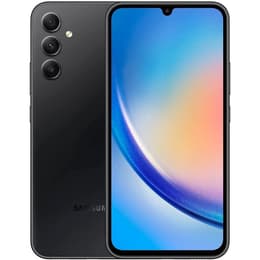
Galaxy A34
Galaxy A34
Starting at

Refurbished price:127.00

Versus €399.00 new

See options
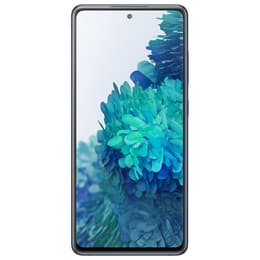
Galaxy S20 FE
Galaxy S20 FE
Starting at

Refurbished price:150.00

Versus €779.00 new

See options

Ratings

The Samsung Galaxy A34, released in March 2023, and the Samsung Galaxy S20 FE (Fan Edition), initially launched in October 2020, represent different segments and generations within Samsung's smartphone lineup. While both devices offer a comprehensive Android experience, they cater to varying user priorities through distinct hardware and software approaches. The A34 focuses on extended software longevity and a large battery, whereas the S20 FE, an older model, emphasizes a more capable camera system and a higher-tier processor from its release era.

Scores

Durability

The practical lifespan of a smartphone is significantly influenced by its release timeline and the manufacturer's commitment to software updates.

  • Release Timeline: The Galaxy A34 is a newer device, launched in March 2023. The Galaxy S20 FE, on the other hand, was released in October 2020, making it over two years older.
  • OS Support Duration: The Galaxy A34 launched with Android 13 and is guaranteed to receive four major OS upgrades and five years of security updates, extending its support until at least 2027 and potentially up to Android 17. In contrast, the Galaxy S20 FE, which started with Android 10, received three major Android updates and five years of security patches, with official software support concluding around October 2025. This means the A34 offers a significantly longer period of official software and security updates.
  • Repairability and Practical Lifespan: Both devices are designed for durability, with the A34 featuring an IP67 rating and Gorilla Glass 5 on the front, while the S20 FE boasts an IP68 rating and Gorilla Glass 3 (or 5 in some later versions). Users prioritizing the longest possible software support and up-to-date security patches will find the A34 more aligned with their needs, while the S20 FE's software lifecycle has officially concluded.

Year of Release

2023

2020

Compatible with latest Update

Yes

No

OS

Android

Android

Foldable

No

No

Performance

Performance in daily use is a key differentiator, with both devices offering capable experiences, though with different underlying architectures.

  • Processor Capabilities: The Galaxy A34 is equipped with a current-generation mid-range processor, which handles demanding applications and multitasking smoothly. The Galaxy S20 FE features a processor that was considered flagship-tier at its release, providing a fast and responsive experience for its time. For everyday tasks, both phones offer a fluid experience, but the S20 FE's older flagship-grade processor may still hold an edge in certain intensive applications or gaming scenarios, though the A34's newer mid-range chip is optimized for current software.
  • Multitasking and Storage: Both devices offer various RAM and storage configurations, typically starting from 6GB or 8GB of RAM and 128GB of internal storage, with options for expansion via a microSD card. This allows for efficient multitasking and ample space for applications and media on both models.
  • Battery Behavior: The Galaxy A34 includes a larger 5000 mAh battery, which users report often lasts up to two days with moderate usage. The Galaxy S20 FE has a 4500 mAh battery, generally providing a full day of use for most users.

Memory (GB)

6 GB

8 GB

Screen quality

Both smartphones offer vibrant display technologies, but there are subtle differences in their viewing experiences.

  • Display Technology and Size: Both the Galaxy A34 and S20 FE feature Super AMOLED displays, known for deep blacks and vibrant colors. The A34 has a slightly larger 6.6-inch display, while the S20 FE offers a 6.5-inch screen.
  • Resolution and Refresh Rate: Both devices provide a Full HD+ resolution (1080 x 2340 for A34, 1080 x 2400 for S20 FE), ensuring sharp visuals for everyday content. They also both feature a 120Hz refresh rate, contributing to smoother scrolling and a more fluid user interface.
  • Brightness and Viewing Experience: The Galaxy A34 can reach a peak brightness of 1000 nits, offering good visibility outdoors. The S20 FE can achieve up to 1200 nits peak brightness, providing a slightly brighter viewing experience in direct sunlight. The S20 FE also features a flat display, which some users prefer.

Resolution

1080 x 2340

1080 x 2400

Screen type

Super AMOLED

Super AMOLED

Audiovisual

The camera systems on these two devices offer different strengths, catering to various photography preferences.

  • Rear Camera System: The Galaxy A34 features a triple camera setup with a 48MP main sensor with optical image stabilization (OIS), an 8MP ultrawide, and a 5MP macro lens. The Galaxy S20 FE also has a triple camera system, consisting of a 12MP main sensor with OIS, a 12MP ultrawide, and an 8MP telephoto lens with 3x optical zoom. The S20 FE's dedicated telephoto lens provides greater versatility for zoomed-in shots without significant loss of detail.
  • Photography Performance: Users generally report that the A34's main camera performs well in good lighting conditions, producing respectable photos, though low-light performance can be grainy. The S20 FE is praised for its overall camera quality, with its main camera delivering excellent results in various conditions, including good low-light performance, and the telephoto lens being a notable advantage.
  • Video and Front Camera: Both phones can record video at up to 4K resolution at 30 frames per second (fps) with their rear cameras, though the S20 FE can also record 4K at 60fps. For selfies, the A34 has a 13MP front camera, while the S20 FE features a higher-resolution 32MP front camera, capable of 4K@60fps video recording.

Main camera

48 megapixels

12 megapixels

Front camera

13 megapixels

32 megapixels

Miscellaneous

Beyond core features, several practical elements contribute to the overall user experience and daily convenience.

  • Connectivity and Ports: Both devices support 5G connectivity. The Galaxy A34 supports Wi-Fi 5 and Bluetooth 5.3, while the S20 FE offers Wi-Fi 6 and Bluetooth 5.0. Both utilize a USB-C port for charging and data transfer. Neither device includes a 3.5mm headphone jack.
  • Sensors and Security: Both phones feature an under-display fingerprint sensor for secure unlocking. The S20 FE also includes face recognition.
  • Build Materials and Handling: The Galaxy A34 has a plastic back and frame, contributing to its lighter feel. The S20 FE features a plastic back but a metal frame, which can offer a more robust feel. The A34 weighs 199g and measures 161.3 x 78.1 x 8.2 mm, while the S20 FE is slightly lighter at 190g and more compact at 159.8 x 74.5 x 8.4 mm.
  • Additional Features: The Galaxy S20 FE supports wireless charging and reverse wireless charging, features not present on the Galaxy A34.

Weight

199 g

190 g

Screen size (in)

6.6

6.5

Network

5G

4G

SIM card

Dual Physical SIM

Dual Physical SIM

Carrier compatibility

Unlocked

Unlocked

Connector

USB-C

USB-C

Choosing between the Samsung Galaxy A34 and the Galaxy S20 FE involves weighing priorities between software longevity and an older, more premium feature set. Users frequently praise the Galaxy A34 for its exceptional battery life, often lasting two days on a single charge, and its commitment to extended software updates, ensuring it remains current for several years. Its display is also noted for its vibrancy and smooth 120Hz refresh rate. However, some users have noted that its performance can show occasional jitters during heavy gaming, and its camera, while capable, may not excel in very low-light conditions.

The Galaxy S20 FE, despite being an older model, is often lauded for its robust camera system, particularly the inclusion of a telephoto lens and its strong performance, especially in the Snapdragon variant. Its inclusion of wireless charging and a slightly brighter display are also frequently highlighted as advantages. The primary concern for the S20 FE is its concluded software support, meaning it will no longer receive major Android version upgrades or regular security patches, which can impact its long-term usability and security.

Users prioritizing long-term software support, maximum battery endurance, and a modern mid-range experience will find the Galaxy A34 well-suited to their needs. It is an excellent choice for those who value a device that stays updated and secure for an extended period. Conversely, users who prioritize a more versatile camera system with optical zoom, the convenience of wireless charging, and a slightly more powerful processor for demanding tasks, and are comfortable with an older software support cycle, may lean towards the Galaxy S20 FE. Both devices, especially when considering quality-assured refurbished options, offer a practical and eco-friendly alternative for consumers.