
iPhone 14 Pro Vs iPhone 16 Pro

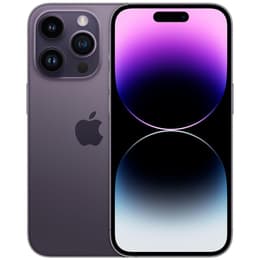
iPhone 14 Pro
iPhone 14 Pro
Starting at

Refurbished price:418.00

Versus €1,339.00 new

See options
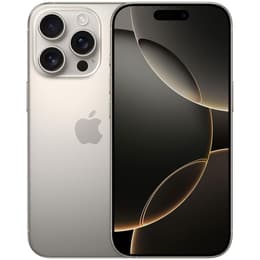
iPhone 16 Pro
iPhone 16 Pro
Starting at

Refurbished price:669.00

Versus €1,239.00 new

See options

Ratings

The iPhone 14 Pro, released in September 2022, and the iPhone 16 Pro, launched in September 2024, represent two distinct generations of Apple's professional-grade smartphone line. While both devices offer a premium experience within the iOS ecosystem, the iPhone 16 Pro introduces advancements in processing power, camera capabilities, and display technology, building upon the foundation laid by its predecessor. Both models operate on Apple's iOS, ensuring a consistent software experience, though the newer model benefits from a longer period of future software support.

Scores

Durability

Evaluating the practical lifespan of these devices involves considering their release timelines, software support, and physical durability.

  • Release Timeline: The iPhone 14 Pro was released in September 2022, while the iPhone 16 Pro followed two years later in September 2024. This two-year difference directly impacts their expected software longevity.
  • Software Longevity: Apple typically provides major iOS updates for five to six years from a device's release. The iPhone 14 Pro, originally running iOS 16, is currently on iOS 26.3.1, and the iPhone 16 Pro, launched with iOS 18, is currently on iOS 26.4. The iPhone 16 Pro will receive software updates for a longer duration, extending its functional lifespan by approximately two years compared to the iPhone 14 Pro.
  • Physical Durability: Both models feature a Ceramic Shield front cover, designed to enhance drop performance. The iPhone 14 Pro has an IP68 rating for water and dust resistance, allowing submersion up to 6 meters for 30 minutes. The iPhone 16 Pro continues with this robust IP68 rating and incorporates a titanium alloy frame, similar to the iPhone 15 Pro, which offers improved scratch and drop resistance compared to previous stainless steel designs.

Performance

The performance of a smartphone is crucial for daily tasks, demanding applications, and overall user experience, with both models offering robust capabilities for their respective generations.

  • Processing Capabilities: The iPhone 14 Pro is powered by a capable processor that handles demanding apps and multitasking smoothly, providing a responsive user experience for its generation. The iPhone 16 Pro features a newer, more advanced processor designed for enhanced performance, particularly with complex tasks and future-oriented features like Apple Intelligence. This newer processor offers faster CPU and GPU speeds, resulting in quicker app loading times, smoother graphics for gaming, and more efficient handling of intensive computational photography.
  • Multitasking and Responsiveness: Both devices are equipped with sufficient memory to manage multiple applications simultaneously without significant slowdowns. The iPhone 16 Pro, with its more recent processor, offers a noticeable improvement in overall system responsiveness, making transitions and interactions feel more immediate.
  • Storage Options: Both the iPhone 14 Pro and iPhone 16 Pro offer a range of storage capacities, typically starting from 128GB and extending up to 1TB, providing ample space for applications, photos, and videos.
  • Battery Behavior: The iPhone 14 Pro features a battery that provides up to 23 hours of video playback. The iPhone 16 Pro is equipped with a larger battery capacity, expected to offer extended usage times, particularly for heavy users. It also supports faster wired charging at 40W and MagSafe wireless charging at 20W, compared to the iPhone 14 Pro's 20W+ wired and 15W MagSafe charging.

Memory (GB)

6 GB

8 GB

Screen quality

The display is a primary interface for smartphone interaction, and both models feature high-quality screens with some notable differences.

  • Display Technology and Clarity: Both the iPhone 14 Pro and iPhone 16 Pro utilize Super Retina XDR OLED displays, known for deep blacks, vibrant colors, and excellent contrast. The iPhone 14 Pro has a 6.1-inch display with a resolution of 2556x1179 pixels at 460 pixels per inch. The iPhone 16 Pro features a slightly larger 6.3-inch display with a resolution of 2622x1206 pixels at 460 pixels per inch, offering a marginally more expansive viewing area with similar pixel density.
  • Brightness Levels: The iPhone 14 Pro offers a typical maximum brightness of 1000 nits, with peak HDR brightness reaching 1600 nits and an outdoor peak of 2000 nits, ensuring good visibility in various lighting conditions. The iPhone 16 Pro maintains similar peak HDR and outdoor brightness levels, but some reports indicate a potential increase in typical SDR brightness to 1200 nits, which would enhance everyday viewing clarity.
  • Refresh Rate and Smoothness: Both devices incorporate ProMotion technology, providing an adaptive refresh rate that can scale from 1Hz up to 120Hz. This allows for smooth scrolling and fluid animations while conserving battery life when a high refresh rate is not needed. Both also feature an Always-On display and the Dynamic Island for interactive notifications.

Audiovisual

Camera systems are a significant focus for Apple's Pro models, and the iPhone 16 Pro brings several enhancements over the iPhone 14 Pro.

  • Main Camera System: The iPhone 14 Pro features a 48-megapixel main camera with a large sensor, which typically outputs 12-megapixel images using pixel binning but can capture full 48-megapixel ProRAW photos. It also includes a 12-megapixel ultra-wide camera and a 12-megapixel telephoto lens with 3x optical zoom. The iPhone 16 Pro retains a 48-megapixel main camera, but with an upgraded sensor. A significant improvement is its 48-megapixel ultra-wide camera, a substantial upgrade from the 14 Pro's 12-megapixel ultra-wide, offering improved low-light performance and detail. The telephoto lens on the iPhone 16 Pro is also upgraded to offer 5x optical zoom, compared to the 3x optical zoom on the iPhone 14 Pro.
  • Photography and Video Features: Both models benefit from Apple's computational photography, including features like Photonic Engine for improved image quality. The iPhone 14 Pro introduced Action Mode for stabilized video and Cinematic mode up to 4K HDR at 30 frames per second. The iPhone 16 Pro enhances video capabilities further, supporting 4K video recording at 120 frames per second. It also introduces a new dedicated Capture button for easier photo and video capture, and a new lens coating to reduce flare.
  • Front Camera and Audio: Both devices feature a 12-megapixel TrueDepth front camera with autofocus, capable of high-quality selfies and video calls. While specific microphone and speaker upgrades are less frequently highlighted, Apple generally maintains high standards for audio input and output across its Pro models, ensuring clear call quality and immersive media consumption.

Miscellaneous

Beyond core performance and camera, several practical elements contribute to the overall user experience and device utility.

  • Connectivity: The iPhone 14 Pro supports 5G cellular connectivity and Wi-Fi 6. The iPhone 16 Pro advances connectivity with support for Wi-Fi 7 (802.11be), offering faster speeds and improved performance in congested network environments. Both models include Bluetooth 5.3 for wireless accessories. The iPhone 16 Pro also features a second-generation Ultra Wideband chip, enhancing spatial awareness and device location capabilities.
  • Ports and Sensors: The iPhone 14 Pro uses a Lightning port for charging and data transfer. The iPhone 16 Pro, following industry trends, features a USB-C port, offering broader compatibility with other devices. Both include Face ID for secure authentication, along with a suite of sensors like a LiDAR scanner, gyroscope, accelerometer, and barometer.
  • Design and Handling: The iPhone 14 Pro has dimensions of 147.5 x 71.5 x 7.85 mm and weighs 206 grams. The iPhone 16 Pro, due to its slightly larger display, is marginally taller, wider, and heavier, measuring 149.6 x 71.5 x 8.25 mm and weighing 199 grams. Both models feature a premium build with a textured matte glass back. The iPhone 16 Pro's design also includes thinner display bezels, maximizing screen real estate.

Screen size (in)

6.1

6.3

Network

5G

5G

SIM card

Physical SIM + eSIM

eSIM

Carrier compatibility

Unlocked

Unlocked

The iPhone 14 Pro and iPhone 16 Pro both offer a robust smartphone experience, but they cater to users with different priorities due to the two-year gap in their release cycles. Users generally praise the iPhone 14 Pro for its strong performance, excellent camera system, and vibrant display, which were leading features at its launch. Common feedback highlighted its reliable battery life for a day's use and the introduction of the Dynamic Island as an intuitive interface element. Some users noted that while the camera was a significant upgrade, the 48MP ProRAW files could be large and slow to process.

The iPhone 16 Pro, being the newer model, builds upon these strengths with several key advancements. User sentiment often points to its significantly upgraded camera system, particularly the 48-megapixel ultra-wide lens and 5x optical zoom, as major draws for photography enthusiasts. The larger display with thinner bezels and the more powerful processor are also frequently cited as improvements that enhance the overall user experience, especially for demanding applications and future-proof performance. The faster charging capabilities and Wi-Fi 7 support are practical benefits for daily use.

Users prioritizing a device with a proven track record, still-excellent performance for everyday tasks, and a slightly more compact form factor may find the iPhone 14 Pro well-suited to their needs. It remains a highly capable smartphone, especially as a quality-assured refurbished option. Conversely, users who prioritize the latest camera technology, a larger and more immersive display, cutting-edge processing power for future applications, and extended software support will likely lean towards the iPhone 16 Pro. This model is designed for those seeking the most advanced features and a longer period before considering an upgrade. Both devices offer a premium experience, and choosing between them depends on the specific features and longevity that align with individual user requirements.


See all articles

Our recent comparisons