

iPhone 12 mini Vs iPhone 15 Plus

iPhone 12 mini
iPhone 12 mini
Starting at

Refurbished price:159.00

Versus €689.00 new

See options
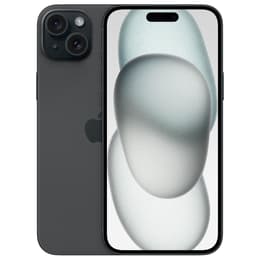
iPhone 15 Plus
iPhone 15 Plus
Starting at

Refurbished price:420.00

Versus €979.00 new

See options

Ratings

The iPhone 12 Mini, released in late 2020, and the iPhone 15 Plus, launched in late 2023, represent distinct approaches within Apple's smartphone lineup. While both operate on Apple's iOS ecosystem, they cater to different user preferences regarding size, performance, and camera capabilities. The iPhone 12 Mini offers a compact form factor, whereas the iPhone 15 Plus provides a significantly larger display and more recent technological advancements.

Scores

Durability

When considering the longevity of these devices, several factors come into play, including their release dates, software support, and repairability.

  • Release Timeline: The iPhone 12 Mini was introduced in November 2020, making it a device from an earlier generation. The iPhone 15 Plus, released in September 2023, benefits from being a much newer model.
  • OS Support Duration: Apple is known for providing extended software support for its devices. The iPhone 12 Mini, having launched with iOS 14, is expected to receive major iOS updates until approximately 2027, potentially supporting iOS 26 or 27. The iPhone 15 Plus, launching with iOS 17, is anticipated to receive updates for a longer period, potentially until 2035, offering a significantly extended software lifespan.
  • Repairability: The iPhone 12 Mini received an iFixit repairability score of 6 out of 10, praised for its modular design for components like the battery and display. However, its glass back is noted as fragile and impractical to replace independently. The iPhone 15 Plus initially received a lower repairability score, but after updates to Apple's repair protocols, its score improved to 7 out of 10, partly due to easier back glass repair.

Year of Release

2020

2023

Compatible with latest Update

Yes

Yes

OS

iOS

iOS

Foldable

No

No

Performance

The performance of a smartphone is crucial for daily tasks, app usage, and overall responsiveness. These two models offer different levels of processing power and battery endurance.

  • Processor Capabilities: The iPhone 12 Mini is equipped with a capable processor that handles everyday applications and multitasking smoothly. The iPhone 15 Plus features a more advanced processor, providing enhanced speed and efficiency for demanding applications, complex computations, and graphics-intensive tasks. This translates to faster app loading times and a more fluid user experience, especially with newer software.
  • Battery Behavior: The iPhone 12 Mini is known for its compact size, which necessitates a smaller battery capacity. Users frequently report that its battery may require recharging before the end of a full day, particularly with heavy use. In contrast, the iPhone 15 Plus, with its larger physical size, accommodates a substantially larger battery, offering excellent battery life that can comfortably last through a full day, even for active users.
  • Storage Options: Both devices offer various internal storage configurations. The iPhone 12 Mini was available with 64GB, 128GB, and 256GB options. The iPhone 15 Plus starts at 128GB and goes up to 512GB, providing more base storage and higher maximum capacity for users with extensive digital content.

Memory (GB)

4 GB

6 GB

Screen quality

The display is a primary interface for smartphone interaction, and these two iPhones offer different viewing experiences due to their size and display characteristics.

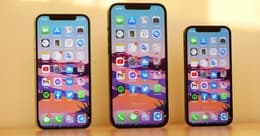
  • Display Technology and Size: The iPhone 12 Mini features a 5.4-inch Super Retina XDR OLED display, offering deep blacks and vibrant colors in a highly compact form factor. The iPhone 15 Plus boasts a significantly larger 6.7-inch Super Retina XDR OLED display, providing an expansive viewing area. Both utilize OLED technology for excellent contrast.
  • Resolution and Clarity: The iPhone 12 Mini has a resolution of 2340 x 1080 pixels, resulting in a pixel density of 476 pixels per inch (ppi). The iPhone 15 Plus offers a higher resolution of 2796 x 1290 pixels, maintaining a sharp image with approximately 460 ppi across its larger screen. Both provide clear and detailed visuals.
  • Brightness and Refresh Rate: Both models feature a standard 60Hz refresh rate, which provides a consistent visual experience for most everyday tasks. The iPhone 15 Plus offers improved peak brightness levels, making content more visible and vibrant, especially in bright outdoor conditions.

Resolution

1080 x 2340

1290 x 2796

Screen type

Super Retina XDR OLED

Super Retina XDR OLED

Audiovisual

Photography and videography capabilities are key considerations for many smartphone users, and both iPhones offer capable camera systems with notable differences.

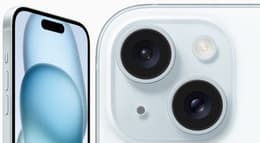
  • Rear Camera System: The iPhone 12 Mini features a dual 12-megapixel camera system, including a wide-angle lens with a f/1.6 aperture and an ultra-wide-angle lens with a f/2.4 aperture and a 120-degree field of view. The iPhone 15 Plus significantly upgrades this with a dual-camera setup featuring a 48-megapixel main wide-angle camera (f/1.6) and a 12-megapixel ultra-wide-angle camera (f/2.4). The higher resolution main sensor on the iPhone 15 Plus allows for more detailed images and offers a 2x optical zoom option.
  • Low-Light and Everyday Photography: While the iPhone 12 Mini delivers good results in various lighting conditions, the larger sensor and improved computational photography of the iPhone 15 Plus generally lead to better low-light performance and more detailed images in everyday scenarios.
  • Video Recording and Audio: Both devices are capable of high-quality video recording. The iPhone 15 Plus benefits from more advanced image stabilization and improved microphone quality for clearer audio capture in videos and calls. Speaker output for media consumption is robust on both, with the iPhone 15 Plus offering a slightly more refined audio experience.

Main camera

12 megapixels

48 megapixels

Front camera

12 megapixels

12 megapixels

Miscellaneous

Beyond core specifications, several practical features and design elements differentiate these two iPhone models.

  • Connectivity and Ports: Both devices support 5G cellular connectivity and Wi-Fi 6 for fast wireless internet. A significant difference lies in their charging and data ports: the iPhone 12 Mini uses Apple's proprietary Lightning port, while the iPhone 15 Plus adopts the more universal USB-C port. However, the USB-C port on the iPhone 15 Plus operates at USB 2.0 speeds, similar to Lightning.
  • Biometric Security: Both iPhones rely on Face ID for secure facial recognition, enabling unlocking, authentication, and secure payments.
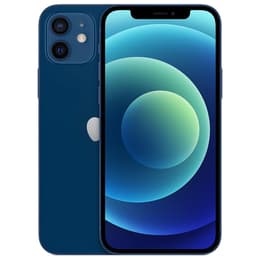
  • Design and Build Materials: The iPhone 12 Mini features a compact design with flat edges and an aluminum frame, protected by a Ceramic Shield front cover and an IP68 rating for dust and water resistance. The iPhone 15 Plus also features flat edges and an aluminum frame, with a Ceramic Shield front and IP68 dust and water resistance. Its larger size and slightly increased weight (201g compared to 135g for the 12 Mini) contribute to a different in-hand feel.
  • Additional Features: The iPhone 15 Plus includes the Dynamic Island, a pill-shaped cutout at the top of the display that dynamically displays alerts and background activities. This feature is not present on the iPhone 12 Mini.

Weight

135 g

201 g

Screen size (in)

5.4

6.7

Network

5G

5G

SIM card

Physical SIM + eSIM

Physical SIM + eSIM

Carrier compatibility

Unlocked

Unlocked

Connector

Lightning

USB-C

The iPhone 12 Mini and iPhone 15 Plus cater to distinct user needs, reflecting their different generations and design philosophies. The iPhone 12 Mini is frequently praised by users for its exceptionally compact size, making it comfortable for one-handed use and easy pocketability. Its main criticism often revolves around its battery life, which many users find insufficient for a full day of heavy use.

Conversely, the iPhone 15 Plus receives commendation for its large, vibrant display, significantly extended battery life, and substantial camera improvements. Common concerns among users include the continued use of a 60Hz refresh rate display, which some feel is outdated for a modern smartphone, and the USB-C port operating at USB 2.0 speeds, limiting data transfer rates compared to Pro models.

Users prioritizing a highly portable device that is easy to handle with one hand will find the iPhone 12 Mini well-suited to their needs, especially if they are light users or have access to frequent charging. For those who value an expansive screen for media consumption, extended battery life, and a more advanced camera system, the iPhone 15 Plus presents a compelling option. Its newer processor also offers greater future-proofing for demanding applications. Both models, like many electronic devices, are available as quality-assured refurbished options, providing a sustainable choice for consumers.

See all articles

Our recent comparisons