

Galaxy S21 5G Vs Xiaomi Redmi Note 13 Pro

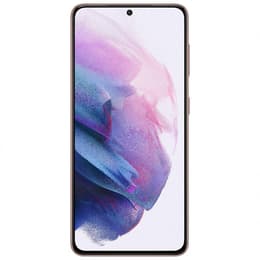
Galaxy S21 5G
Galaxy S21 5G
Starting at

Refurbished price:174.00

Versus €1,026.00 new

See options
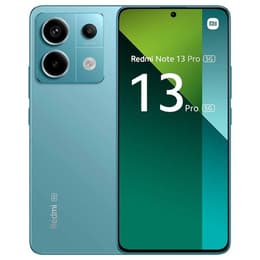
Xiaomi Redmi Note 13 Pro
Starting at

Refurbished price:179.00

Versus €349.00 new

See options

Ratings

The Samsung Galaxy S21 5G, released in early 2021, and the Xiaomi Redmi Note 13 Pro 5G, launched globally in early 2024, are both Android smartphones offering distinct experiences. While the Galaxy S21 5G was a flagship device at its release, the Redmi Note 13 Pro 5G enters the market as a more recent mid-range offering. Their primary differences lie in their release timelines, core processing power, and camera approaches, influencing their suitability for various user needs. Both run on the Android operating system, providing access to a wide ecosystem of applications and services.

Scores

Durability

The practical lifespan of a smartphone is often influenced by its release timeline and the manufacturer's software support policy.

  • Software Longevity: The Galaxy S21 5G, released in January 2021, launched with Android 11 and has received several major Android updates, typically receiving around four major OS updates and five years of security patches from its release date. [14, 17] The Redmi Note 13 Pro 5G, being a January 2024 global release, launched with Android 13 and benefits from a longer future support window, likely receiving major Android updates for at least two to three more years and security updates for a similar duration, extending its practical usability. [5, 8]
  • Physical Resilience: Both devices feature robust glass protection on their displays. The Galaxy S21 5G uses Gorilla Glass Victus on the front and has an IP68 rating for significant dust and water resistance, meaning it can withstand submersion up to 1.5 meters for 30 minutes. [9, 13, 17] The Redmi Note 13 Pro 5G also features Gorilla Glass Victus on its display but comes with an IP54 rating, offering protection against dust ingress and water splashes from any direction, but it is not designed for full submersion. [3, 7, 12, 20, 21]
  • Build Materials: The Galaxy S21 5G combines a glass front with a plastic back and an aluminum frame, providing a balanced feel. [1] The Redmi Note 13 Pro 5G utilizes a glass front and back with a plastic frame, contributing to its overall construction. [21]

Year of Release

2021

2023

Compatible with latest Update

Yes

Yes

OS

Android

Android

Foldable

No

No

Performance

The responsiveness and capability of a smartphone's internal components dictate how smoothly it handles daily tasks and demanding applications.

  • Everyday Responsiveness: The Galaxy S21 5G, powered by a flagship-tier processor from its release year, offers very smooth performance for general navigation, app launching, and multitasking. It handles graphically intensive games and demanding applications with ease. [9, 14, 16] The Redmi Note 13 Pro 5G, featuring a capable upper-mid-range processor, provides a fluid experience for most daily activities and can manage many popular games and applications without significant slowdowns, though it may not match the sustained peak performance of a former flagship. [3, 5, 8, 12]
  • Multitasking and Storage: Both devices typically come with 8GB of RAM, allowing for efficient multitasking and switching between several open applications. [1, 5, 8, 17] The Galaxy S21 5G offers storage options up to 256GB, while the Redmi Note 13 Pro 5G provides larger capacities, up to 512GB, which can be beneficial for users with extensive media libraries or numerous applications. [1, 5, 8, 22] Neither device supports expandable storage via a microSD card in their 5G variants. [1, 7]
  • Battery Behavior: The Galaxy S21 5G is equipped with a 4000 mAh battery, which generally provides a full day of moderate use for many users. [9, 15, 16] The Redmi Note 13 Pro 5G features a larger 5100 mAh battery, often translating to extended usage times, potentially lasting well beyond a single day for average users or comfortably through a heavy day. [5, 7, 8, 12]

Memory (GB)

8 GB

8 GB

Screen quality

The display is a primary interface for any smartphone, and its quality significantly impacts the viewing experience for media, browsing, and daily interactions.

  • Display Technology and Clarity: Both smartphones feature vibrant AMOLED displays, known for their deep blacks and high contrast. The Galaxy S21 5G has a 6.2-inch Dynamic AMOLED 2X panel with a Full HD+ resolution (1080 x 2400 pixels), delivering sharp and clear visuals. [9, 13, 16, 17] The Redmi Note 13 Pro 5G offers a larger 6.67-inch AMOLED screen with a slightly higher 1.5K resolution (1220 x 2712 pixels), providing a more expansive viewing area and enhanced detail. [2, 3, 5, 7, 12]
  • Smoothness and Brightness: Both devices support a 120Hz refresh rate, which makes scrolling, animations, and gaming appear noticeably smoother and more fluid than standard 60Hz displays. [2, 3, 7, 8, 13, 17] In terms of brightness, the Galaxy S21 5G can reach a peak brightness of 1300 nits, ensuring good visibility in bright conditions. [16, 17] The Redmi Note 13 Pro 5G can achieve an even higher peak brightness of 1800 nits, enhancing outdoor readability. [7, 8, 12, 21]
  • Viewing Experience: The Galaxy S21 5G's smaller screen size makes it more manageable for one-handed use. The Redmi Note 13 Pro 5G's larger display offers a more immersive experience for media consumption and productivity tasks, benefiting users who prefer more screen real estate. [2, 3, 5, 7, 12]

Resolution

1080 x 2400

1220 x 2712

Screen type

Dynamic AMOLED 2X

AMOLED

Audiovisual

For many users, the camera system is a crucial factor, determining the quality of photos and videos captured in various situations.

  • Main Camera Capabilities: The Galaxy S21 5G features a versatile triple-camera setup, including a 12 MP main sensor with optical image stabilization (OIS), a 12 MP ultrawide lens, and a 64 MP telephoto lens offering 3x hybrid optical zoom with OIS. [1, 13, 17] This combination provides flexibility for different shooting scenarios. The Redmi Note 13 Pro 5G boasts a high-resolution 200 MP main sensor with OIS, designed to capture a significant amount of detail, alongside an 8 MP ultrawide and a 2 MP macro lens. [2, 3, 4, 7, 8, 12, 18]
  • Photography Performance: The Galaxy S21 5G excels in producing consistently good images across its lenses, with strong dynamic range and color accuracy, performing well in both good lighting and challenging low-light conditions. Its telephoto lens provides effective zoom capabilities. [1, 13, 17] The Redmi Note 13 Pro 5G's 200 MP main sensor can capture highly detailed photos, especially in well-lit environments, and its OIS helps with sharpness. [3, 4, 12] Its ultrawide and macro lenses offer additional perspectives. [2, 3, 7]
  • Video Recording and Audio: The Galaxy S21 5G supports video recording up to 8K resolution at 24 frames per second, and 4K at 30 or 60 frames per second, offering high-quality video capture. [13, 15, 16] The Redmi Note 13 Pro 5G records video up to 4K at 30 frames per second. [3, 8, 18] Both devices provide clear audio recording for videos and calls, and their stereo speakers offer a good experience for media playback. [7, 15, 24]

Main camera

12 megapixels

200 megapixels

Front camera

10 megapixels

16 megapixels

Miscellaneous

Beyond the core features, several practical elements contribute to the overall user experience and daily convenience.

  • Connectivity and Ports: Both smartphones support 5G connectivity for fast mobile data speeds. [1, 7, 17, 24] The Galaxy S21 5G includes Wi-Fi 6 and Bluetooth 5.0. [1, 17, 24] The Redmi Note 13 Pro 5G features Wi-Fi 5 and Bluetooth 5.2. [7, 8, 21] The Galaxy S21 5G relies solely on its USB-C port for charging and audio, lacking a traditional headphone jack. [13, 15] The Redmi Note 13 Pro 5G, however, includes both a USB-C port and a 3.5mm headphone jack, offering more audio flexibility. [7, 21]
  • Biometric Security: For secure unlocking, the Galaxy S21 5G uses an ultrasonic under-display fingerprint sensor, known for its reliability. [17, 24] The Redmi Note 13 Pro 5G employs an optical under-display fingerprint sensor, which also provides convenient and secure access. [3, 7, 12]
  • Physical Characteristics: The Galaxy S21 5G is a more compact device, weighing 169g and featuring dimensions of 151.7 x 71.2 x 7.9 mm, making it easier to handle with one hand. [9, 13, 15] The Redmi Note 13 Pro 5G is slightly larger and heavier at 187g, with dimensions of 161.15 x 74.24 x 7.98 mm, offering a more substantial feel and a larger screen for viewing. [5, 7, 12, 21] Both devices feature a modern design with minimal bezels.

Weight

171 g

187 g

Screen size (in)

6.2

6.67

Network

5G

5G

SIM card

Physical SIM + eSIM

Dual Physical SIM

Carrier compatibility

Unlocked

Unlocked

User feedback often highlights the Galaxy S21 5G's strengths in its premium build, consistent camera performance, and overall smooth user experience, typical of a former flagship device. Some users have noted its battery life, while generally sufficient, might require a mid-day top-up for very heavy use. The Redmi Note 13 Pro 5G is frequently praised for its impressive high-resolution main camera, large and vibrant display, and extended battery life, making it a strong contender in its segment. Some discussions point to its software experience being different from more established flagships, which can be a matter of personal preference.

Users prioritizing a more compact device with a proven flagship-level camera system and robust water resistance may find the Galaxy S21 5G well-suited to their needs. Those who value a larger, higher-resolution display, exceptional battery longevity, and a very high-megapixel main camera, along with a longer software support window, might lean towards the Redmi Note 13 Pro 5G. Both devices offer a compelling Android experience, and considering a quality-assured refurbished option for either can be an eco-friendly alternative to purchasing new, providing excellent value and extending the life cycle of these electronics. The choice ultimately depends on individual priorities regarding size, camera focus, and long-term software support.


See all articles

Our recent comparisons