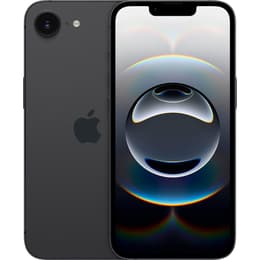
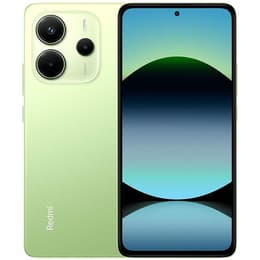


iPhone 16e Vs Xiaomi Redmi Note 14 4G

iPhone 16e
iPhone 16e
Starting at

Refurbished price:387.00

Versus €719.00 new

See options
Xiaomi Redmi Note 14 4G
Starting at

Refurbished price:155.00

Versus €259.00 new

See options

Ratings

The iPhone 16E and the Xiaomi Redmi Note 14 4G represent distinct approaches to smartphone design and functionality, catering to different user priorities. Released in early 2025, the iPhone 16E integrates into Apple's ecosystem with a focus on streamlined performance and a premium user experience. The Xiaomi Redmi Note 14 4G, launched around late 2024 to early 2025, offers a feature-rich Android experience with an emphasis on display technology and battery capacity. While both devices provide modern smartphone capabilities, they diverge significantly in their operating systems and core hardware philosophies. For those considering a quality-assured refurbished option, understanding these differences is key to making an informed choice.

Scores

Durability

The expected practical lifespan and software support differ between these two devices, influencing their long-term usability.

  • Release Timeline and Software Support: The iPhone 16E, released in February 2025, shipped with iOS 18.3 and is designed to receive several years of major iOS updates, with current support extending to iOS 26.4. This typically translates to a longer period of security patches and new feature rollouts compared to many Android devices. The Xiaomi Redmi Note 14 4G, released between late 2024 and early 2025, runs on Android 14 with HyperOS. While Xiaomi provides updates, the duration of major Android version updates and security patches is generally shorter than Apple's commitment for its devices.
  • Durability Features: The iPhone 16E incorporates Ceramic Shield front cover technology and boasts an IP68 rating for dust and water resistance, allowing submersion up to 6 meters for 30 minutes. The Redmi Note 14 4G features Corning Gorilla Glass 5 for screen protection and carries an IP54 rating, indicating resistance to dust and splashes.
  • Repairability and Practical Lifespan: Apple devices generally have a structured repair ecosystem, though component costs can be a factor. The iPhone 16E's robust build and extended software support contribute to a longer practical lifespan for users who prioritize software longevity. The Redmi Note 14 4G, while offering decent build quality for its segment, may see its practical lifespan influenced more by its shorter software update cycle and the availability of parts in various markets.

Year of Release

2025

2025

OS

iOS

Android

Foldable

No

No

Performance

Performance characteristics vary significantly between the iPhone 16E and the Xiaomi Redmi Note 14 4G, impacting how they handle daily tasks and demanding applications.

  • Processing Power and Responsiveness: The iPhone 16E is equipped with an Apple A18 chip, which provides a highly responsive and fluid user experience across iOS. This processor is designed for efficient handling of demanding applications, complex multitasking, and advanced computational features, including Apple Intelligence. The Redmi Note 14 4G utilizes the MediaTek Helio G99-Ultra chipset, which offers capable performance for everyday tasks, social media, and casual gaming. While it handles general usage smoothly, some users have reported occasional stutters or lag, particularly with more intensive applications or after prolonged use.
  • Multitasking and Storage: The iPhone 16E comes with 8GB of RAM, facilitating smooth transitions between multiple open applications and efficient background process management. It offers storage options of 128GB, 256GB, and 512GB, which are not expandable. The Redmi Note 14 4G is available with 6GB or 8GB of RAM and 128GB or 256GB of internal storage. A notable advantage for the Redmi is its support for expandable storage via a microSD card, offering flexibility for users who require more space for media and files.
  • Battery Behavior: The iPhone 16E features a 4005 mAh battery, which users have noted provides strong battery life, often lasting through a full day of heavy use. Apple states it has the best battery life ever on a 6.1-inch iPhone. The Redmi Note 14 4G houses a larger 5500mAh battery, which, combined with its efficient processor, also delivers excellent battery longevity, often extending beyond a single day for many users. It also supports 33W fast charging for quicker power replenishment.

Memory (GB)

8 GB

6 GB

Screen quality

Both smartphones offer vibrant displays, but they differ in refresh rate and overall viewing experience.

  • Display Technology and Clarity: The iPhone 16E features a 6.1-inch Super Retina XDR OLED display with a resolution of 2532x1170 pixels, resulting in a sharp 460 pixels per inch (ppi). This OLED panel delivers deep blacks and vibrant colors. The Redmi Note 14 4G boasts a larger 6.67-inch AMOLED display with a 1080x2400 pixel resolution, providing approximately 395 ppi. Both displays offer excellent clarity for viewing content.
  • Brightness and Refresh Rate: The iPhone 16E's display offers a typical maximum brightness of 800 nits and a peak HDR brightness of 1200 nits, ensuring good visibility in various lighting conditions. However, it maintains a standard 60Hz refresh rate. In contrast, the Redmi Note 14 4G features a 120Hz AMOLED display, providing a smoother scrolling and animation experience. Its peak brightness can reach up to 1800 nits (some sources indicate 2100 nits), which aids in outdoor visibility.
  • Viewing Experience: The iPhone 16E's display is protected by Ceramic Shield and features a notch for its front camera and Face ID sensors. The Redmi Note 14 4G's display is protected by Corning Gorilla Glass 5 and typically features a punch-hole cutout for the front camera, offering a more expansive screen-to-body ratio. The higher refresh rate on the Redmi Note 14 4G contributes to a more fluid visual experience, particularly noticeable during gaming or fast-paced content consumption.

Resolution

2532x1170

1080x2400

Audiovisual

The camera systems of the iPhone 16E and Xiaomi Redmi Note 14 4G are designed with different strengths and capabilities.

  • Rear Camera System: The iPhone 16E features a 48MP Fusion main camera with optical image stabilization (OIS), capable of capturing high-resolution photos and offering an optical-quality 2x telephoto capability through its main sensor. It also includes a 12MP front camera. The Redmi Note 14 4G is equipped with a 108MP main sensor with PDAF, a 2MP macro lens, and a 2MP depth sensor. It notably lacks an ultrawide camera. Its front camera is a 20MP sensor.
  • Photography Performance: The iPhone 16E's 48MP main camera delivers clean, in-focus, and color-accurate shots in good lighting, with strong low-light performance and advanced computational photography features. Users generally find its camera capable for everyday photography. The Redmi Note 14 4G's 108MP main sensor performs well in daylight, capturing sharp and detailed images. However, its low-light performance is less consistent, with noticeable noise and potential motion blur due to the absence of OIS on the main sensor. The 2MP macro and depth sensors offer limited practical utility.
  • Video Recording and Audio: The iPhone 16E supports 4K Dolby Vision video recording at various frame rates and includes features like Cinematic mode. Its microphone quality for calls and recording is generally clear. The Redmi Note 14 4G's video recording capabilities are generally good for its segment, though it lacks 4K video recording. It features stereo speakers with Dolby Atmos support, providing a more immersive audio experience for media consumption. Its microphone performance for calls is also considered good.

Miscellaneous

Beyond core performance, several practical elements differentiate the user experience of these two smartphones.

  • Connectivity and Ports: The iPhone 16E supports 5G connectivity, Wi-Fi 6, and Bluetooth 5.3. It features a USB-C port, though with USB 2.0 data transfer speeds. The Redmi Note 14 4G supports 4G connectivity, Wi-Fi 5 (dual-band), and Bluetooth 5.3. It also includes a USB-C port, a 3.5mm headphone jack, and an infrared (IR) blaster, which allows it to function as a universal remote.
  • Biometrics and User Interface: The iPhone 16E relies on Face ID for secure authentication and features an Action Button for customizable shortcuts. Its operating system, iOS, is known for its intuitive interface and tight ecosystem integration. The Redmi Note 14 4G incorporates an in-display fingerprint sensor for biometric security. It runs on Android 14 with Xiaomi's HyperOS, offering a customizable interface with various features and personalization options.
  • Physical Design and Handling: The iPhone 16E has dimensions of 146.7 x 71.5 x 7.8 mm and weighs 167 grams, offering a compact and manageable form factor. It features an aluminum frame and a glass back. The Redmi Note 14 4G is slightly larger and heavier, with dimensions of 163.25 x 76.55 x 8.16 mm and a weight of 196.5 grams. It features a boxy design with flat sides and a matte finish on the back, which helps resist fingerprints.

Weight

167 g

196 g

Screen size (in)

6.1

6.67

Network

5G

4G

SIM card

eSIM

Physical SIM + eSIM

Carrier compatibility

Unlocked

Unlocked

User feedback for the iPhone 16E generally highlights its strong battery life, reliable performance for daily tasks, and capable camera for non-professional use. Many appreciate its compact size and the overall smooth iOS experience. Common criticisms include the 60Hz display, the absence of MagSafe, and the lack of an ultrawide camera. Some users also note the USB 2.0 speeds over its USB-C port as a limitation.

The Xiaomi Redmi Note 14 4G receives praise for its vibrant 120Hz AMOLED display, impressive battery longevity, and the inclusion of a 3.5mm headphone jack and IR blaster. However, users frequently point out the absence of an ultrawide camera, inconsistent low-light camera performance, and occasional software stutters or delayed updates as areas for improvement. Some reports also mention performance issues or freezing.

Users prioritizing a compact device with long-term software support, a highly optimized ecosystem, and consistent camera performance for everyday moments may find the iPhone 16E well-suited to their needs. Its robust build and efficient processor make it a reliable choice for those who value a streamlined experience. Conversely, users who prioritize a larger, high-refresh-rate display, expandable storage, and a more versatile Android operating system with features like a headphone jack and IR blaster might lean towards the Xiaomi Redmi Note 14 4G. It offers a compelling set of features for media consumption and general use, particularly for those who manage their expectations regarding camera versatility and long-term software updates. Both devices are available as quality-assured refurbished options, providing a sustainable choice for consumers.
See all articles

Our recent comparisons





