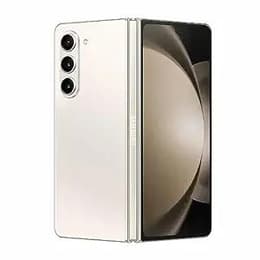



Galaxy Z Fold5 Vs Xiaomi Redmi Note 12 Pro

Galaxy Z Fold5
Galaxy Z Fold5
Starting at

Refurbished price:591.00

Versus €1,899.99 new

See options
Xiaomi Redmi Note 12 Pro
Starting at

Refurbished price:112.00

Versus €399.00 new

See options

Ratings

The Samsung Galaxy Z Fold5 (2023) and the Xiaomi Redmi Note 12 Pro (2023) represent distinct approaches to smartphone design and functionality. While both are Android-based devices released in the same year, the Galaxy Z Fold5 stands out with its innovative foldable form factor, offering a tablet-like experience in a pocketable design, whereas the Redmi Note 12 Pro provides a more traditional smartphone experience. These differences extend to their core specifications, impacting user experience in various ways.

Scores

Durability

The longevity of a smartphone is influenced by its build quality, software support, and the availability of repairs. These two devices offer different expectations in these areas.

  • Release Timeline and Software Support: The Galaxy Z Fold5 was released in August 2023, while the Redmi Note 12 Pro launched earlier in January 2023. The Galaxy Z Fold5 shipped with Android 13 and is expected to receive four major Android OS upgrades, with its last major update likely being Android 17 in late 2026 or early 2027, along with quarterly security patches for an additional year. The Redmi Note 12 Pro, initially running Android 12 with MIUI 13, was committed to two major Android versions and three years of security patches, with its final major update, HyperOS 2 (based on Android 15), expected by the end of 2025, and security patches until 2026. This indicates a longer software support period for the Galaxy Z Fold5.

  • Physical Durability: The Galaxy Z Fold5 features an IPX8 water resistance rating, meaning it can withstand submersion in water, though it lacks official dust resistance. Its cover screen is protected by Gorilla Glass Victus 2, and it incorporates an improved hinge design that closes without a gap. User reports suggest the inner flexible screen's pre-applied protector can scratch easily. The Redmi Note 12 Pro offers IP53 dust and splash resistance and uses Gorilla Glass 5 for its display protection.
  • Repairability: The Galaxy Z Fold5 has seen some improvements in repairability, such as the use of pull-pouch batteries, which can make battery replacement more straightforward. However, the complex foldable design still presents challenges for repairs. Information regarding the specific repairability score or ease of repair for the Redmi Note 12 Pro is less detailed, but traditional slab phones generally offer a more conventional repair process compared to foldable devices.

Year of Release

2023

2022

Compatible with latest Update

Yes

No

OS

Android

Android

Foldable

Yes

No

Performance

Performance is a key aspect for any smartphone, dictating how smoothly applications run and how efficiently tasks are handled. These devices offer different levels of processing power and memory configurations.

  • Processing Power: The Galaxy Z Fold5 is equipped with a current-generation processor, designed to handle demanding applications and multitasking with high efficiency. This results in very fast and responsive operation, comparable to other high-end devices. The Redmi Note 12 Pro utilizes a mid-range processor, which provides smooth performance for everyday tasks and general usage. However, some users have reported that the 4G variant of the Redmi Note 12 Pro can experience overheating and lag with intensive use, particularly during gaming or camera operation.
  • Memory and Storage: The Galaxy Z Fold5 comes with a substantial 12 GB of RAM, supporting seamless multitasking and efficient handling of numerous open applications. It offers storage options of 256 GB, 512 GB, and 1 TB, providing ample space for files and applications. The Redmi Note 12 Pro is available with 6 GB, 8 GB, or 12 GB of RAM, and storage options of 128 GB or 256 GB. While sufficient for most users, the lower RAM configurations may offer a less fluid experience when juggling many demanding apps compared to the Fold5.
  • Battery Behavior: The Galaxy Z Fold5 features a 4400 mAh battery. Users have reported good battery life, often lasting one to two days for heavy users. The Redmi Note 12 Pro has a larger 5000 mAh battery. It also supports fast charging, which can quickly replenish the battery.

Memory (GB)

12 GB

8 GB

Screen quality

The display is a primary interface for smartphone interaction, and both devices offer distinct visual experiences due to their different form factors and display technologies.

  • Display Technology and Size: The Galaxy Z Fold5 features a unique dual-display setup. Its main internal display is a 7.6-inch Foldable Dynamic AMOLED 2X panel, offering a large, immersive viewing area when unfolded. The external cover display is a 6.2-inch Dynamic AMOLED 2X screen, providing a more traditional smartphone experience when folded. The Redmi Note 12 Pro has a single 6.67-inch AMOLED display, offering vibrant colors and deep blacks.
  • Resolution and Clarity: The Galaxy Z Fold5's main display has a resolution of 2176 x 1812 pixels, resulting in a pixel density of approximately 373 PPI, providing sharp and detailed visuals. The cover display has a resolution of 904 x 2316 pixels, with a pixel density of around 386 PPI. The Redmi Note 12 Pro features a 1080 x 2400 pixel (FHD+) resolution, with a pixel density of approximately 395 PPI, delivering clear images and text.
  • Brightness and Refresh Rate: Both devices offer a smooth visual experience with a 120 Hz refresh rate on their main displays. The Galaxy Z Fold5's displays are known for their high brightness, making them suitable for outdoor use. The Redmi Note 12 Pro's AMOLED display also offers good brightness and vibrant colors.

Resolution

1812 x 2176

1080 x 2400

Screen type

Foldable Dynamic AMOLED 2X

AMOLED

Audiovisual

Camera capabilities are a significant factor for many users, and both smartphones offer multi-lens systems for various photographic needs.

  • Rear Camera Systems: The Galaxy Z Fold5 features a versatile triple-camera setup on the rear, including a 50 MP wide-angle main sensor, a 12 MP ultrawide camera, and a 10 MP telephoto lens with 3x optical zoom. This combination allows for a range of photographic styles, from expansive landscapes to detailed zoomed-in shots. The Redmi Note 12 Pro also has a triple-camera system, comprising a 50 MP wide-angle primary camera, an 8 MP ultrawide camera, and a 2 MP macro camera.
  • Photography Performance: The Galaxy Z Fold5's camera system is generally praised for its overall quality, though some users note it may not match the absolute best traditional flagship phones. It offers strong performance in various lighting conditions. The Redmi Note 12 Pro's 50 MP main camera is capable of capturing detailed photos, but some users have reported inconsistencies with its AI processing and HDR, occasionally leading to less sharp or color-accurate results, particularly when zoomed.
  • Video Recording and Front Cameras: The Galaxy Z Fold5 supports 8K video recording at 30 frames per second. It includes a 10 MP camera on the cover display and a 4 MP under-display camera on the main foldable screen for selfies and video calls. The Redmi Note 12 Pro offers a 16 MP front-facing camera for selfies. Information on its specific video recording capabilities beyond standard resolutions is less prominent, though some variants support 4K video recording.

Main camera

50 megapixels

50 megapixels

Front camera

4 megapixels

16 megapixels

Miscellaneous

Beyond core performance and display, several practical features contribute to the overall user experience and daily usability of these devices.

  • Connectivity and Ports: Both the Galaxy Z Fold5 and the Redmi Note 12 Pro support 5G connectivity, ensuring access to faster mobile networks. The Fold5 supports Wi-Fi 6E/7 and Bluetooth 5.3, offering advanced wireless capabilities. It features a USB-C 3.2 port for faster data transfer. The Redmi Note 12 Pro supports Wi-Fi 6 and Bluetooth 5.2, and includes a USB-C 2.0 port. The Redmi Note 12 Pro also includes an IR blaster, a feature not found on the Fold5.
  • Biometric Security and Sensors: Both devices incorporate fingerprint sensors for secure unlocking. The Galaxy Z Fold5 features a side-mounted fingerprint sensor, along with face recognition. The Redmi Note 12 Pro also has a side-mounted fingerprint sensor. Both include a range of sensors such as accelerometers, gyroscopes, and ambient light sensors.
  • Physical Design and Handling: The Galaxy Z Fold5, due to its foldable nature, has distinct dimensions: when folded, it measures 154.9 x 67.1 x 13.4 mm and weighs 253 g. When unfolded, it is 154.9 x 130.1 x 6.1 mm. Users note its bulkiness and weight, though the cover screen is often used for one-handed operation. The Redmi Note 12 Pro is a more conventional slab phone, measuring 162.9 x 76 x 7.9 mm and weighing 187 g, making it lighter and thinner than the Fold5 when folded.

Weight

253 g

187 g

Screen size (in)

7.6

6.67

Network

5G

5G

SIM card

Dual Physical SIM + eSIM

Dual Physical SIM

Carrier compatibility

Unlocked

Unlocked

The Samsung Galaxy Z Fold5 and the Xiaomi Redmi Note 12 Pro cater to different user needs and preferences, reflecting their distinct design philosophies and feature sets.

The Galaxy Z Fold5 is frequently praised by users for its innovative foldable design, which offers a large, tablet-like screen for enhanced productivity and media consumption. Its powerful performance ensures smooth operation even with demanding applications, and many users appreciate its solid build quality and good battery life. However, common criticisms include its considerable weight and bulk when folded, the reflective nature of the inner screen, and some users feel its camera, while capable, doesn't quite match the absolute best traditional flagships. The narrow cover screen is also a point of contention for some.

Conversely, the Redmi Note 12 Pro is often lauded for its bright and fast display, capable main camera, and efficient fast charging. For everyday tasks, its performance is generally considered snappy and reliable. User concerns, particularly with the 4G variant, sometimes revolve around potential overheating during intensive use, inconsistencies in camera processing, and the presence of pre-installed software (bloatware) and ads. Some users also feel the build materials can feel less premium.

Users prioritizing a versatile, large-screen experience for multitasking, media, and productivity, and who are comfortable with a heavier, thicker device, may find the Galaxy Z Fold5 well-suited to their needs. Its longer software support also appeals to those seeking extended device longevity. On the other hand, users looking for a more traditional smartphone experience with a large, vibrant display, reliable everyday performance, and fast charging, without the added bulk of a foldable, might lean towards the Redmi Note 12 Pro. It serves as a practical choice for general use.

Both devices are available as quality-assured refurbished options, providing an eco-friendly alternative for consumers.


See all articles

Our recent comparisons