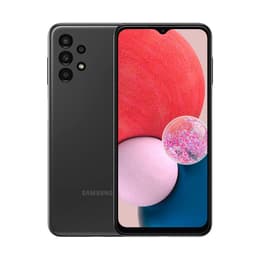
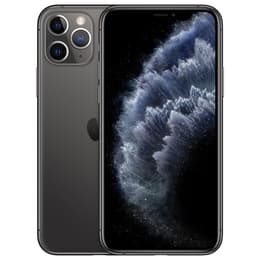


Galaxy A13 Vs iPhone 11 Pro

Galaxy A13
Galaxy A13
Starting at

Refurbished price:97.00

Versus €249.00 new

See options
iPhone 11 Pro
iPhone 11 Pro
Starting at

Refurbished price:176.00

Versus €809.00 new

See options

Ratings

The Samsung Galaxy A13, released in March 2022, and the iPhone 11 Pro, launched in September 2019, represent distinct approaches to smartphone design and functionality. While the Galaxy A13 offers a larger display and a focus on battery capacity within the Android ecosystem, the iPhone 11 Pro provides a more compact form factor with a premium build and Apple's iOS experience. These differences cater to varying user preferences, from those prioritizing screen size and extensive battery life to those seeking a refined user experience and advanced camera capabilities.

Scores

Durability

The practical lifespan of a smartphone is significantly influenced by its release timeline, software support, and repairability.

  • Release Timeline and Software Support: The iPhone 11 Pro, released in 2019, is expected to receive major iOS updates until late 2026, with security updates potentially extending beyond that. The Galaxy A13, launched in 2022, has received two major Android OS updates and continues to get quarterly security patches, with major OS support having concluded around early 2025. [18, 21, 26, 30, 31, 32, 33]
  • Repairability: The Galaxy A13 generally offers a higher degree of repairability, with a reported score of 8 out of 10 on Samsung's index, and a 7 out of 10 from iFixit for its 5G variant, indicating easier access to components for servicing. The iPhone 11 Pro received an iFixit repairability score of 6 out of 10, noting that critical display and battery repairs are prioritized in its design. [3, 12, 16, 34]
  • Expected Practical Lifespan: Users of the iPhone 11 Pro can anticipate continued software and security support for a longer duration compared to the Galaxy A13, which has already reached the end of its major OS update cycle. This extended support can contribute to a longer practical usability period for the iPhone 11 Pro. [21, 30, 32, 33]

Year of Release

2022

2019

Compatible with latest Update

No

Yes

OS

Android

iOS

Foldable

No

No

Performance

Performance in daily use is shaped by the device's internal components, affecting everything from app responsiveness to multitasking efficiency and battery endurance.

  • Processor Capabilities: The iPhone 11 Pro features a powerful processor that handles demanding applications and multitasking with notable smoothness, maintaining strong performance even several years after its release. The Galaxy A13, while capable for everyday tasks like calling, messaging, and web browsing, may exhibit slower performance and occasional lag, particularly with heavier use or after extended periods. [10, 13, 15, 22, 25]
  • Battery Behavior: The Galaxy A13 is equipped with a larger 5000mAh battery, often providing extended usage times that can last through a full day of heavy use or longer with moderate usage. The iPhone 11 Pro, with its 3046mAh battery, was noted for its strong battery life at launch, often lasting a full day for many users, though its capacity is smaller than the A13. [1, 4, 6, 14, 15]
  • Storage and Multitasking: The iPhone 11 Pro offers various storage options, including 64GB, 256GB, and 512GB, paired with 4GB of RAM, which supports efficient multitasking. The Galaxy A13 comes with 32GB, 64GB, or 128GB storage options and 3GB, 4GB, or 6GB of RAM, with some users finding the lower RAM configurations less suitable for extensive multitasking. [1, 2, 4, 6, 9, 11, 13]

Memory (GB)

4 GB

4 GB

Screen quality

The display is a primary interface for smartphone interaction, and differences in technology, resolution, and brightness significantly impact the viewing experience.

  • Display Technology and Clarity: The iPhone 11 Pro features a 5.8-inch Super Retina XDR OLED display, known for its deep blacks, vibrant colors, and high contrast. The Galaxy A13 utilizes a 6.6-inch PLS TFT LCD, which provides a larger viewing area but typically offers less contrast and color vibrancy compared to OLED technology. [2, 6, 9, 11, 15, 37]
  • Resolution and Brightness: The iPhone 11 Pro offers a resolution of 1125x2436 pixels with a pixel density of approximately 458 PPI, resulting in a very sharp image. It also boasts high brightness levels, reaching up to 1200 nits for HDR content, making it suitable for outdoor visibility. The Galaxy A13 has a resolution of 1080x2408 pixels with about 400 PPI, providing clear visuals, though its typical brightness is lower than the iPhone 11 Pro. [1, 6, 7, 11, 15, 37]
  • Refresh Rate and Viewing Experience: Both devices feature a standard 60Hz refresh rate, which provides a smooth experience for general navigation. The iPhone 11 Pro's smaller, high-quality OLED screen is often preferred for media consumption due to its superior color reproduction and contrast, while the Galaxy A13's larger LCD offers more screen real estate for browsing and content viewing. [9, 11, 37]

Resolution

1080 x 2408

1125 x 2436

Screen type

PLS LCD

Super Retina XDR OLED

Audiovisual

Camera systems are a key differentiator, influencing the quality of photos and videos captured in various conditions, as well as the overall multimedia experience.

  • Rear Camera System: The iPhone 11 Pro features a versatile triple 12MP camera system, including wide, ultrawide, and telephoto lenses, which are praised for their consistent image quality, excellent video recording capabilities (up to 4K), and effective Night mode. The Galaxy A13 comes with a quad-camera setup, highlighted by a 50MP main sensor, alongside ultrawide, macro, and depth sensors, offering flexibility for different shot types. [1, 4, 6, 8, 14, 15, 20, 37]
  • Photography Performance: The iPhone 11 Pro excels in various lighting conditions, with users frequently commending its Night mode for producing natural-looking low-light photos and its overall image processing for realistic results. The Galaxy A13 performs well in good lighting, but user feedback suggests that its low-light performance and zoom capabilities may be less refined, with some users noting blurring with slight movement. [10, 14, 15, 22]
  • Video and Audio: Both the front and rear cameras of the iPhone 11 Pro are capable of recording high-quality 4K video, and its microphone quality is generally well-regarded for calls and recordings. The iPhone 11 Pro also offers loud and clear stereo speaker output. The Galaxy A13 records video at 1080p@30fps and provides a functional audio experience, though it may not match the premium output of the iPhone 11 Pro. [6, 15, 20]

Main camera

50 megapixels

12 megapixels

Front camera

8 megapixels

12 megapixels

Miscellaneous

Beyond core features, practical elements like connectivity, physical design, and additional sensors contribute to the daily usability and overall experience of a smartphone.

  • Connectivity and Ports: The iPhone 11 Pro supports Wi-Fi 6 (802.11ax) and Bluetooth 5.0, utilizing a Lightning port for charging and data transfer. The Galaxy A13 supports Wi-Fi and Bluetooth, featuring a USB Type-C 2.0 port. The Galaxy A13 also offers 5G connectivity in its 5G variant, which the iPhone 11 Pro lacks. [1, 2, 6, 8, 9, 11, 20]
  • Biometric Security: The iPhone 11 Pro relies on Face ID for secure facial recognition. The Galaxy A13 incorporates a side-mounted fingerprint sensor for biometric authentication. [1, 6, 16]
  • Build and Handling: The iPhone 11 Pro features a premium construction with a glass front and back, and a stainless steel frame, contributing to its solid feel and IP68 water and dust resistance. Its compact dimensions (144 x 71.4 x 8.1 mm) and weight (188g) make it comfortable for one-handed use for many. The Galaxy A13 has a glass front (Gorilla Glass 5) and a plastic back and frame, measuring 165.1 x 76.4 x 8.8 mm and weighing 195g, offering a larger form factor. [1, 2, 4, 6, 8, 9, 11, 20]

Weight

195 g

188 g

Screen size (in)

6.6

5.8

Network

4G

4G

SIM card

Dual Physical SIM

Physical SIM + eSIM

Carrier compatibility

Unlocked

Unlocked

The Samsung Galaxy A13 and iPhone 11 Pro cater to different user priorities, reflecting their respective market segments and release philosophies. Users frequently praise the iPhone 11 Pro for its robust performance, high-quality camera system, and premium build, often highlighting its comfortable size and excellent display. Some users, however, note that the 64GB base storage can be restrictive and that the device, while still capable, shows signs of aging on the latest iOS versions. [13, 14, 15, 19, 24]

Conversely, the Galaxy A13 is often appreciated for its large battery capacity and expansive screen, making it suitable for users who prioritize extended usage and a larger viewing area for basic tasks. Criticisms often revolve around its performance, with some users reporting noticeable slowdowns and lag after initial use, as well as less impressive camera performance in challenging conditions. [10, 17, 22, 25]

Users prioritizing a compact, premium device with a highly capable camera and a long-standing software support commitment may find the iPhone 11 Pro well-suited to their needs. Those who value a larger screen, extensive battery life, and a more budget-conscious Android experience for everyday communication and media consumption might lean towards the Galaxy A13. Both devices are available as quality-assured refurbished options, providing an eco-friendly alternative for consumers.


See all articles

Our recent comparisons





