

iPhone 16e Vs Xiaomi Redmi Note 13 Pro+

iPhone 16e
iPhone 16e
Starting at

Refurbished price:387.00

Versus €719.00 new

See options
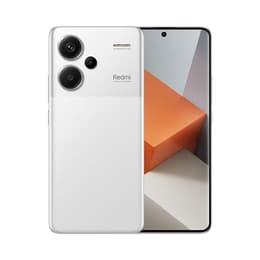
Xiaomi Redmi Note 13 Pro+
Starting at

Refurbished price:201.00

Versus €449.00 new

See options

Ratings

The iPhone 16E, a hypothetical model from 2026, and the Xiaomi Redmi Note 13 Pro+, released in late 2023 and early 2024, represent distinct approaches to smartphone design and functionality. While both are modern smartphones, they cater to different user priorities through their hardware and software ecosystems. The iPhone 16E is anticipated to offer a streamlined iOS experience with robust ecosystem integration, whereas the Redmi Note 13 Pro+ provides a feature-rich Android experience with a focus on high-resolution imaging and rapid charging.

Scores

Durability

When considering the long-term usability of these devices, several factors contribute to their expected practical lifespan.

  • Software Support: The iPhone 16E, running on Apple's iOS, is expected to receive software updates for approximately five to six years from its release, ensuring access to the latest features and security patches for an extended period. The Xiaomi Redmi Note 13 Pro+ launched with Android 13 and has received updates to HyperOS, with Xiaomi typically providing three years of major OS updates and four years of security updates.
  • Physical Durability: The iPhone 16E is likely to feature Apple's Ceramic Shield front cover and an IP68 rating for dust and water resistance, offering a high level of protection against everyday elements. The Redmi Note 13 Pro+ also boasts an IP68 rating for dust and water resistance, a notable feature for its category, and its display is protected by Corning Gorilla Glass Victus, which enhances scratch resistance.
  • Repairability: Both devices are designed with modern smartphone construction, which can present challenges for user-initiated repairs. Professional repair services are generally recommended for both models to ensure proper functionality and maintain water resistance. Opting for a quality-assured refurbished option for either device can extend its life cycle sustainably.

Year of Release

2025

2023

OS

iOS

Android

Foldable

No

No

Performance

Performance is a key differentiator, influencing how smoothly applications run and how efficiently daily tasks are handled.

  • Processing Power: The iPhone 16E is expected to incorporate a current-generation A-series processor, designed for efficient performance across the iOS ecosystem. This typically translates to fluid navigation, rapid app launches, and smooth handling of demanding applications and graphics-intensive games. The Xiaomi Redmi Note 13 Pro+ is powered by a MediaTek Dimensity 7200-Ultra processor, which is built on a 4nm process. This processor delivers high-speed output, supporting smooth mobile gaming and efficient multitasking.
  • Multitasking and Responsiveness: Both devices offer configurations with ample RAM to support efficient multitasking. The iPhone 16E's optimized software and hardware integration typically ensure consistent responsiveness even with multiple applications open. The Redmi Note 13 Pro+ is available with up to 12GB of RAM and UFS 3.1 storage, contributing to faster app loading and a responsive user experience.
  • Battery Behavior: The iPhone 16E will likely feature a battery optimized for a full day of mixed usage, with Apple's software managing power consumption effectively. The Redmi Note 13 Pro+ includes a 5000mAh battery, which users report can last for about 1.5 days or 36 hours on a single charge with typical usage. It also supports 120W HyperCharge, allowing for very rapid charging times.

Memory (GB)

8 GB

12 GB

Screen quality

The visual experience is largely defined by the display, with both devices offering distinct characteristics.

  • Display Technology and Clarity: The iPhone 16E is anticipated to feature an OLED display, known for its deep blacks and vibrant color reproduction, offering sharp visuals for text and images. The Xiaomi Redmi Note 13 Pro+ features a 6.67-inch AMOLED display with a 2712 x 1220 (1.5K) resolution, resulting in a pixel density of 446 PPI for clear and crisp visuals.
  • Brightness and Refresh Rate: The iPhone 16E's display is expected to offer good brightness levels for outdoor visibility, though its refresh rate might be 60Hz or 90Hz, differentiating it from Pro models. The Redmi Note 13 Pro+ boasts a peak brightness of 1800 nits, ensuring excellent visibility even in bright sunlight, and features a 120Hz adaptive refresh rate for smooth scrolling and fluid animations.
  • Viewing Experience: The Redmi Note 13 Pro+ offers a curved display with slim bezels, providing an immersive viewing experience for media consumption. It also supports 12-bit color depth and 100% DCI-P3 color gamut, contributing to rich and accurate colors.

Resolution

2532x1170

1220 x 2712

Audiovisual

For many users, the camera system is a primary consideration, and both smartphones offer capable photographic tools.

  • Main Camera Capabilities: The iPhone 16E is expected to feature an advanced dual-camera system, likely with improvements to its main sensor for enhanced detail and low-light performance, building on Apple's computational photography strengths. The Xiaomi Redmi Note 13 Pro+ is equipped with a 200MP main camera with Optical Image Stabilization (OIS), a large 1/1.4-inch sensor, and an f/1.65 aperture, capable of capturing highly detailed images and offering 2x and 4x lossless zoom.
  • Versatility and Performance: The iPhone 16E will likely include an ultrawide lens and offer features like Cinematic mode for video recording. The Redmi Note 13 Pro+ also includes an 8MP ultrawide camera and a 2MP macro camera. While the main camera performs well in various conditions, including low light, user reviews suggest the ultrawide and macro lenses are less impressive.
  • Video and Selfies: Both devices are expected to deliver high-quality video recording. The iPhone 16E will likely offer advanced video stabilization and editing features. The Redmi Note 13 Pro+ can record video at 4K 30fps and 1080p 60fps with good stabilization, and features a 16MP front-facing camera for selfies.

Front camera

TrueDepth 12MP

16 megapixels

Miscellaneous

Beyond core features, several practical elements contribute to the overall user experience.

  • Connectivity and Ports: The iPhone 16E is expected to feature USB-C connectivity, along with support for the latest Wi-Fi and Bluetooth standards, and 5G cellular capabilities. The Xiaomi Redmi Note 13 Pro+ supports 5G connectivity, modern Wi-Fi standards, and Bluetooth. It features a USB-C port for charging and data transfer but lacks a traditional headphone jack.
  • Biometric Security: The iPhone 16E will likely continue to rely on Face ID for secure facial recognition. The Redmi Note 13 Pro+ incorporates an in-display fingerprint sensor for convenient and secure unlocking.
  • Design and Handling: The iPhone 16E is anticipated to maintain a premium build with an aluminum frame and glass back, offering a balanced feel in hand. The Redmi Note 13 Pro+ features a design with a curved display and a vegan leather pattern on some variants, contributing to a distinct aesthetic and comfortable grip. It weighs approximately 204.5 grams.

Weight

167 g

204 g

Screen size (in)

6.1

6.67

Network

5G

5G

SIM card

eSIM

Dual Physical SIM

Carrier compatibility

Unlocked

Unlocked

The iPhone 16E and the Xiaomi Redmi Note 13 Pro+ offer compelling packages, each with its own strengths, appealing to different user preferences. Users often praise the Redmi Note 13 Pro+ for its vibrant AMOLED display, rapid 120W charging, and the high-resolution 200MP main camera, which captures detailed photos. Some common criticisms include the less impressive performance of its ultrawide and macro cameras, and occasional reports of software inconsistencies or average battery life for heavy users, despite the large capacity.

For those who prioritize a seamless and intuitive user experience within a well-established ecosystem, coupled with consistent software updates and strong privacy features, the iPhone 16E may be the more suitable choice. Its anticipated robust performance and reliable camera system are likely to appeal to users seeking a premium and long-lasting device. Conversely, users who value a feature-rich Android experience, a high-resolution main camera, an exceptionally bright display, and extremely fast charging capabilities might find the Xiaomi Redmi Note 13 Pro+ better suited to their needs. It offers a compelling set of specifications for media consumption and photography enthusiasts.

Ultimately, the decision hinges on individual priorities. Both devices, whether new or as quality-assured refurbished options, provide a pathway to a capable smartphone experience, allowing consumers to make informed and sustainable choices.


See all articles

Our recent comparisons