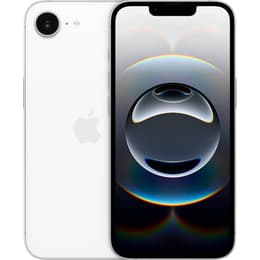
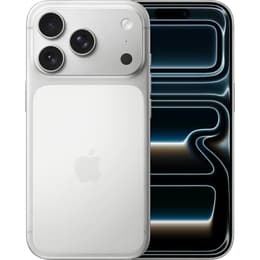


iPhone 16e Vs iPhone 17 Pro

iPhone 16e
iPhone 16e
Starting at

Refurbished price:387.00

Versus €719.00 new

See options
iPhone 17 Pro
iPhone 17 Pro
Starting at

Refurbished price:1,064.00

Versus €1,339.00 new

See options

Ratings

The iPhone 16e, released in February 2025, and the iPhone 17 Pro, launched in September 2025, represent different tiers within Apple's smartphone lineup. While both operate on the iOS platform, the iPhone 16e is positioned as an entry-level model offering core iPhone functionalities, whereas the iPhone 17 Pro is a flagship device designed for users seeking advanced features and top-tier performance. The primary differentiators lie in their camera systems, display technology, and overall processing power, catering to distinct user needs.

Scores

Durability

When considering the longevity of these devices, their respective release dates play a significant role in their expected software support and practical lifespan.

  • Release Timeline: The iPhone 16e was released in February 2025, making it slightly older than the iPhone 17 Pro, which debuted in September 2025. This difference in launch timing means the iPhone 17 Pro will likely receive software updates for a longer period.
  • OS Support: Both devices are expected to receive iOS updates for approximately 5-6 years from their release. The iPhone 17 Pro, being newer, will benefit from an extended update timeline, potentially receiving major iOS versions for an additional year compared to the iPhone 16e.
  • Durability Features: Both models feature Ceramic Shield front covers, designed to offer enhanced durability against drops and scratches. They also carry an IP68 rating for splash, water, and dust resistance, indicating a similar level of protection against environmental elements. The iPhone 17 Pro, however, features Ceramic Shield 2, which offers three times better scratch resistance than the original Ceramic Shield.

Year of Release

2025

2025

OS

iOS

iOS

Foldable

No

No

Performance

The performance capabilities of the iPhone 16e and iPhone 17 Pro cater to different usage demands, primarily influenced by their internal components.

  • Processing Power: The iPhone 16e is powered by the A18 chip, which provides smooth performance for everyday tasks, app navigation, and moderate gaming. The iPhone 17 Pro, on the other hand, features the A19 Pro chip, offering a significant boost in processing power, making it well-suited for demanding applications, intensive multitasking, and graphically rich games.
  • Storage Options: The iPhone 16e is available with 128 GB, 256 GB, and 512 GB of internal storage. The iPhone 17 Pro starts with 256 GB of storage and offers options up to 2 TB, providing more headroom for large files, extensive app libraries, and high-resolution media.
  • Battery Behavior: The iPhone 16e is noted for its efficient battery life, offering up to 26 hours of video playback and 90 hours of audio playback, making it suitable for a full day of typical use. The iPhone 17 Pro, with its larger battery capacity and the efficiency of the A19 Pro chip, is designed for extended usage, with the Pro Max variant claiming up to 39 hours of video playback. Users report the iPhone 17 Pro comfortably lasts a full day for typical usage.

Memory (GB)

8 GB

12 GB

Screen quality

The visual experience on both devices is delivered through advanced display technologies, though with notable distinctions in their capabilities.

  • Display Technology: Both the iPhone 16e and iPhone 17 Pro feature Super Retina XDR OLED displays, providing deep blacks, vibrant colors, and excellent contrast.
  • Resolution and Clarity: The iPhone 16e has a 6.1-inch display with a resolution of 2532 x 1170 pixels at 460 pixels per inch. The iPhone 17 Pro offers a 6.3-inch display with a resolution of 2622 x 1206 pixels at 460 ppi, providing a slightly larger viewing area with comparable clarity.
  • Brightness and Refresh Rate: The iPhone 16e offers a typical maximum brightness of 800 nits and a peak HDR brightness of 1200 nits. The iPhone 17 Pro significantly enhances this with a typical maximum brightness of 1000 nits, a peak HDR brightness of 1600 nits, and an outdoor peak brightness of 3000 nits. Furthermore, the iPhone 17 Pro incorporates ProMotion technology, offering adaptive refresh rates up to 120 Hz for smoother scrolling and more fluid visuals, a feature not present on the iPhone 16e.

Resolution

2532x1170

2622x1206

Audiovisual

The camera systems on the iPhone 16e and iPhone 17 Pro are designed for different levels of photographic and videographic versatility.

  • Rear Camera System: The iPhone 16e features a single 48 MP Fusion rear camera with a wide lens and optical image stabilization, capable of 2x optical-quality zoom by cropping the sensor. It supports 4K video recording at up to 60 frames per second. The iPhone 17 Pro boasts a more advanced triple-camera system, including a 48 MP Fusion Main camera, a 48 MP Fusion Ultra Wide camera, and a 48 MP Fusion Telephoto camera with up to 8x optical-quality zoom.
  • Photography Features: Both devices support features like Night Mode, Smart HDR, and Photographic Styles. However, the iPhone 16e's Portrait mode is limited to human faces and lacks some advanced features like Cinematic Mode and Action Mode. The iPhone 17 Pro offers a more comprehensive suite of computational photography features, including enhanced low-light performance and advanced Portrait mode capabilities.
  • Front Camera: The iPhone 16e includes a 12 MP TrueDepth front camera. The iPhone 17 Pro features an 18 MP Centre Stage front camera with a unique square-shaped sensor, allowing for more flexible framing and improved video calls.

Front camera

TrueDepth 12MP

18 megapixels

Miscellaneous

Beyond core performance and display, several other practical aspects differentiate the iPhone 16e and iPhone 17 Pro.

  • Connectivity: Both models support 5G cellular connectivity. The iPhone 16e supports Wi-Fi 6, while the iPhone 17 Pro features the newer Wi-Fi 7 standard, offering potentially faster and more efficient wireless connections. Both also include Bluetooth for wireless accessories.
  • Ports and Sensors: Both devices utilize a USB-C connector for charging and data transfer. They both feature Face ID for secure authentication. The iPhone 16e includes an Action Button, replacing the traditional mute switch, which is also present on the iPhone 17 Pro.
  • Design and Handling: The iPhone 16e has dimensions of 146.7 x 71.5 x 7.8 mm and weighs 167 grams. The iPhone 17 Pro, with its 6.3-inch display, has slightly different dimensions and may feel different in hand due to its design and materials. The iPhone 17 Pro models feature an aluminum unibody chassis.

Weight

167 g

206 g

Screen size (in)

6.1

6.3

Network

5G

5G

SIM card

eSIM

Physical SIM + eSIM

Carrier compatibility

Unlocked

Unlocked

Connector

USB-C

USB-C

The iPhone 16e and iPhone 17 Pro cater to distinct user preferences and priorities within the Apple ecosystem. The iPhone 16e is often praised by users for delivering a solid iPhone experience with reliable performance and impressive battery life for its category. Some users note its camera capabilities are strong for everyday photography, especially in good lighting conditions. Criticisms sometimes point to the absence of advanced camera features found in Pro models and its standard refresh rate display.

Conversely, the iPhone 17 Pro receives acclaim for its cutting-edge camera system, particularly its versatile telephoto lens and enhanced low-light performance, making it a preferred choice for photography enthusiasts. Its ProMotion display and powerful processor are frequently highlighted for delivering a smooth and responsive user experience. Some users might find its advanced features and larger display to be more than what they require for basic smartphone use.

Users prioritizing a balanced and efficient smartphone for daily communication, media consumption, and casual photography will find the iPhone 16e well-suited to their needs. It offers a robust set of features without the premium additions. For individuals who demand the latest in mobile photography, superior display technology, and maximum processing power for intensive tasks like gaming or professional content creation, the iPhone 17 Pro aligns more closely with those requirements. Both devices represent quality options, and considering a quality-assured refurbished option for either model can be an eco-friendly alternative to purchasing new.


See all articles

Our recent comparisons





