

Google Pixel 7 Pro Vs iPhone 13

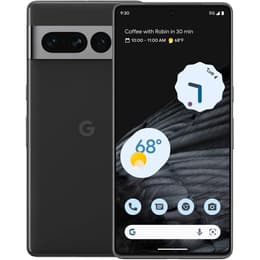
Google Pixel 7 Pro
Google Pixel 7 Pro
Starting at

Refurbished price:201.00

Versus €640.98 new

See options
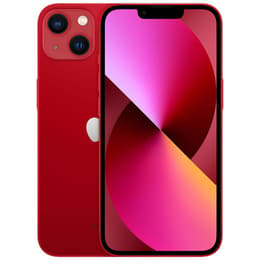
iPhone 13
iPhone 13
Starting at

Refurbished price:233.00

Versus €769.00 new

See options

Ratings

The Google Pixel 7 Pro, released in October 2022, and the iPhone 13, launched in September 2021, represent distinct approaches to the premium smartphone experience. While the Pixel 7 Pro operates on the Android ecosystem and emphasizes advanced computational photography and a larger display, the iPhone 13 runs on iOS, offering a streamlined user experience and a focus on consistent performance. These devices cater to different user preferences regarding operating systems and hardware priorities.

Scores

Durability

The Google Pixel 7 Pro and the iPhone 13 offer different timelines for software support and physical resilience. The Pixel 7 Pro, being a newer device, is expected to receive operating system updates for a longer duration compared to the iPhone 13.

  • Software Longevity: The iPhone 13, released in 2021, typically receives iOS updates for approximately five to six years from its launch. The Pixel 7 Pro, from 2022, is projected to receive Android OS updates for five years and security updates for five years from its release date, likely maintaining software currency for longer.
  • Physical Protection: Both devices feature robust build materials and an IP68 rating for dust and water resistance, indicating protection against immersion in water. The iPhone 13 incorporates a Ceramic Shield front cover for enhanced drop performance, while the Pixel 7 Pro uses Gorilla Glass Victus for both its front and back panels.
  • Repairability: Both models generally offer moderate repairability, with components like batteries and screens being replaceable by skilled technicians. The availability of parts and repair guides can vary, but both manufacturers provide support for their devices.

Year of Release

2022

2021

Compatible with latest Update

Yes

Yes

OS

Android

iOS

Foldable

No

No

Performance

Both the Google Pixel 7 Pro and the iPhone 13 deliver capable performance for daily tasks, though they achieve this with different internal architectures. The Pixel 7 Pro is equipped with a more recent processor designed for advanced AI and machine learning tasks, while the iPhone 13 features a powerful chip known for its efficiency and graphics capabilities.

  • Everyday Responsiveness: The iPhone 13 provides a consistently smooth experience for general navigation and app launching. The Pixel 7 Pro, with its more advanced processing unit, offers a fluid experience, particularly excelling in demanding applications and computational photography.
  • Multitasking and Demanding Apps: The Pixel 7 Pro typically includes more RAM (12GB), which can be beneficial for keeping numerous applications open simultaneously and managing intensive background processes. The iPhone 13, despite having less RAM (4GB), is optimized to manage memory efficiently within the iOS ecosystem, providing a responsive experience for most users.
  • Storage Options: Both devices offer a range of internal storage capacities, typically starting at 128GB and extending to 512GB, providing ample space for applications, photos, and media.

Memory (GB)

12 GB

4 GB

Screen quality

The display experience on the Google Pixel 7 Pro and the iPhone 13 presents notable differences in size, resolution, and refresh rate, catering to varying user preferences. Both utilize OLED technology for vibrant colors and deep blacks.

  • Display Technology and Clarity: The Pixel 7 Pro features a larger 6.7-inch LTPO AMOLED display with a higher QHD+ resolution (1440 x 3120 pixels), resulting in a very sharp and detailed visual experience. The iPhone 13 has a 6.1-inch Super Retina XDR OLED display, offering excellent clarity and color accuracy with a resolution of 1170 x 2532 pixels.
  • Smoothness and Brightness: The Pixel 7 Pro benefits from a variable refresh rate of up to 120Hz, providing noticeably smoother scrolling and animations compared to the iPhone 13's standard 60Hz refresh rate. Both displays offer high peak brightness levels, suitable for outdoor viewing, with the Pixel 7 Pro capable of reaching up to 1500 nits and the iPhone 13 up to 1200 nits.
  • Viewing Experience: Users who prefer a larger screen for media consumption or gaming may find the Pixel 7 Pro's expansive display more immersive. The iPhone 13's more compact screen offers a comfortable one-handed use experience.

Resolution

1440 x 3120

1170 x 2532

Screen type

LTPO AMOLED

Super Retina XDR OLED

Audiovisual

Both the Google Pixel 7 Pro and the iPhone 13 offer capable camera systems and multimedia experiences, though they approach imaging with different philosophies and hardware configurations. The Pixel 7 Pro emphasizes versatility with its triple camera setup, while the iPhone 13 focuses on consistent quality with its dual cameras.

  • Photography Capabilities: The Pixel 7 Pro includes a comprehensive triple camera system with a 50 MP main sensor, a 12 MP ultrawide lens with autofocus, and a 48 MP telephoto lens offering 5x optical zoom, providing significant flexibility for various photographic scenarios. The iPhone 13 features a dual-camera system with a 12 MP main wide lens and a 12 MP ultrawide lens, excelling in capturing detailed and color-accurate images in everyday conditions.
  • Low-Light and Video Performance: Both devices perform well in challenging lighting, with the Pixel 7 Pro leveraging its computational photography for impressive night shots and the iPhone 13 delivering strong low-light performance. For video recording, both support 4K resolution at various frame rates, with the iPhone 13 offering features like Cinematic mode, while the Pixel 7 Pro provides advanced stabilization.
  • Audio Experience: Both smartphones feature stereo speakers that deliver clear audio for media consumption and calls. The microphone quality on both devices is suitable for clear voice calls and video conferencing.

Main camera

50 megapixels

12 megapixels

Front camera

10.8 megapixels

12 megapixels

Miscellaneous

Beyond core performance and display, the Google Pixel 7 Pro and the iPhone 13 present differences in connectivity, physical interfaces, and biometric security, which can influence daily usability.

  • Connectivity Standards: The Pixel 7 Pro supports Wi-Fi 6E, offering access to a less congested 6GHz band for potentially faster wireless speeds where available, alongside Bluetooth 5.2. The iPhone 13 supports Wi-Fi 6 and Bluetooth 5.0, providing robust and reliable wireless connections. Both devices are compatible with 5G cellular networks.
  • Ports and Biometrics: The Pixel 7 Pro utilizes a USB-C 3.2 port for charging and data transfer, a widely adopted standard. It offers both an under-display fingerprint sensor and face unlock for secure access. The iPhone 13 uses Apple's proprietary Lightning port and relies solely on Face ID for biometric authentication.
  • Physical Design and Handling: The Pixel 7 Pro is a larger (162.9 x 76.6 x 8.9 mm) and heavier (212g) device, beneficial for users who prefer a more substantial feel and a larger screen. The iPhone 13 is more compact (146.7 x 71.5 x 7.65 mm) and lighter (174g), making it easier to handle with one hand. Both devices feature premium build materials.

Weight

212 g

173 g

Screen size (in)

6.7

6.1

Network

5G

5G

SIM card

Physical SIM + eSIM

Physical SIM + eSIM

Carrier compatibility

Unlocked

Unlocked

The Google Pixel 7 Pro and the iPhone 13 cater to distinct user preferences, each excelling in different areas. Users frequently praise the Pixel 7 Pro for its exceptional camera system, particularly its telephoto capabilities and advanced computational photography features, often noting its ability to capture detailed and vibrant images. Its larger, high-refresh-rate display and longer software support are also commonly highlighted as strong points. Some users, however, have occasionally noted its larger size and weight as a consideration for one-handed use, and some have reported mixed experiences with battery life under heavy usage.

The iPhone 13 is often lauded for its consistent and reliable performance, the intuitive nature of its iOS operating system, and its robust build quality, including the Ceramic Shield front cover. Its compact form factor is frequently appreciated by those who prefer a smaller device that is easy to handle. Criticisms sometimes point to its standard 60Hz display refresh rate, which some users find less fluid compared to higher refresh rate screens on other devices.

Users prioritizing a versatile camera system with advanced zoom capabilities, a larger and smoother display, and a longer period of Android software updates may find the Google Pixel 7 Pro to be a more suitable choice. Conversely, individuals who value a compact design, the streamlined iOS ecosystem, consistent performance, and a strong focus on video features might lean towards the iPhone 13. Both devices represent quality options, and considering a quality-assured refurbished option for either model can be an eco-friendly alternative to purchasing new.


See all articles

Our recent comparisons