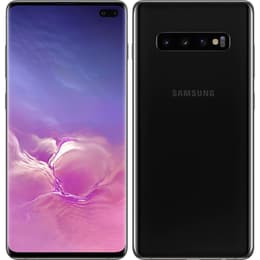
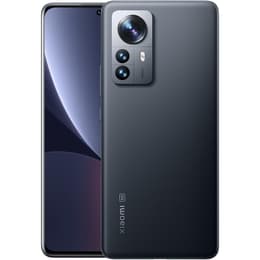


Galaxy S10 Vs Xiaomi 12T Pro

Galaxy S10
Galaxy S10
Starting at

Refurbished price:114.00

Versus €549.00 new

See options
Xiaomi 12T Pro
Xiaomi 12T Pro
Starting at

Refurbished price:201.00

Versus €1,199.00 new

See options

Ratings

The Samsung Galaxy S10, released in March 2019, and the Xiaomi 12T Pro, launched in October 2022, represent different eras in smartphone technology. While both are Android-based devices, the Xiaomi 12T Pro benefits from several years of technological advancements, particularly in processing power, camera capabilities, and charging speeds. The Galaxy S10, on the other hand, offers a more compact design and features that were standard for its time, such as a headphone jack.

Scores

Durability

The practical lifespan of a smartphone is influenced by its initial release, software support, and ease of repair. These two devices show notable differences in these areas.

  • Release Timeline and Age: The Samsung Galaxy S10 was released in March 2019, making it a device from an earlier generation. The Xiaomi 12T Pro, launched in October 2022, is a significantly newer device. This age difference directly impacts their remaining software support and hardware relevance.
  • OS Support Duration: The Galaxy S10 launched with Android 9 Pie and received three major Android updates, concluding with Android 12. Its security updates officially ended in March 2023. In contrast, the Xiaomi 12T Pro launched with Android 12 and is promised three major Android OS updates, extending its support to Android 15, along with four years of security patches. This means the Xiaomi 12T Pro offers a longer period of official software and security updates.
  • Repairability: The Galaxy S10 received a low repairability score of 3 out of 10 from iFixit, primarily due to extensive adhesive, a soldered USB-C charging port, and a glued-down battery, making repairs challenging and potentially costly. The Xiaomi 12T Pro, however, received a higher repairability score of 7 out of 10, with features like pull tabs for battery removal aiding in easier servicing.

Year of Release

2019

2022

Compatible with latest Update

No

Yes

OS

Android

Android

Foldable

No

No

Performance

Performance is a key differentiator, with the newer device generally offering more robust capabilities for demanding tasks.

  • Processor Capabilities: The Xiaomi 12T Pro features a more recent-generation processor, which translates to significantly faster performance for demanding applications, complex multitasking, and graphics-intensive gaming. Users report that it handles apps instantly and multitasking is smooth. The Galaxy S10, while offering strong performance for its release year, provides a level of responsiveness suitable for everyday tasks and moderate usage.
  • Multitasking and Responsiveness: The Xiaomi 12T Pro typically comes with 8GB or 12GB of RAM, allowing for seamless switching between numerous applications and maintaining smooth operation even under heavy load. The Galaxy S10, with 8GB of RAM, also handles multitasking well for its generation, but may show more hesitation with a large number of open applications compared to the newer device.
  • Storage Options: Both devices offer ample internal storage, with the Galaxy S10 providing 128GB or 512GB, and the option for microSD card expansion. The Xiaomi 12T Pro offers 128GB or 256GB of internal storage, with some configurations including 512GB, but it does not support expandable storage.

Memory (GB)

8 GB

8 GB

Screen quality

The visual experience on both devices is designed to be immersive, though with differences in technology and specifications.

  • Display Technology and Resolution: Both phones feature AMOLED displays, known for deep blacks and vibrant colors. The Galaxy S10 has a 6.1-inch Dynamic AMOLED display with a QHD+ resolution (1440x3040 pixels). The Xiaomi 12T Pro sports a larger 6.67-inch CrystalRes AMOLED display with a resolution of 1220x2712 pixels, often referred to as 1.5K.
  • Refresh Rate and Smoothness: The Xiaomi 12T Pro offers a 120 Hz refresh rate, providing a noticeably smoother scrolling experience and more fluid animations compared to the Galaxy S10's standard 60 Hz refresh rate. This higher refresh rate can enhance the perception of responsiveness, especially during gaming or navigating user interfaces.
  • Brightness and Viewing Experience: The Xiaomi 12T Pro can reach a peak brightness of 900 nits, contributing to good visibility in various lighting conditions, including direct sunlight. The Galaxy S10 also offers a bright display, which users have praised for its clarity and visual quality.

Resolution

1440 x 3040

1220 x 2712

Screen type

Dynamic AMOLED

AMOLED

Audiovisual

Camera systems have evolved significantly, and these two devices showcase different approaches and capabilities.

  • Main Camera Capabilities: The Xiaomi 12T Pro features a high-resolution 200 MP main sensor with optical image stabilization (OIS), capable of capturing highly detailed images, especially in good lighting. It uses pixel-binning technology to produce detailed 12.5 MP photos by default. The Galaxy S10 includes a 12 MP main wide-angle camera with dual aperture and OIS, which was highly regarded for its image quality at the time of its release.
  • Versatility and Additional Lenses: The Galaxy S10 offers a versatile triple-camera setup with a 12 MP telephoto lens (2x optical zoom) and a 16 MP ultrawide lens, providing a range of focal lengths for different photographic scenarios. The Xiaomi 12T Pro also has a triple-camera system, including an 8 MP ultrawide and a 2 MP macro lens. While its main sensor is powerful, the auxiliary lenses are less capable than those on the Galaxy S10.
  • Video Recording and Audio: The Xiaomi 12T Pro supports video recording up to 8K at 24fps or 4K at 60fps. It also features stereo speakers tuned by Harman Kardon with Dolby Atmos support, providing a rich audio experience. The Galaxy S10 also offers strong video capabilities for its generation and good speaker quality.

Main camera

12 megapixels

200 megapixels

Front camera

10 megapixels

20 megapixels

Miscellaneous

Beyond core features, several practical elements contribute to the overall user experience and daily usability.

  • Connectivity and Ports: The Xiaomi 12T Pro supports 5G connectivity, Wi-Fi 6, and Bluetooth 5.2, offering faster wireless speeds and more modern standards. It features a USB Type-C 2.0 port. The Galaxy S10 supports 4G LTE and includes a 3.5mm headphone jack, a feature absent on the Xiaomi 12T Pro.
  • Biometric Security: Both devices incorporate in-display fingerprint sensors for secure unlocking. The Galaxy S10 uses an ultrasonic in-screen fingerprint reader. The Xiaomi 12T Pro also offers face unlock in addition to its in-display fingerprint sensor.
  • Build Materials and Durability: The Galaxy S10 features a glass-aluminum construction with Gorilla Glass 6 on the front and Gorilla Glass 5 on the rear, providing a premium feel and a degree of scratch resistance. The Xiaomi 12T Pro uses Gorilla Glass 5 on the front, a glass back, and a plastic frame, and carries an IP53 rating for dust and splash resistance.

Weight

158 g

204 g

Screen size (in)

6.1

6.67

Network

4G

5G

SIM card

Physical SIM

Dual Physical SIM

Carrier compatibility

Unlocked

Unlocked

The Samsung Galaxy S10 and Xiaomi 12T Pro cater to different user needs and expectations, largely due to their respective release timelines. Users frequently praised the Galaxy S10 for its excellent camera, vibrant AMOLED screen, and overall user-friendly experience at its launch. Its compact design and the inclusion of a headphone jack were also often highlighted as positives. However, common criticisms included its relatively poor repairability score and the eventual end of its software support.

The Xiaomi 12T Pro, being a newer device, is often lauded for its powerful processor, which ensures smooth performance for demanding applications and gaming. Its high-resolution main camera and exceptionally fast charging capabilities are also frequently mentioned as strong points. Some users have noted that while the main camera is impressive, the auxiliary lenses are less so, and the absence of wireless charging is a point of contention for some.

Users prioritizing a more modern device with extended software support, superior processing power for intensive tasks, and rapid charging will find the Xiaomi 12T Pro well-suited to their needs. Its large, high-refresh-rate display also makes it ideal for media consumption and gaming. Conversely, users who value a more compact form factor, the convenience of a traditional headphone jack, and a still-capable camera system for everyday photography might lean towards the Galaxy S10. For those considering either device, exploring quality-assured refurbished options can provide an eco-friendly alternative, extending the life cycle of these products and offering a sustainable choice.


See all articles

Our recent comparisons