


Compare models

Galaxy A13 Vs iPhone Air

  • 1-year minimum warranty
  • Free delivery on all orders
  • Free 30-day returns
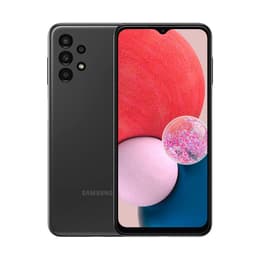
Galaxy A13
Starting at

Refurbished price:€109.00

Versus €249.00 new

See options
iPhone Air
Starting at

Refurbished price:€693.00

Versus €1,339.00 new

See options

Differences at a glance

The Samsung Galaxy A13 (2022) and the Apple iPhone Air (2025) represent entirely different eras, device categories, and operating systems within the smartphone market. While the Galaxy A13 is an entry-level Android device built for everyday utility, the iPhone Air is a contemporary, ultra-slim iOS flagship designed around advanced engineering and portability.

These two devices diverge heavily in build quality, performance tiers, and software ecosystems, making them suitable for completely different user needs.

Available Models

Colour

Storage

Scores

Durability

Both smartphones offer distinct hardware life expectancies and software update cycles aligned with their respective release years and market tiers.

  • Software Support Longevity: The iPhone Air benefits from a significantly extended update timeline for its operating system compared to the older Galaxy A13, ensuring modern features and security patches for years to come.
  • Build and Repairability: The Galaxy A13 utilizes a plastic-heavy construction that handles minor drops with predictable resilience, whereas the iPhone Air features reinforced glass and a titanium frame designed for modern structural durability.
  • Expected Practical Lifespan: Users seeking long-term hardware relevance and sustained software support will find the newer Apple device better equipped for multi-year usage cycles.

Year of Release

2022

2025

Compatible with latest Update

No

Yes

OS

Android

iOS

Foldable

No

No

Performance

System performance and day-to-day responsiveness differ substantially based on the internal hardware tiers of each device.

  • Multitasking and App Loading: The iPhone Air handles demanding applications, heavy multitasking, and modern gaming seamlessly, while the Galaxy A13 manages basic web browsing, messaging, and lighter apps with standard efficiency.
  • Battery Behavior: The Galaxy A13 relies on a large capacity power cell that comfortably sustains moderate use across a full day, whereas the iPhone Air optimizes power management within a much thinner chassis to balance daily usage demands.
  • Storage Configurations: The iPhone Air starts with larger base storage capacities and utilizes high-speed flash memory, while the Galaxy A13 offers modest internal tiers paired with expandable storage via memory cards.

Screen quality

Display technology creates a major visual divergence between the budget Android model and the premium iOS device.

  • Display Technology: The iPhone Air features an advanced OLED screen delivering deep contrast levels and rich colors, whereas the Galaxy A13 uses a standard PLS LCD panel suitable for basic media consumption.
  • Refresh Rate and Smoothness: Motion rendering on the iPhone Air is exceptionally fluid due to a high refresh rate panel, while the Galaxy A13 operates at a standard refresh rate.
  • Outdoor Visibility: Peak brightness outputs on the iPhone Air allow for clear readability under direct sunlight, whereas the Galaxy A13 requires manual shade adjustments in bright outdoor conditions.

Resolution

1080 x 2408

2736x1260

Screen type

PLS LCD

Super Retina XDR

Audiovisual

Optics and media playback hardware reflect the contrasting design philosophies and market segments of both smartphones.

  • Camera System Capabilities: The iPhone Air utilizes a refined single-lens high-resolution setup backed by advanced computational photography, while the Galaxy A13 employs a multi-lens array geared toward versatile basic shooting.
  • Low-Light and Video Performance: The iPhone Air captures sharp details and stable video sequences in dim environments, whereas the Galaxy A13 performs adequately in well-lit daylight settings.
  • Audio Output: Media consumption on the iPhone Air benefits from crisp stereo staging, while the Galaxy A13 relies on a standard single loudspeaker setup alongside a traditional headphone jack.

Main camera

50 megapixels

48 megapixels

Front camera

8 megapixels

18 megapixels

Miscellaneous

Physical handling, connectivity standards, and daily usability features set these two smartphones apart in practical scenarios.

  • Dimensions and Weight: The iPhone Air introduces an exceptionally thin and lightweight profile for effortless pocketability, whereas the Galaxy A13 features a thicker, traditional plastic chassis that feels substantial in the hand.
  • Port Type and Connectivity: The iPhone Air utilizes a modern universal data port and advanced wireless standards like Wi-Fi 7, while the Galaxy A13 retains legacy connectivity options alongside standard mobile data bands.
  • Security Sensors: Biometric authentication is handled via facial recognition on the iPhone Air and a convenient side-mounted fingerprint scanner on the Galaxy A13.

Weight

195 g

165 g

Screen size (in)

6.6

6.5

Network

4G

5G

SIM card

Dual Physical SIM

eSIM

Carrier compatibility

Unlocked

Unlocked

What the community thinks

User discussions and community feedback highlight clear preferences for each device based on individual daily requirements. Owners of the Galaxy A13 frequently praise its dependable battery life, expandable storage slot, and straightforward reliability for essential tasks. Common criticisms center on its slower processing speeds and basic display panel. Meanwhile, users of the iPhone Air highlight its remarkably slim profile, fluid display performance, and top-tier processing power, though some note that its ultra-thin battery capacity requires mindful power management during heavy workdays.

Users prioritizing maximum portability, premium display clarity, and long-term software updates will find the iPhone Air well-suited to their needs. Conversely, users prioritizing everyday essentials, expandable storage simplicity, and a traditional build may lean toward the Galaxy A13. Choosing a quality-assured refurbished option through Back Market can also provide a sustainable choice for acquiring either device while reducing electronic waste.








