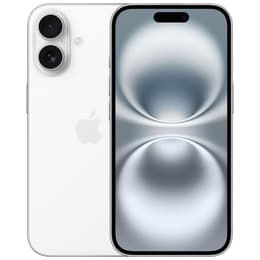


iPhone

Compare models
Differences at a glance
The iPhone 16, released in September 2024, and the Xiaomi Redmi Note 11 Pro 5G, launched in January 2022, represent distinct approaches to smartphone design and functionality. While both are capable devices, they cater to different user expectations, primarily due to their release timelines and underlying operating systems. The iPhone 16 operates on Apple's iOS, known for its integrated ecosystem, whereas the Redmi Note 11 Pro 5G runs on Android, offering a more open and customizable experience. Key differentiators include their display technologies, camera capabilities, and expected software support longevity.
Colour
Storage
When considering the practical lifespan of these devices, their respective release dates play a significant role. The iPhone 16, being a more recent release from September 2024, benefits from a longer projected period of software updates and security patches from Apple, typically extending for five to six years from its launch. This provides users with an extended period of optimal functionality and access to the latest features. In contrast, the Xiaomi Redmi Note 11 Pro 5G, released in January 2022, has a shorter remaining software support window, as Android devices generally receive fewer major OS updates compared to iPhones. [14]
Year of Release
The performance of these two smartphones reflects their different hardware philosophies and target segments. The iPhone 16, powered by a newer-generation Apple processor, is engineered for seamless operation across demanding applications and complex multitasking. The Redmi Note 11 Pro 5G, while capable, utilizes a mid-range processor that handles everyday tasks efficiently.
The visual experience on both devices is shaped by their display technologies, offering distinct advantages depending on user preferences. Both phones feature vibrant OLED panels, but they differ in refresh rates and overall brightness capabilities.
Both smartphones offer capable camera systems, but they approach photography and videography with different strengths and feature sets. The iPhone 16 emphasizes advanced computational photography and video features, while the Redmi Note 11 Pro 5G provides a high-megapixel main sensor for detailed stills.
Beyond core performance and display, several practical elements differentiate these two devices, impacting daily usability and connectivity.
Screen size (in)
Network
SIM card
Carrier compatibility
Connector
The iPhone 16 and Xiaomi Redmi Note 11 Pro 5G cater to distinct user needs, largely influenced by their release dates and ecosystem differences. Users frequently praise the iPhone 16 for its seamless performance, advanced camera capabilities, and the longevity of its software support. [11, 13, 25] Its integrated iOS ecosystem and robust build quality are often highlighted as strong points. However, some users note the 60Hz display as a point of consideration, especially when compared to other devices in its category. [19, 37, 39]
The Redmi Note 11 Pro 5G receives commendation for its vibrant 120Hz AMOLED display, impressive battery life, and fast charging capabilities. [1, 16, 17, 21] Its expandable storage and inclusion of a headphone jack are also frequently appreciated by users. [17] Criticisms often revolve around its limited software update policy and the absence of 4K video recording, which some users find to be a significant drawback. [1, 14, 21]
Users prioritizing a long-term software experience, advanced video features, and a compact, premium build will find the iPhone 16 well-suited to their needs. Those who value a smoother display refresh rate, extensive battery life, expandable storage, and a more open Android ecosystem may lean toward the Redmi Note 11 Pro 5G. Both devices, whether new or as quality-assured refurbished options, offer a pathway to informed and sustainable choices in mobile technology.