

iPhone 16 Vs Xiaomi Redmi Note 11

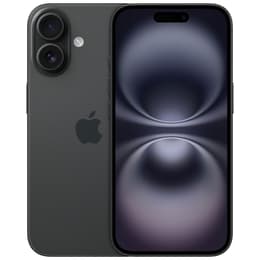
iPhone 16
iPhone 16
Starting at

Refurbished price:548.00

Versus €879.00 new

See options
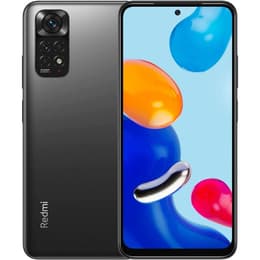
Xiaomi Redmi Note 11
Starting at

Refurbished price:108.00

Versus €249.99 new

See options

Ratings

The iPhone 16, released in 2024, and the Xiaomi Redmi Note 11, launched in early 2022, represent distinct approaches to smartphone design and functionality. While both are smartphones, they cater to different user expectations, primarily differing in their processing power, camera capabilities, and long-term software support. The iPhone 16 operates on Apple's iOS, offering a tightly integrated ecosystem, whereas the Redmi Note 11 runs on Android with Xiaomi's MIUI overlay, providing a more customizable experience.

Scores

Durability

When considering the practical lifespan of these devices, their release timelines and software support policies are key factors. The iPhone 16, having been released in September 2024, benefits from Apple's extended software update cycle, typically receiving iOS updates for approximately five to six years from its launch. This means users can expect continued access to new features, security patches, and app compatibility well into the future. In contrast, the Xiaomi Redmi Note 11, released in January 2022, has already reached the end of its software update lifecycle as of February 2025, meaning it no longer receives official Android or security updates.

  • Software Longevity: The iPhone 16 offers a significantly longer period of software support, ensuring access to the latest operating system features and security enhancements for several years. The Redmi Note 11, having concluded its update cycle, will not receive further official software or security updates.
  • Physical Durability: The iPhone 16 features Ceramic Shield protection on its front display and is rated IP68 for water and dust resistance, allowing submersion up to 6 meters for 30 minutes. The Redmi Note 11 offers IP53 splash resistance, providing protection against light splashes and dust.
  • Expected Practical Lifespan: Users prioritizing long-term software support and robust physical durability will find the iPhone 16 better suited for extended use. The Redmi Note 11 remains functional but without ongoing software enhancements or security updates.

Year of Release

2024

2022

Compatible with latest Update

Yes

No

Foldable

No

No

Performance

The performance capabilities of the iPhone 16 and the Xiaomi Redmi Note 11 reflect their different design philosophies and target user experiences. The iPhone 16 is equipped with a more advanced internal architecture, designed for demanding applications and efficient multitasking, while the Redmi Note 11 provides reliable performance for everyday tasks.

  • Processing Power: The iPhone 16 features a current-generation processor with a multi-core CPU and GPU, alongside a dedicated Neural Engine, enabling smooth operation for complex applications, advanced gaming, and AI-driven features. The Redmi Note 11 is powered by a Qualcomm Snapdragon 680 4G processor, which handles daily tasks, social media, and light gaming with acceptable responsiveness.
  • Multitasking and Responsiveness: With 8GB of RAM, the iPhone 16 offers ample memory for seamless app switching and maintaining multiple applications in the background without significant slowdowns. The Redmi Note 11 comes with 4GB or 6GB of RAM, which is sufficient for typical smartphone usage but may show limitations with numerous demanding apps open simultaneously.
  • Storage Options: The iPhone 16 is available with 128GB, 256GB, or 512GB of internal storage, providing generous space for apps, photos, and videos. The Redmi Note 11 offers 64GB or 128GB of internal storage, with the added flexibility of expandable storage up to 1TB via a microSD card.

Memory (GB)

8 GB

4 GB

Screen quality

Both devices feature vibrant displays, but they differ in technology, resolution, and refresh rates, impacting the overall visual experience. The iPhone 16 prioritizes clarity and brightness, while the Redmi Note 11 offers a smooth viewing experience with its AMOLED panel.

  • Display Technology and Clarity: The iPhone 16 utilizes a 6.1-inch Super Retina XDR OLED display, offering a resolution of 2556 by 1179 pixels at 460 pixels per inch, which results in sharp text and detailed images. The Redmi Note 11 features a 6.43-inch FHD+ AMOLED DotDisplay with a resolution of 2400 x 1080 pixels, providing clear visuals and deep blacks.
  • Brightness and Refresh Rate: The iPhone 16's display can reach a typical maximum brightness of 1000 nits, with peak HDR brightness of 1600 nits and an impressive 2000 nits peak brightness outdoors, ensuring good visibility in various lighting conditions. It maintains a standard 60Hz refresh rate. The Redmi Note 11 offers a peak brightness of 1000 nits and features a 90Hz refresh rate, contributing to smoother scrolling and a more fluid user interface experience.
  • Viewing Experience: The iPhone 16's display includes features like HDR, True Tone, and Wide color (P3) for accurate color reproduction and an adaptive viewing experience. The Redmi Note 11's AMOLED panel with DCI-P3 wide color gamut and Sunlight display mode enhances outdoor readability and color vibrancy.

Resolution

1179 x 2556

1080 x 2400

Screen type

Super Retina XDR OLED

AMOLED

Audiovisual

The camera systems on the iPhone 16 and the Xiaomi Redmi Note 11 are designed with different strengths, impacting the quality and versatility of photos and videos. The iPhone 16 focuses on advanced computational photography and video capabilities, while the Redmi Note 11 provides a capable multi-lens setup for general photography.

  • Rear Camera System: The iPhone 16 features an advanced dual-camera system with a 48MP Main camera (f/1.6) that supports super-high-resolution photos and a 12MP Ultra Wide camera (f/2.2). It also enables 12MP 2x telephoto shots using the main sensor. The Redmi Note 11 is equipped with a quad-camera setup, including a 50MP main camera (f/1.8), an 8MP ultra-wide camera (f/2.2), a 2MP macro camera, and a 2MP depth sensor.
  • Photography Performance: The iPhone 16's camera system is designed for improved low-light performance and supports macro photography, along with features like Photonic Engine and Smart HDR 5 for enhanced image processing. The Redmi Note 11's main camera performs well in good lighting conditions, but its low-light image quality can be affected by noise.
  • Video Recording and Features: The iPhone 16 supports spatial video recording due to its vertical camera alignment, offering an immersive viewing experience on compatible devices. It also includes a new Capture Button for intuitive photo and video control. The Redmi Note 11's video recording is capped at 1080p at 30 frames per second. Both devices offer a front-facing camera, with the iPhone 16 featuring a 12MP sensor and the Redmi Note 11 a 13MP sensor for selfies and video calls.

Main camera

48 megapixels

50 megapixels

Front camera

12 megapixels

13 megapixels

Miscellaneous

Beyond core performance and camera, several practical elements differentiate the user experience of these two smartphones, from connectivity to physical design and additional features.

  • Connectivity and Ports: The iPhone 16 supports 5G cellular networks and Wi-Fi 7, offering faster wireless data speeds and improved network efficiency. It features a USB-C port for charging and data transfer, though at USB 2.0 speeds. The Redmi Note 11 is a 4G LTE device and supports Wi-Fi 802.11a/b/g/n/ac and Bluetooth 5.0. It also includes a USB-C port for charging and data, and notably, a 3.5mm headphone jack.
  • Biometric Security and Sensors: The iPhone 16 relies on Face ID for secure facial recognition. The Redmi Note 11 incorporates a side-mounted fingerprint sensor and AI Face Unlock for biometric security. The Redmi Note 11 also includes an IR blaster, allowing it to function as a universal remote control.
  • Dimensions and Handling: The iPhone 16 measures 147.6 x 71.6 x 7.8 mm and weighs 170 grams, offering a compact and relatively lightweight design. The Redmi Note 11 is slightly larger and heavier at 159.87 x 73.87 x 8.09 mm and 179 grams, providing a larger screen footprint.

Weight

170 g

179 g

Screen size (in)

6.1

6.43

Network

5G

4G

SIM card

eSIM

Dual Physical SIM

Carrier compatibility

Unlocked

Unlocked

The iPhone 16 and the Xiaomi Redmi Note 11 cater to different user priorities, reflecting their respective market positions and release timelines. Users often praise the iPhone 16 for its advanced camera capabilities, particularly its ability to record spatial video and its improved low-light performance, along with the intuitive new Capture Button. Its powerful processor and extended software support are also frequently highlighted as significant advantages for long-term usability and demanding tasks.

Conversely, the Redmi Note 11 is often noted for its vibrant AMOLED display with a 90Hz refresh rate and its impressive battery life, which can last up to two days for many users. Its inclusion of a 3.5mm headphone jack and expandable storage are also points of appreciation for users who value these features. However, common criticisms for the Redmi Note 11 include its limited software update lifespan and its camera's performance in challenging lighting conditions.

Users prioritizing cutting-edge performance, a highly capable camera system with advanced video features, and long-term software support will find the iPhone 16 well-suited to their needs. Its robust build and Ceramic Shield display also appeal to those seeking enhanced durability. On the other hand, users who prioritize a smooth display experience, exceptional battery longevity, and practical features like expandable storage and a headphone jack may lean toward the Redmi Note 11. For those considering a quality-assured refurbished option, both models can offer a sustainable choice depending on individual priorities.


See all articles

Our recent comparisons