

iPhone 16 Vs Xiaomi 14T Pro

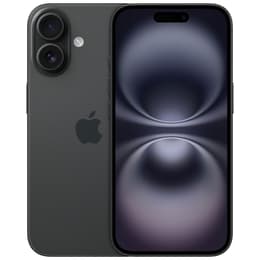
iPhone 16
iPhone 16
Starting at

Refurbished price:549.00

Versus €879.00 new

See options
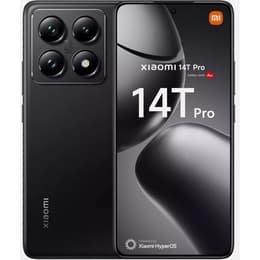
Xiaomi 14T Pro
Xiaomi 14T Pro
Starting at

Refurbished price:394.00

Versus €900.00 new

See options

Ratings

The iPhone 16, released in September 2024, and the Xiaomi 14T Pro, launched in late September 2024, represent contemporary smartphone offerings from two prominent manufacturers. Both devices aim to deliver a comprehensive user experience, but they approach this goal with distinct philosophies in terms of operating system, design, and feature prioritization. The iPhone 16 operates on Apple's iOS ecosystem, while the Xiaomi 14T Pro runs on Xiaomi's HyperOS, based on Android, offering different software experiences and customization options.

Scores

Durability

When considering the long-term usability of these devices, several factors contribute to their expected practical lifespan.

  • Release Timeline and OS Support: The iPhone 16, released in September 2024, benefits from Apple's reputation for extended software support, typically receiving major iOS updates for five to six years from its launch. It shipped with iOS 18 and is currently running iOS 26.4. The Xiaomi 14T Pro, also launched in September 2024, runs on Xiaomi HyperOS, based on Android 14, with an update to Android 15 and HyperOS 2. While Xiaomi has improved its update policy, the duration of major Android version updates typically falls short of Apple's longer commitment.
  • Durability Features: Both devices offer robust build quality. The iPhone 16 features a Ceramic Shield front cover and an IP68 rating for water and dust resistance, allowing submersion up to 6 meters for 30 minutes. The Xiaomi 14T Pro also boasts an IP68 rating, protecting against submersion up to 2 meters for 30 minutes, and incorporates Corning Gorilla Glass 5 for display protection.
  • Repairability and Practical Lifespan: While specific repairability scores are not detailed for either model, both manufacturers design their devices with a certain level of component integration. The practical lifespan for either device can be extended through careful handling and the availability of replacement parts, which is a consideration for users looking for a sustainable choice.

Year of Release

2024

2024

Compatible with latest Update

Yes

Yes

Foldable

No

No

Performance

The performance of a smartphone is crucial for daily tasks, from navigating applications to engaging in demanding activities like gaming.

  • Processor Capabilities: The iPhone 16 is powered by Apple's A18 chip, designed for efficient handling of demanding applications and multitasking. The Xiaomi 14T Pro features the MediaTek Dimensity 9300+ chipset, a high-performance processor capable of managing intensive graphics tasks and ensuring smooth operation.
  • System Responsiveness and Multitasking: The iPhone 16, with its optimized iOS and 8GB of RAM, offers fluid navigation and efficient app switching. The Xiaomi 14T Pro, equipped with 12GB of LPDDR5X RAM (with some configurations offering up to 16GB) and UFS 4.0 storage, provides ultra-fast loading times and reliable performance for power users and gamers.
  • Battery Behavior: The iPhone 16 has a 3561 mAh battery, offering up to 22 hours of offline video playback, with improvements over its predecessor due to a larger battery and efficient chip. The Xiaomi 14T Pro houses a larger 5000mAh battery, which in testing, demonstrated continuous use for approximately two days under moderate usage, or around 13 hours with heavy screen time.

Memory (GB)

8 GB

16 GB

Screen quality

The display is a primary interface for smartphone interaction, and both devices offer high-quality viewing experiences with distinct characteristics.

  • Display Technology and Resolution: The iPhone 16 features a 6.1-inch Super Retina XDR OLED display with a resolution of 2556x1179 pixels, resulting in a pixel density of 460 ppi. The Xiaomi 14T Pro comes with a larger 6.67-inch CrystalRes AMOLED display, offering a resolution of 1220 x 2712 pixels and a pixel density of 446 ppi.
  • Brightness and Clarity: The iPhone 16's display reaches a typical maximum brightness of 1000 nits and a peak outdoor brightness of 2000 nits, ensuring good visibility in various lighting conditions. The Xiaomi 14T Pro boasts an impressive peak brightness of 4000 nits, contributing to exceptional readability even in direct sunlight.
  • Refresh Rate and Viewing Experience: The iPhone 16 maintains a standard refresh rate, while the Xiaomi 14T Pro offers an adaptive refresh rate of up to 144Hz, providing smoother scrolling and more fluid visuals, particularly beneficial for gaming and fast-paced content. Both displays support HDR content, with the Xiaomi 14T Pro specifically mentioning Dolby Vision and HDR10+.

Resolution

1179 x 2556

1220 x 2712

Screen type

Super Retina XDR OLED

AMOLED

Audiovisual

Both smartphones offer advanced camera systems designed to capture high-quality images and videos, catering to different photographic preferences.

  • Rear Camera Systems: The iPhone 16 features an advanced dual-camera system with a 48MP Fusion Main camera (f/1.6, OIS) and a 12MP Ultra Wide camera (f/2.2, 120° FOV). It supports 2x optical zoom in/out and up to 10x digital zoom. The Xiaomi 14T Pro sports a Leica-powered triple-camera setup, including a 50MP main sensor (f/1.6, OIS), a 50MP telephoto lens with 2.6x optical zoom, and a 12MP ultra-wide camera (120° FOV).
  • Photography Performance: The iPhone 16 utilizes computational photography features like Photonic Engine, Deep Fusion, and Smart HDR 5 for enhanced image processing, particularly in challenging lighting. The Xiaomi 14T Pro offers Leica Authentic and Vibrant color profiles, and users report excellent detail and vibrant colors, especially in outdoor photography, with good low-light performance.
  • Video Capabilities and Front Camera: The iPhone 16 offers robust video recording features, though specific resolutions were not detailed in the provided snippets. The Xiaomi 14T Pro supports video recording up to 8K and includes a 32MP front camera capable of 4K video recording, appealing to content creators.

Main camera

48 megapixels

50 megapixels

Front camera

12 megapixels

32 megapixels

Miscellaneous

Beyond core features, several practical elements differentiate the user experience of these two devices.

  • Connectivity and Ports: The iPhone 16 supports Wi-Fi 7 and Bluetooth 5.3, and features a USB-C port. It also includes a second-generation Ultra Wideband chip for improved spatial awareness. The Xiaomi 14T Pro offers 5G dual SIM support and is expected to support modern Wi-Fi standards, though specific Wi-Fi versions were not consistently detailed. It also features a USB-C port.
  • Biometrics and Sensors: The iPhone 16 relies on Face ID for secure authentication. The Xiaomi 14T Pro typically includes an in-display fingerprint sensor. A notable additional feature on the Xiaomi 14T Pro is an IR Blaster, allowing it to control various electronic devices.
  • Design and Handling: The iPhone 16 has dimensions of 147.6 x 71.6 x 7.8 mm and weighs 170g. The Xiaomi 14T Pro is slightly larger and heavier at 160.4 x 75.1 x 8.4 mm and 209g, featuring an aluminum frame and a 3D curved back for a premium feel. The iPhone 16 also introduces a customizable Action button and a Camera Control button.

Weight

170 g

209 g

Screen size (in)

6.1

6.67

Network

5G

5G

SIM card

eSIM

Dual Physical SIM

Carrier compatibility

Unlocked

Unlocked

User sentiment for the iPhone 16 generally highlights its reliable performance, improved battery life over previous standard models, and the consistent quality of its camera system, particularly with the new Camera Control button and enhanced computational photography. Some users appreciate the integration of Apple Intelligence. However, some might note the absence of a 120Hz ProMotion display on the standard model as a point of comparison with other devices.

For the Xiaomi 14T Pro, users frequently praise its vibrant 144Hz AMOLED display, the versatile Leica-tuned camera setup, and its exceptionally fast wired and wireless charging capabilities. The powerful processor is also a common positive. Criticisms sometimes revolve around the software experience with HyperOS, with some users reporting occasional bugs or a less refined user interface compared to competitors. There are also mixed reports on battery drain, though fast charging often mitigates this concern.

Users prioritizing a long-term software commitment, a highly integrated ecosystem, and consistent performance for everyday tasks may find the iPhone 16 well-suited to their needs. Those who value a larger, high-refresh-rate display, rapid charging, and a versatile camera system with extensive manual controls might lean towards the Xiaomi 14T Pro. Both devices offer compelling features, and considering a quality-assured refurbished option for either model can be a practical and eco-friendly alternative.


See all articles

Our recent comparisons