

Compare models
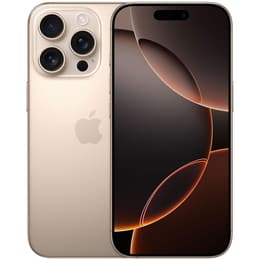
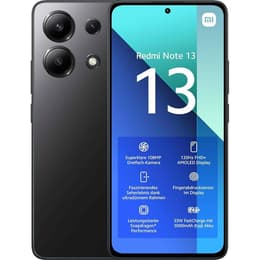
iPhone 16 Pro Vs Xiaomi Redmi Note 13 4G
- 1-year minimum warranty
- Free delivery on all orders
- Free 30-day returns
Differences at a glance
The iPhone 16 Pro (2024) and the Xiaomi Redmi Note 13 4G (2024) are smartphone options catering to distinct segments of the mobile market. While both devices serve daily communication and computing needs, they approach hardware design, software ecosystems, and processing capability from entirely different directions. Running on iOS and Android respectively, these models offer alternative paths depending on individual user requirements.
Available Models
Colour
Storage (GB)
Scores
Durability
When examining longevity and durability, both smartphones feature distinct build timelines and software support structures that shape their expected operational lifespan.
- Software Support and Updates: The iPhone 16 Pro receives Apple's long-term operating system updates spanning multiple years, whereas the Xiaomi Redmi Note 13 4G provides a standard multi-year Android update schedule tailored to its class.
- Build Integrity and Repair: The iPhone 16 Pro utilizes a grade titanium frame paired with durable front glass protection, while the Xiaomi model employs a plastic frame and reinforced front glass. Both devices require professional assistance for complex internal component repairs.
- Expected Lifespan: The iPhone 16 Pro is built to retain high processing efficiency over many years, while the Xiaomi Redmi Note 13 4G suits moderate, everyday multi-year usage cycles well.
Year of Release
2024
2024
Compatible with latest Update
Yes
Yes
Foldable
No
No
Performance
Performance capabilities vary significantly between these two models, influencing how they handle multitasking, demanding software, and everyday operational tasks.
- System Responsiveness: The iPhone 16 Pro handles intensive applications, high-end mobile gaming, and complex background tasks smoothly, whereas the Xiaomi Redmi Note 13 4G manages routine web browsing, messaging, and lighter apps reliably.
- Memory and Storage Configurations: Both devices offer various storage tiers, though the iPhone 16 Pro pairs its storage with high-bandwidth memory architecture for efficient multitasking and fast data access.
- Battery Behavior: The iPhone 16 Pro optimizes power consumption dynamically for extended daily use, while the Xiaomi Redmi Note 13 4G features a dependable battery capacity designed to comfortably clear standard daily use cases.
Screen quality
Display technology differs between the two handsets, impacting outdoor visibility, motion smoothness, and media consumption clarity.
- Display Technology: The iPhone 16 Pro features an advanced OLED panel with adaptive refresh rates up to 120Hz, while the Xiaomi Redmi Note 13 4G utilizes a smooth 120Hz AMOLED display with vivid color reproduction.
- Brightness and Outdoor Legibility: The iPhone 16 Pro reaches high peak outdoor brightness levels for clear visibility under direct sunlight, whereas the Xiaomi panel performs well in standard daylight conditions.
- Viewing Experience: Both screens offer sharp resolutions and deep contrast levels, making them well-suited for reading, streaming video, and viewing photos.
Resolution
1206 x 2622
1080 x 2400
Screen type
LTPO Super Retina XDR OLED
AMOLED
Audiovisual
Imaging and audio systems vary widely, offering distinct capabilities for photography, video recording, and media playback.
- Camera System Versatility: The iPhone 16 Pro incorporates a multi-lens professional camera array with high-resolution sensors and dedicated optical zoom, while the Xiaomi Redmi Note 13 4G features a high-resolution main sensor accompanied by supporting lenses for everyday snapshots.
- Video and Low-Light Performance: The iPhone 16 Pro supports advanced high-frame-rate cinematic video recording formats and detailed low-light captures, whereas the Xiaomi model handles standard 1080p video recording.
- Audio Output: Both devices include stereo speaker configurations capable of delivering clear sound for hands-free calls and casual media consumption.
Main camera
48 megapixels
108 megapixels
Front camera
12 megapixels
16 megapixels
Miscellaneous
Practical everyday features, physical dimensions, and connectivity options dictate how each device integrates into daily routines.
- Connectivity Standards: The iPhone 16 Pro includes advanced Wi-Fi and 5G capabilities, while the Xiaomi Redmi Note 13 4G supports standard 4G networks and reliable local wireless standards.
- Physical Design and Handling: The iPhone 16 Pro offers a compact, premium metal-and-glass footprint, whereas the Xiaomi Redmi Note 13 4G presents a lightweight plastic-framed build that sits comfortably in the hand.
- Biometrics and Ports: The iPhone relies on facial recognition alongside a universal reversible connector port, while the Xiaomi model uses a side-mounted fingerprint scanner and retains traditional audio connectivity options.
Weight
199 g
175 g
Screen size (in)
6.3
6.67
Network
5G
4G
SIM card
eSIM
Dual Physical SIM
Carrier compatibility
Unlocked
Unlocked
Connector
USB-C (USB 3)
USB-C
What the community thinks
User feedback from online communities highlights distinct experiences with both smartphones. Owners of the iPhone 16 Pro frequently praise its robust build quality, fluid display performance, and capable camera suite, though some note its heavier weight in pocket storage. Conversely, users of the Xiaomi Redmi Note 13 4G often commend its responsive daily screen fluidity and reliable battery endurance, while pointing out limitations in demanding gaming scenarios and low-light video clarity.
When deciding between these two devices, user priorities serve as the main guide. Users prioritizing advanced mobile photography, high-end gaming capabilities, and long-term software longevity will find the iPhone 16 Pro well-suited to their needs. Meanwhile, users focusing on straightforward daily communication, media viewing, and core smartphone functions may lean toward the Xiaomi Redmi Note 13 4G. For conscious consumers seeking a sustainable choice, a quality-assured refurbished option provides an eco-friendly alternative that reduces electronic waste while delivering fully tested hardware performance.