


iPhone 16 Pro Vs Xiaomi Redmi Note 11

iPhone 16 Pro
iPhone 16 Pro
Starting at

Refurbished price:650.00

Versus €1,239.00 new

See options
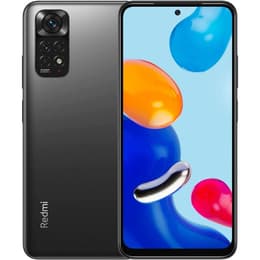
Xiaomi Redmi Note 11
Starting at

Refurbished price:108.00

Versus €249.99 new

See options

Ratings

The iPhone 16 Pro, released in late 2024, represents Apple's advanced smartphone offering, running on the iOS ecosystem. In contrast, the Xiaomi Redmi Note 11, launched in early 2022, operates on the Android platform with Xiaomi's MIUI overlay. These devices cater to different user expectations, with the iPhone 16 Pro focusing on cutting-edge performance and premium features, while the Redmi Note 11 aims to deliver a balanced experience for everyday use.

Scores

Durability

The longevity of a smartphone is influenced by its release timeline, software support, and physical durability.

  • Release Timeline: The iPhone 16 Pro, having been released in late 2024, benefits from a more recent manufacturing date, positioning it for a longer period of current technology relevance. The Xiaomi Redmi Note 11 was introduced in early 2022, making it an older model in the smartphone lifecycle.
  • Software Support: Apple typically provides major iOS updates for iPhones for approximately five to seven years from their release, with security updates often extending even longer. This suggests the iPhone 16 Pro will receive software support well into the future. The Redmi Note 11 launched with Android 11 and MIUI 13, and while Xiaomi provides updates, the duration of major Android version support is generally shorter compared to Apple's policy.
  • Repairability and Build: The iPhone 16 Pro features a titanium frame and Ceramic Shield front, contributing to its durability, and recent iPhone Pro models have seen improvements in repairability scores, reaching around 7 out of 10 due to design changes and software tools. The Redmi Note 11 offers IP53 dust and splash protection and a Gorilla Glass 3 front, providing a degree of resilience for daily use. Variants of the Redmi Note 11 series have shown good repairability scores, with some models rated around 6.5 to 8.75 out of 10, indicating accessible components for servicing.

Year of Release

2024

2022

Compatible with latest Update

Yes

No

Foldable

No

No

Performance

Performance is a key differentiator, impacting how smoothly applications run and how efficiently tasks are handled.

  • Processing Power: The iPhone 16 Pro is equipped with an advanced, current-generation processor designed for demanding applications, complex multitasking, and high-fidelity gaming, ensuring a highly responsive user experience. The Redmi Note 11 utilizes a processor that handles everyday tasks, social media, and light gaming competently, providing a smooth experience for general usage.
  • Multitasking and Storage: The iPhone 16 Pro is expected to feature 8GB of RAM, facilitating seamless transitions between numerous open applications and intensive background processes. Storage options for the iPhone 16 Pro are anticipated to start at 256GB, with higher capacities available, offering ample space for media and applications. The Redmi Note 11 typically comes with 4GB or 6GB of RAM, which is suitable for moderate multitasking, and offers 64GB or 128GB of internal storage, expandable via a microSD card for additional capacity.
  • Battery Behavior: The iPhone 16 Pro is expected to feature an enhanced battery capacity, building on its predecessor's ability to provide extended video playback. The Redmi Note 11 is known for its substantial 5000mAh battery, which, combined with an energy-efficient processor, often allows for over a full day of moderate usage on a single charge.

Memory (GB)

8 GB

4 GB

Screen quality

The display is the primary interface for user interaction, and both devices offer distinct visual experiences.

  • Display Technology and Clarity: The iPhone 16 Pro features a 6.3-inch Super Retina XDR OLED display, providing exceptional contrast, deep blacks, and precise color reproduction. Its resolution ensures sharp text and detailed images. The Redmi Note 11 sports a 6.43-inch FHD+ AMOLED DotDisplay, which delivers vibrant colors and good clarity for media consumption and daily tasks.
  • Brightness and Refresh Rate: The iPhone 16 Pro's display is capable of reaching up to 1000 nits typical brightness, 1600 nits peak for HDR content, and an impressive 2000 nits peak outdoor brightness, ensuring excellent visibility in various lighting conditions. It also incorporates ProMotion technology, offering an adaptive refresh rate up to 120Hz for smooth scrolling and responsive interactions. The Redmi Note 11 provides a peak brightness of 1000 nits, making it adequately visible outdoors, and features a 90Hz refresh rate, which offers a smoother visual experience compared to standard 60Hz displays.
  • Screen Size and Features: The iPhone 16 Pro's slightly larger 6.3-inch screen, combined with thinner bezels, enhances the viewing area. It also includes the Dynamic Island for interactive alerts and activities. The Redmi Note 11's 6.43-inch display offers a generous screen size for its category, suitable for immersive viewing.

Resolution

1206 x 2622

1080 x 2400

Screen type

LTPO Super Retina XDR OLED

AMOLED

Audiovisual

Camera capabilities are a significant factor for many users, and these devices approach photography from different perspectives.

  • Rear Camera System: The iPhone 16 Pro is expected to feature an advanced triple-camera system, including a 48MP main sensor with optical image stabilization, a 48MP ultra-wide lens, and a telephoto lens offering up to 5x optical zoom. This setup is designed for high-resolution photos, improved low-light performance, and versatile photographic options. The Redmi Note 11 includes a quad-camera setup with a 50MP main sensor, an 8MP ultrawide lens, a 2MP macro lens, and a 2MP depth sensor. It performs well in good lighting conditions, capturing clean shots with pleasing colors.
  • Low-Light and Video Performance: The iPhone 16 Pro's camera system is engineered for superior low-light photography and offers advanced video recording capabilities, including 4K resolution at various frame rates, HDR video, and cinematic modes. The Redmi Note 11's cameras can struggle in low-light environments, producing softer and noisier images. Video recording is capped at 1080p at 30 frames per second, which is suitable for casual video capture but lacks the advanced features of higher-end devices.
  • Front Camera and Features: The iPhone 16 Pro features a 12MP front camera with autofocus and advanced computational photography for detailed selfies and high-quality video calls. The Redmi Note 11 has a 13MP front camera that is capable of capturing acceptable selfies, particularly in well-lit conditions.

Main camera

48 megapixels

50 megapixels

Front camera

12 megapixels

13 megapixels

Miscellaneous

Beyond core features, several practical elements contribute to the overall user experience.

  • Connectivity and Ports: The iPhone 16 Pro supports 5G connectivity for faster mobile data speeds and is expected to feature Wi-Fi 7, along with Bluetooth 5.3. It utilizes a USB-C port for charging and data transfer. The Redmi Note 11 offers 4G LTE connectivity, Wi-Fi 802.11ac, and Bluetooth 5.0. It includes a USB-C port for charging and data, and notably, retains a 3.5mm headphone jack.
  • Biometrics and Sensors: The iPhone 16 Pro relies on Face ID for secure facial recognition. It also integrates a range of sensors for advanced functionalities. The Redmi Note 11 features a side-mounted fingerprint sensor for biometric authentication and also supports AI Face Unlock. It includes an IR blaster, allowing it to function as a universal remote.
  • Design and Handling: The iPhone 16 Pro is constructed with a titanium frame, offering a premium feel and enhanced durability, and is expected to be slightly larger than its predecessor. The Redmi Note 11 has a design that is comfortable to hold, with dimensions and weight that make it manageable for one-handed use. It features a plastic back and a flat-edge design.

Weight

199 g

179 g

Screen size (in)

6.3

6.43

Network

5G

4G

SIM card

eSIM

Dual Physical SIM

Carrier compatibility

Unlocked

Unlocked

The iPhone 16 Pro and Xiaomi Redmi Note 11 cater to distinct user needs and preferences. Users often praise the iPhone 16 Pro for its powerful performance, advanced camera system, and long-term software support, making it a choice for those who prioritize cutting-edge technology and a premium ecosystem. Common criticisms, if any, typically revolve around its higher entry point.

The Xiaomi Redmi Note 11 is frequently lauded by users for its impressive AMOLED display with a 90Hz refresh rate, excellent battery life, and solid build quality for its category. Some users note that its camera performance in low light and the absence of 5G connectivity are areas where it doesn't match higher-end devices. The software update policy, while consistent, may not offer the same extended duration as Apple's.

Users prioritizing a device with a highly advanced camera, top-tier processing power for demanding applications, and a long software support lifespan will find the iPhone 16 Pro well-suited to their needs. Its robust build and ecosystem integration are also key advantages. Conversely, users who value a vibrant display, extended battery life, and reliable performance for everyday tasks, without requiring the absolute latest in processing or camera technology, may lean toward the Xiaomi Redmi Note 11. It offers a strong feature set for general use.

For those considering either device, exploring quality-assured refurbished options can provide a sustainable choice, extending the life of these products and offering an eco-friendly alternative.


See all articles

Our recent comparisons