

Galaxy A13 Vs Xiaomi Redmi 14C

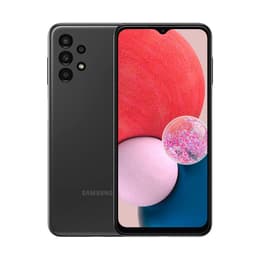
Galaxy A13
Galaxy A13
Starting at

Refurbished price:97.00

Versus €249.00 new

See options
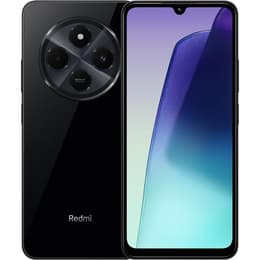
Xiaomi Redmi 14C
Xiaomi Redmi 14C
Starting at

Refurbished price:128.20

Versus €189.00 new

See options

Ratings

The Samsung Galaxy A13, released in March 2022, and the Xiaomi Redmi 14C, launched in August 2024, are both smartphones designed for everyday use. While the Galaxy A13 runs on Samsung's One UI based on Android, the Redmi 14C operates on Xiaomi's HyperOS, also based on Android. These devices offer different approaches to design, performance, and camera capabilities, catering to users with varying priorities.

Scores

Durability

When considering the practical lifespan of these devices, their release timelines and software support are key factors.

  • Release Timeline: The Galaxy A13 was released in March 2022, making it an older model compared to the Redmi 14C, which launched in August 2024. This difference in release date impacts their expected software support duration.
  • Software Longevity: The Galaxy A13 typically receives major Android updates for about two years and security updates for four years from its release, meaning its official software support is nearing its end. The Redmi 14C, being a newer device, benefits from a longer period of anticipated Android and security updates, extending its functional lifespan.
  • Build Materials: The Galaxy A13 features a glass front with Gorilla Glass 5 protection, paired with a plastic back and frame. The Redmi 14C offers a glass front and a plastic frame, with options for a glass or silicone polymer (eco-leather) back, and some variants are noted to have an IP52 rating for dust and splash resistance, offering a degree of protection against everyday elements.

Year of Release

2022

2024

Compatible with latest Update

No

Yes

OS

Android

Android

Foldable

No

No

Performance

The performance of a smartphone is crucial for daily tasks, app usage, and multitasking.

  • Processing Power: The Galaxy A13 is equipped with a processor that handles general smartphone functions and light applications smoothly. The Redmi 14C, depending on the variant, features either a MediaTek Helio G81 Ultra or a Qualcomm Snapdragon 4 Gen 2 processor, both designed to offer responsive performance for everyday tasks and moderate multitasking.
  • Multitasking and Storage: The Galaxy A13 comes with various RAM configurations, typically ranging from 3GB to 6GB, and storage options up to 128GB, expandable via microSD. The Redmi 14C offers more generous RAM options, from 4GB to 8GB, and internal storage up to 256GB, also with microSD expansion, which can contribute to smoother multitasking and more storage for applications and media.
  • Battery Behavior: Both devices feature substantial battery capacities. The Galaxy A13 has a 5000 mAh battery, providing ample power for a full day of typical use. The Redmi 14C comes with a slightly larger 5160 mAh battery, also supporting extended usage.

Memory (GB)

4 GB

4 GB

Screen quality

The display is a primary interface for users, influencing the visual experience of content and applications.

  • Display Technology and Resolution: The Galaxy A13 features a 6.6-inch PLS LCD display with a Full HD+ resolution (2408 x 1080 pixels), offering clear and sharp visuals for its size. The Redmi 14C has a larger 6.88-inch display, with some sources indicating an IPS LCD panel and others an OLED panel, typically with an HD+ resolution (720 x 1640 pixels).
  • Brightness and Refresh Rate: The Galaxy A13's display provides adequate brightness for indoor viewing. The Redmi 14C's display is noted to offer up to 600 nits peak brightness, which can improve visibility in brighter conditions, and features a 120Hz refresh rate, contributing to a smoother scrolling experience compared to the Galaxy A13's standard 60Hz refresh rate.
  • Viewing Experience: While the Galaxy A13 offers a higher pixel density for sharper images, the Redmi 14C's larger screen size and higher refresh rate may appeal to users who prioritize a more expansive and fluid visual experience, especially for media consumption and browsing.

Resolution

1080 x 2408

720 x 1640

Screen type

PLS LCD

IPS LCD

Audiovisual

Camera capabilities are a significant consideration for many smartphone users, impacting photography and video recording.

  • Rear Camera System: The Galaxy A13 features a quad-camera setup with a 50MP main sensor, accompanied by an ultrawide, macro, and depth sensor, allowing for versatility in different shooting scenarios. The Redmi 14C typically comes with a dual-camera setup, featuring a 50MP main sensor and an auxiliary lens, focusing on core photography.
  • Photography Performance: Both devices are capable of capturing detailed images in good lighting conditions with their 50MP main sensors. The Galaxy A13's additional ultrawide lens provides a wider field of view for landscape or group shots. The Redmi 14C's camera is noted to capture appealing pictures with decent contrast and sharpness in daylight.
  • Video Recording and Front Camera: Both smartphones support 1080p video recording at 30 frames per second. For selfies, the Galaxy A13 has an 8MP front camera, while the Redmi 14C features a 13MP front camera, potentially offering more detail for self-portraits and video calls.

Main camera

50 megapixels

50 megapixels

Front camera

8 megapixels

13 megapixels

Miscellaneous

Beyond core features, several practical elements contribute to the overall user experience.

  • Connectivity: The Galaxy A13 supports 4G LTE, Wi-Fi 5 (802.11ac), and Bluetooth 5.0. The Redmi 14C also offers 4G connectivity, with some variants supporting 5G, along with Wi-Fi and Bluetooth 5.4, providing potentially faster and more stable wireless connections.
  • Ports and Sensors: Both devices include a USB-C port for charging and data transfer, and retain a 3.5mm headphone jack. They both feature side-mounted fingerprint sensors for secure unlocking. The Redmi 14C also includes NFC in some regions for contactless payments.
  • Design and Handling: The Galaxy A13 measures 165.1 x 76.4 x 8.8 mm and weighs 195g. The Redmi 14C is slightly larger and heavier, with dimensions around 171.9 x 77.8 x 8.2 mm and a weight of approximately 204-211g, which might influence one-handed use.

Weight

195 g

207 g

Screen size (in)

6.6

6.88

Network

4G

4G

SIM card

Dual Physical SIM

Dual Physical SIM

Carrier compatibility

Unlocked

Unlocked

Users often praise the Samsung Galaxy A13 for its reliable battery life and the clarity of its Full HD+ display, making it a solid choice for general daily usage. Some common feedback points to its performance being suitable for light to moderate tasks rather than demanding applications. The Redmi 14C, being a newer release, is frequently highlighted for its larger display with a higher refresh rate, offering a smoother visual experience, and its potentially more capable processor for improved responsiveness. Its extended software support is also a notable advantage for long-term use. However, some users might find the HD+ resolution on a larger screen less sharp compared to higher-resolution displays.

Users prioritizing a compact design and a higher-resolution display for crisp visuals might find the Galaxy A13 more aligned with their needs. Conversely, those who value a larger, smoother display for media consumption and a longer period of software updates, along with potentially better performance for multitasking, may lean toward the Redmi 14C. Both devices serve as practical options for everyday smartphone users. For those seeking an eco-friendly alternative, considering a quality-assured refurbished option for either model can be a sustainable choice.


See all articles

Our recent comparisons