

OnePlus 11 Vs Xiaomi Redmi Note 14 4G

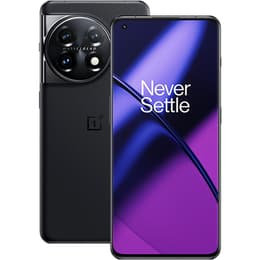
OnePlus 11
OnePlus 11
Starting at

Refurbished price:325.00

Versus €949.00 new

See options
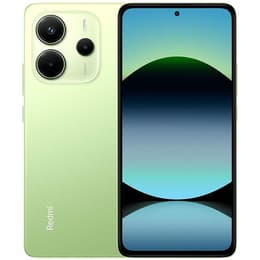
Xiaomi Redmi Note 14 4G
Starting at

Refurbished price:162.00

Versus €229.99 new

See options

Ratings

The OnePlus 11, released in early 2023, and the Xiaomi Redmi Note 14 4G, launched in early 2025, represent distinct approaches to smartphone design and functionality. While the OnePlus 11 is positioned as a high-performance device, the Redmi Note 14 4G focuses on delivering a balanced experience with a strong emphasis on core features. Both devices operate on the Android platform, with the OnePlus 11 running OxygenOS and the Redmi Note 14 4G utilizing Xiaomi's HyperOS.

Scores

Durability

When considering the long-term usability of these devices, their release timelines and software support policies are key factors.

  • Software Longevity: The OnePlus 11, having launched in 2023, is expected to receive four major Android updates and five years of security updates from its release date, extending its software support well into the future. The Redmi Note 14 4G, released in 2025 with Android 14, will likely benefit from a similar, if not slightly longer, support window for its operating system and security patches.
  • Physical Durability: The OnePlus 11 features Gorilla Glass Victus on the front and Gorilla Glass 5 on the back, encased in an aluminum frame, offering a robust build with an IP64 rating for dust and splash resistance. The Redmi Note 14 4G also incorporates Gorilla Glass 5 for screen protection and carries an IP54 rating, indicating resistance to dust and splashes.
  • Practical Lifespan: Users can expect both phones to remain functional for several years, with the OnePlus 11 offering a slightly more premium build. The Redmi Note 14 4G's design, while durable for everyday use, may not withstand impacts as readily as devices with higher-grade glass or metal frames.

Year of Release

2023

2025

OS

Android

Android

Foldable

No

No

Performance

The performance of a smartphone is crucial for daily tasks, from browsing to demanding applications and gaming.

  • Processing Power: The OnePlus 11 is equipped with a high-end processor that allows for exceptionally smooth multitasking, rapid app loading, and a fluid experience even with graphically intensive games. Users will find it handles demanding tasks without noticeable slowdowns. In contrast, the Redmi Note 14 4G features a processor designed for efficient everyday performance, capable of handling common applications and moderate gaming, though it may exhibit occasional stutters with very intensive workloads.
  • Memory and Storage: The OnePlus 11 offers configurations with higher RAM capacities and faster storage technologies (UFS 4.0), contributing to its overall responsiveness and quicker data access. The Redmi Note 14 4G provides ample storage and RAM for its segment, utilizing UFS 2.2 storage, and includes a hybrid microSD card slot for expandable storage, a feature not present on the OnePlus 11.
  • Battery Experience: Both devices feature large battery capacities, with the Redmi Note 14 4G having a slightly larger 5500 mAh battery compared to the OnePlus 11's 5000 mAh. The OnePlus 11 supports significantly faster wired charging, allowing for a full charge in under 30 minutes, while the Redmi Note 14 4G offers 33W fast charging. Neither device supports wireless charging.

Memory (GB)

16 GB

6 GB

Screen quality

The display is a primary interface for users, and both phones offer vibrant viewing experiences with distinct characteristics.

  • Display Technology and Resolution: The OnePlus 11 features a 6.7-inch LTPO3 Fluid AMOLED display with a QHD+ resolution (1440 x 3216 pixels), providing exceptional sharpness and detail. The Redmi Note 14 4G comes with a 6.67-inch AMOLED display with a Full HD+ resolution (1080 x 2400 pixels), which offers clear visuals suitable for most content consumption.
  • Brightness and Smoothness: Both phones boast a 120Hz refresh rate for fluid scrolling and animations. The OnePlus 11's LTPO technology allows for an adaptive refresh rate from 1Hz to 120Hz, optimizing battery life. The Redmi Note 14 4G offers high peak brightness, reaching up to 1800 nits, which aids in outdoor visibility, while the OnePlus 11 reaches 1300 nits peak brightness.
  • Viewing Experience: The OnePlus 11's higher resolution and adaptive refresh rate contribute to a more refined and immersive visual experience, particularly for high-definition media. The Redmi Note 14 4G's display, while not as pixel-dense, still provides a bright and smooth viewing experience for everyday use and media consumption.

Resolution

1440 x 3216

1080x2400

Audiovisual

Photography capabilities are a significant consideration for many users, and these devices offer different camera setups.

  • Rear Camera System: The OnePlus 11 features a versatile triple camera system co-developed with Hasselblad, including a 50 MP main sensor with optical image stabilization (OIS), a 48 MP ultrawide lens, and a 32 MP telephoto lens with 2x optical zoom. The Redmi Note 14 4G relies primarily on its 108 MP main camera, complemented by 2 MP macro and 2 MP depth sensors, but notably lacks an ultrawide camera.
  • Photography Performance: The OnePlus 11 is praised for its capable main camera, good low-light performance, and accurate color reproduction, with 8K video recording capabilities. The Redmi Note 14 4G's 108 MP main sensor delivers sharp and detailed images in good lighting, but its performance in low-light conditions and the utility of its secondary sensors are less pronounced.
  • Front Camera and Video: The OnePlus 11 has a 16 MP front camera, while the Redmi Note 14 4G features a 20 MP front camera, which is an upgrade from its predecessor. The OnePlus 11 offers more advanced video recording options, including 8K, while the Redmi Note 14 4G's video capabilities are more standard.

Miscellaneous

Beyond core features, several practical elements contribute to the overall user experience.

  • Connectivity and Ports: The OnePlus 11 supports 5G connectivity and newer Wi-Fi standards (Wi-Fi 6/7), offering faster network speeds. The Redmi Note 14 4G is limited to 4G connectivity but includes an IR Blaster for controlling home appliances and a 3.5mm headphone jack, which the OnePlus 11 lacks. Both devices feature a USB-C port, though the OnePlus 11 uses the older USB 2.0 standard.
  • Biometrics and Design: Both phones incorporate in-display fingerprint sensors for secure unlocking. The OnePlus 11 has a premium design with a glass and aluminum construction, while the Redmi Note 14 4G typically features a plastic frame with a glass front. The OnePlus 11 also brings back the alert slider, a popular physical control for notification modes.
  • Audio Experience: Both devices offer stereo speakers, with the Redmi Note 14 4G featuring Dolby Atmos support for an enhanced audio experience. The OnePlus 11 also provides a loud and well-tuned stereo speaker setup.

Weight

205 g

196 g

Screen size (in)

6.7

6.67

Network

5G

4G

SIM card

Physical SIM

Physical SIM + eSIM

Carrier compatibility

Unlocked

Unlocked

User feedback for the OnePlus 11 frequently highlights its exceptional battery life, rapid charging capabilities, and consistently smooth performance across various applications. Its display is often praised for its clarity and vibrant colors, and the camera system is generally well-regarded for producing quality images. Common criticisms include the absence of wireless charging and the use of a USB 2.0 port.

For the Xiaomi Redmi Note 14 4G, users appreciate its bright AMOLED display and the capable main camera, especially considering its market segment. The large battery capacity and the inclusion of a 3.5mm headphone jack and expandable storage are also frequently cited as positive aspects. However, some users have expressed concerns about the lack of an ultrawide camera, the utility of the secondary macro and depth sensors, and occasional software update delays or performance stutters.

Users prioritizing top-tier performance, a highly refined display, and advanced camera features for photography and videography may find the OnePlus 11 well-suited to their needs. Its fast charging and long-term software support also make it a compelling choice for those seeking a premium experience. Conversely, individuals who value a large battery, expandable storage, and the convenience of a headphone jack, while still desiring a capable main camera and a vibrant display for everyday use, might lean towards the Redmi Note 14 4G. This device is a practical option for users who don't require 5G connectivity or the absolute highest processing power.

For those looking to make a sustainable choice, considering a quality-assured refurbished option for either device can be an eco-friendly alternative to purchasing new.

See all articles

Our recent comparisons