

iPhone 16 Pro Vs Xiaomi 14T Pro

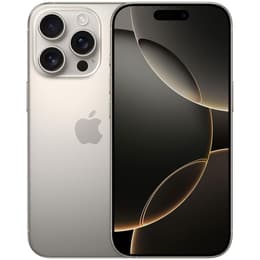
iPhone 16 Pro
iPhone 16 Pro
Starting at

Refurbished price:645.00

Versus €1,239.00 new

See options
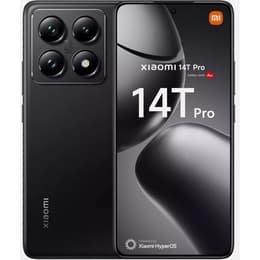
Xiaomi 14T Pro
Xiaomi 14T Pro
Starting at

Refurbished price:394.00

Versus €900.00 new

See options

Ratings

The iPhone 16 Pro, released in September 2024, and the Xiaomi 14T Pro, also launched in September 2024, represent two distinct approaches to high-performance smartphones. Both devices offer advanced features and capabilities, but they cater to different user preferences through their respective operating systems and hardware philosophies. While the iPhone 16 Pro emphasizes a refined user experience with its proprietary ecosystem, the Xiaomi 14T Pro focuses on delivering a feature-rich Android experience with rapid charging and a highly customizable interface.

Scores

Durability

When considering the long-term usability of these devices, several factors come into play, including software support, physical resilience, and repairability.

  • Software Longevity: The iPhone 16 Pro launched with iOS 18 and is expected to receive major iOS updates for at least seven generations, extending its software support well into the future. The Xiaomi 14T Pro, running Android 14 with Xiaomi HyperOS, is slated to receive up to five years of HyperOS and Android updates, with support extending until approximately 2029.
  • Physical Durability: The iPhone 16 Pro features a titanium design and Ceramic Shield front glass, offering robust protection against everyday wear. It also boasts an IP68 rating for dust and water resistance, allowing submersion up to 6 meters for 30 minutes. The Xiaomi 14T Pro utilizes an aluminum alloy frame and glass back, also carrying an IP68 rating for dust and water resistance, though typically rated for submersion up to 2 meters for 30 minutes.
  • Repairability Considerations: While specific repairability scores can vary, both manufacturers offer official repair services. Users often find that Apple's ecosystem can lead to higher costs for out-of-warranty repairs, whereas Android devices like the Xiaomi 14T Pro may have a broader network of third-party repair options, potentially influencing the practical lifespan for some users.

Year of Release

2024

2024

Compatible with latest Update

Yes

Yes

Foldable

No

No

Performance

Both smartphones are equipped with powerful internal components designed to handle demanding applications and multitasking with ease, though their underlying architectures differ.

  • Processing Power: The iPhone 16 Pro is powered by Apple's A18 Pro chip, which features a 6-core CPU, a 6-core GPU, and a 16-core Neural Engine. This configuration is optimized for efficient performance across various tasks, including advanced AI functionalities and graphics-intensive applications. The Xiaomi 14T Pro incorporates the MediaTek Dimensity 9300+ chipset, characterized by an All-Big-Core CPU architecture and a flagship-level GPU, also designed to deliver strong performance and support for generative AI.
  • Multitasking and Responsiveness: The iPhone 16 Pro comes with 8 GB of RAM, which, combined with iOS optimization, ensures smooth app switching and responsive operation. The Xiaomi 14T Pro typically offers 12 GB of RAM in its review models, providing ample memory for extensive multitasking and resource-heavy applications within its HyperOS environment.
  • Storage Options: The iPhone 16 Pro offers storage configurations ranging from 128 GB up to 1 TB. The Xiaomi 14T Pro also provides generous storage options, with models available up to 1 TB.

Memory (GB)

8 GB

16 GB

Screen quality

The visual experience on both devices is a highlight, with each offering a high-quality display tailored for vibrant visuals and smooth interactions.

  • Display Technology and Clarity: The iPhone 16 Pro features a 6.3-inch Super Retina XDR OLED display with a resolution of 2622 × 1206 pixels, resulting in a pixel density of 460 PPI. This OLED panel delivers deep blacks and vibrant colors. The Xiaomi 14T Pro sports a slightly larger 6.67-inch AMOLED display with a resolution of 2712 x 1220 pixels, offering a pixel density of 446 PPI. Its CrystalRes AMOLED technology aims for sharp and vivid imagery.
  • Brightness and Refresh Rate: Both phones offer excellent brightness levels, with the iPhone 16 Pro reaching 1000 nits typical and 2000 nits peak brightness, ensuring good visibility in various lighting conditions. The Xiaomi 14T Pro boasts an impressive peak brightness of 4000 nits, making it exceptionally bright for outdoor use. The iPhone 16 Pro features an adaptive refresh rate of up to 120 Hz, providing fluid scrolling and animations. The Xiaomi 14T Pro goes a step further with an adaptive refresh rate of up to 144 Hz, which can offer an even smoother experience in compatible applications and games.
  • Viewing Experience: Both displays support HDR content, enhancing the viewing experience for movies and high-quality media. The iPhone 16 Pro's display has thinner borders, contributing to a more immersive edge-to-edge viewing experience. The Xiaomi 14T Pro also features an ultra-thin bezel design, with a narrow chin bezel, aiming for a balanced and immersive visual.

Resolution

1206 x 2622

1220 x 2712

Screen type

LTPO Super Retina XDR OLED

AMOLED

Audiovisual

Both smartphones offer advanced camera systems, co-engineered with renowned photography brands, to deliver high-quality imaging and video capabilities.

  • Rear Camera Systems: The iPhone 16 Pro features a versatile triple-camera setup, including a 48 MP main camera with a second-generation sensor, a 48 MP ultrawide camera with a 120-degree field of view, and a 12 MP 5x telephoto camera. It also includes a TOF 3D LiDAR scanner for improved depth sensing. The Xiaomi 14T Pro boasts a Leica co-engineered triple-lens system, comprising a 50 MP main camera with a Light Fusion 900 sensor, a 50 MP telephoto lens (60mm equivalent), and a 12 MP ultrawide camera (15mm equivalent).
  • Photography Performance: The iPhone 16 Pro's Fusion camera and computational photography excel in capturing detailed images with good dynamic range and low-light performance. The 48 MP ultrawide camera is noted for its sharpness. The Xiaomi 14T Pro, with its Leica Summilux optical lens and Light Fusion 900 sensor, is praised for its natural-looking photos, excellent color reproduction, and strong low-light capabilities.
  • Video Capabilities: The iPhone 16 Pro supports 4K video recording at up to 120 frames per second, including ProRes Log capture, offering advanced options for videographers. The Xiaomi 14T Pro is capable of recording 8K video at 30 frames per second and also offers LOG capture at up to 4K resolution, along with various cinematic modes and features like focus switch. Both devices include advanced audio recording features for video.

Main camera

48 megapixels

50 megapixels

Front camera

12 megapixels

32 megapixels

Miscellaneous

Beyond core performance, several practical features and design elements differentiate these two devices, impacting daily usability and user experience.

  • Connectivity and Ports: Both smartphones support modern connectivity standards, including Wi-Fi 7 and 5G for fast wireless data. The iPhone 16 Pro features a USB-C port, offering versatile connectivity. The Xiaomi 14T Pro also uses a USB-C port.
  • Biometric Security: The iPhone 16 Pro relies on Face ID for secure facial recognition. The Xiaomi 14T Pro incorporates an in-display optical fingerprint sensor for biometric authentication, which users report as responsive and swift.
  • Design and Handling: The iPhone 16 Pro has dimensions of 149.6 x 71.5 x 8.25 mm and weighs 199 grams, featuring a titanium design that is both strong and lightweight. It also introduces a new Camera Control button for quick access to camera functions. The Xiaomi 14T Pro measures 160.38 x 75.14 x 8.39 mm and weighs 209 grams, with an aluminum alloy frame and a subtle curvature on the back for comfortable handling despite its size.
  • Charging Speed: The iPhone 16 Pro supports fast wired charging, achieving up to 50% charge in 30 minutes with a 20W or higher adapter, and also supports MagSafe and Qi2 wireless charging. The Xiaomi 14T Pro stands out with its 120W wired HyperCharge, capable of a full charge in approximately 20 minutes, and also offers 50W wireless HyperCharge.

Weight

199 g

209 g

Screen size (in)

6.3

6.67

Network

5G

5G

SIM card

eSIM

Dual Physical SIM

Carrier compatibility

Unlocked

Unlocked

The iPhone 16 Pro and Xiaomi 14T Pro both offer compelling smartphone experiences, each with distinct strengths that appeal to different user priorities. User sentiment for the iPhone 16 Pro often highlights its seamless integration within the Apple ecosystem, consistent software updates, and robust camera performance, particularly for video recording. Some users appreciate the refined design and the introduction of the Camera Control button for enhanced photography. However, some discussions around the iPhone 16 Pro mention that while battery life is improved over previous Pro models, it still typically requires daily charging for heavy users.

For the Xiaomi 14T Pro, common praise points include its exceptionally bright and smooth display, the versatility and quality of its Leica-tuned camera system, and its industry-leading fast charging capabilities. Users also value the extensive customization options offered by HyperOS and the inclusion of advanced AI features like Google Gemini. Some user feedback indicates that while performance is strong, the device can generate noticeable heat during extended periods of intensive gaming.

Users prioritizing a long-term software commitment, a highly integrated ecosystem, and advanced video recording features may find the iPhone 16 Pro well-suited to their needs. Conversely, users who value a larger, exceptionally bright display, rapid charging speeds, and a highly customizable Android experience with a strong photography focus might lean toward the Xiaomi 14T Pro. Both devices represent excellent choices in the high-end smartphone market, and for those considering a more sustainable option, quality-assured refurbished versions of either model can provide an eco-friendly alternative.


See all articles

Our recent comparisons