

Compare models

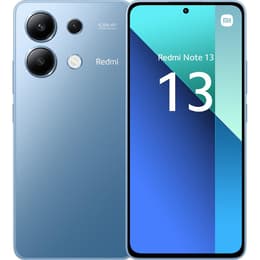
Galaxy S25 Edge Vs Xiaomi Redmi Note 13 4G

  • 1-year minimum warranty
  • Free delivery on all orders
  • Free 30-day returns
Galaxy S25 Edge
Starting at

Refurbished price:506.00

Versus €1,275.21 new

See options
Xiaomi Redmi Note 13 4G
Starting at

Refurbished price:155.00

Versus €176.04 new

See options

Differences at a glance

The Samsung Galaxy S25 Edge (2025) and the Xiaomi Redmi Note 13 4G (2024) are distinct smartphones designed for vastly different everyday usage requirements and hardware philosophies. While both devices run on the Android operating system, they approach mobile computing through contrasting design frameworks, ranging from ultra-slim flagship engineering to practical, feature-rich daily utility. Understanding these fundamental differences helps users determine which device aligns with their specific lifestyle needs.

Available Models

Colour

Storage (GB)

Scores

Durability

When evaluating the long-term viability and physical endurance of these devices, several generational and structural differences emerge regarding software support and build resilience.

  • Software support duration: The Galaxy S25 Edge benefits from an extended software update commitment spanning multiple years, whereas the Xiaomi Redmi Note 13 4G follows a more standard mid-range update lifecycle.
  • Repairability and physical resilience: The Galaxy S25 Edge features advanced glass protection and robust water-resistance certifications, while the Xiaomi Redmi Note 13 4G relies on basic splash resistance and conventional panel protection.
  • Expected lifespan: Users seeking maximum software longevity and sustained security updates will find the Galaxy S25 Edge better equipped for multi-year retention.

Year of Release

2025

2024

Compatible with latest Update

Yes

Yes

OS

Android

Android

Foldable

No

No

Performance

Daily computing capability varies significantly between the two models, influencing how smoothly demanding applications, system multitasking, and routine navigation operate.

  • System responsiveness and multitasking: The Galaxy S25 Edge handles intensive background tasks, high-end mobile gaming, and rapid app switching effortlessly, whereas the Xiaomi Redmi Note 13 4G is tailored for routine messaging, web browsing, and media streaming.
  • Storage capacity options: Both devices offer generous internal storage configurations, though the Xiaomi Redmi Note 13 4G includes expandable storage via a memory card slot, which is absent on the Samsung model.
  • Battery behavior: The Galaxy S25 Edge manages power efficiently despite a slim profile, while the Xiaomi Redmi Note 13 4G relies on a larger physical battery capacity to sustain moderate daily workloads through extended periods.

Screen quality

Display performance shapes the primary visual experience for media consumption, reading, and outdoor visibility across both handsets.

  • Display technology and clarity: The Galaxy S25 Edge utilizes an advanced high-resolution panel with deep contrast and exceptional pixel density, while the Xiaomi Redmi Note 13 4G features a dependable high-refresh-rate screen suitable for daily viewing.
  • Outdoor peak brightness: The Samsung model achieves higher maximum luminance levels for comfortable visibility under direct sunlight compared to the more moderate brightness profile of the Xiaomi option.
  • Refresh rate smoothness: Both devices support fluid scrolling and responsive touch interaction through high refresh rate capabilities, ensuring smooth visual transitions during daily menu navigation.

Resolution

1440 x 3120

1080 x 2400

Audiovisual

Multimedia capture and audio output capabilities dictate how each phone handles photography, video recording, and media playback.

  • Camera system versatility: The Galaxy S25 Edge incorporates high-resolution primary sensors with advanced image stabilization for detailed captures, while the Xiaomi Redmi Note 13 4G employs a multi-lens layout focused on standard everyday snapshots.
  • Video recording features: The Samsung device supports high-definition video formats and robust stabilization, whereas the Xiaomi model is optimized primarily for standard resolution recording.
  • Audio and speaker output: Media consumption through built-in speakers differs due to physical enclosure constraints, with both models delivering clear vocal reproduction for calls and casual listening.

Front camera

12MP

16 megapixels

Miscellaneous

Practical everyday features, connectivity standards, and physical handling characteristics define the ergonomic and functional profile of each smartphone.

  • Physical dimensions and weight: The Galaxy S25 Edge prioritizes an exceptionally thin and lightweight chassis, whereas the Xiaomi Redmi Note 13 4G features a thicker profile that accommodates traditional port layouts.
  • Wired and wireless connectivity: The Samsung model supports modern 5G networks and wireless charging features, while the Xiaomi Redmi Note 13 4G focuses strictly on 4G LTE connectivity and traditional wired charging methods.
  • Physical ports and audio options: The Xiaomi Redmi Note 13 4G retains a traditional headphone jack and infrared blaster, features that are omitted on the streamlined frame of the Galaxy S25 Edge.

Weight

163 g

188 g

Screen size (in)

6.7

6.67

Network

5G

4G

SIM card

Physical SIM + eSIM

Dual Physical SIM

Carrier compatibility

Unlocked

Unlocked

What the community thinks

Real-world user feedback highlights distinct strengths for each smartphone across online communities and review platforms. Users frequently praise the Galaxy S25 Edge for its remarkable screen clarity, premium thin profile, and high-tier processing speeds, though some note that its slim battery capacity requires mindful power management during intensive use days. Conversely, users appreciate the Xiaomi Redmi Note 13 4G for its reliable daily battery endurance, inclusion of expandable storage, and practical traditional ports, while noting that its processor is best suited for lighter tasks rather than demanding gaming.

Users prioritizing raw computing power, cutting-edge display technology, and long-term software support may prefer the Galaxy S25 Edge. Meanwhile, users prioritizing everyday battery endurance, expandable storage flexibility, and traditional connectivity options will find the Xiaomi Redmi Note 13 4G well-suited to their needs. For those considering an eco-friendly alternative, exploring a quality-assured refurbished option provides a sustainable choice that aligns with diverse technology preferences.