

iPhone 12 Pro Vs iPhone X

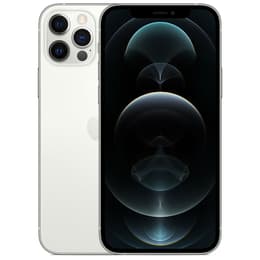
iPhone 12 Pro
iPhone 12 Pro
Starting at

Refurbished price:236.00

Versus €1,039.00 new

See options
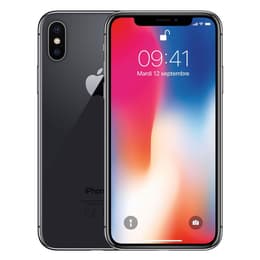
iPhone X
iPhone X
Starting at

Refurbished price:124.96

Versus €439.00 new

See options

Ratings

The iPhone 12 Pro, released in October 2020, and the iPhone X, launched in November 2017, represent different generations within Apple's smartphone lineup. While both devices offer a premium experience with an OLED display and Face ID authentication, the iPhone 12 Pro introduces significant advancements in processing power, camera capabilities, and network connectivity. These differences cater to varying user needs and priorities, making a detailed comparison valuable for those considering a quality-assured refurbished option.

Scores

Durability

The practical lifespan of a smartphone is influenced by its initial release date, software support, and physical resilience. The iPhone 12 Pro, being a more recent model, benefits from a longer expected period of software updates and incorporates newer durability features.

  • Software Longevity: The iPhone X, released in 2017, supports iOS versions up to iOS 16, but does not receive updates for iOS 17 and higher due to hardware limitations. In contrast, the iPhone 12 Pro, launched in 2020, shipped with iOS 14 and is currently supported by iOS 26.4, indicating a significantly longer future for software and security updates.
  • Physical Durability: The iPhone X features a glass front and back with a stainless steel frame. The iPhone 12 Pro enhances this with a Ceramic Shield front cover, which offers improved drop performance, alongside its stainless steel frame and glass back.
  • Water and Dust Resistance: Both devices offer protection against water and dust ingress. The iPhone X is rated IP67, meaning it can withstand immersion in water up to 1 meter for 30 minutes. The iPhone 12 Pro improves upon this with an IP68 rating, allowing for submersion up to 6 meters for 30 minutes.

Year of Release

2020

2017

Compatible with latest Update

Yes

No

OS

iOS

iOS

Foldable

No

No

Performance

Performance is a key differentiator, particularly given the generational gap between these two devices. The advancements in internal components directly impact how smoothly applications run, how quickly tasks are completed, and the overall responsiveness of the user interface.

  • Storage Options: The iPhone X was available with 64GB or 256GB of internal storage. The iPhone 12 Pro offers more generous base storage, starting at 128GB, with options for 256GB and 512GB, providing greater flexibility for users with extensive media libraries or numerous applications.
  • Processing Power: The iPhone 12 Pro features a newer generation processor compared to the iPhone X. This translates to noticeably faster app loading times, smoother multitasking, and more fluid performance in demanding applications and graphically intensive games.
  • Multitasking Capability: With 6GB of RAM, the iPhone 12 Pro offers enhanced multitasking capabilities, allowing users to switch between multiple open applications more seamlessly without experiencing slowdowns. The iPhone X, with 3GB of RAM, handles everyday tasks efficiently but may show limitations with a higher number of active applications.
  • Battery Behavior: While both devices are designed for all-day use, the iPhone 12 Pro's more efficient processor and slightly larger battery capacity (2815 mAh compared to 2716 mAh in the iPhone X) generally contribute to extended usage times for many users, particularly under heavy workloads.

Memory

6 GB

3 GB

Screen quality

Both the iPhone X and iPhone 12 Pro feature OLED display technology, delivering vibrant colors and deep blacks. However, the newer model incorporates refinements that enhance the viewing experience.

  • Display Technology and Clarity: Both phones utilize OLED technology, branded as Super Retina HD on the iPhone X and Super Retina XDR on the iPhone 12 Pro. This ensures excellent contrast ratios and true black levels. The iPhone 12 Pro's Super Retina XDR display offers a slightly higher resolution (2532x1170 pixels at 460 ppi) over the iPhone X (2436x1125 pixels at 458 ppi), resulting in marginally sharper visuals.
  • Brightness Levels: The iPhone 12 Pro provides a brighter display, with a typical maximum brightness of 800 nits and a peak HDR brightness of 1200 nits. The iPhone X has a typical maximum brightness of 625 nits. This increased brightness on the 12 Pro improves visibility in bright outdoor conditions and enhances HDR content viewing.
  • Screen Size and Viewing Experience: The iPhone X features a 5.8-inch OLED display, while the iPhone 12 Pro offers a slightly larger 6.1-inch OLED display. Both provide an immersive, edge-to-edge viewing experience, but the 12 Pro's larger screen offers a bit more screen real estate for media consumption and productivity.
  • Color and Features: Both displays support True Tone and a wide color gamut (P3), ensuring accurate and consistent color reproduction. The iPhone 12 Pro further benefits from HDR with Dolby Vision support, providing a more dynamic range for compatible video content.

Resolution

1170 x 2532

1125 x 2436

Screen type

Super Retina XDR OLED

Super Retina OLED

Audiovisual

The camera systems on these two iPhones reflect significant advancements over their respective release years, with the iPhone 12 Pro offering a more versatile and capable setup, particularly in challenging lighting conditions and video recording.

  • Rear Camera System: The iPhone X features a dual 12-megapixel camera system with a wide-angle (f/1.8) and a telephoto (f/2.4) lens, offering 2x optical zoom and dual optical image stabilization. The iPhone 12 Pro upgrades to a triple 12-megapixel system, adding an ultra-wide (f/2.4) lens, a wider aperture on the main wide lens (f/1.6), and an improved telephoto lens (f/2.0) with 2x optical zoom. The 12 Pro also introduces Night mode, Deep Fusion, Smart HDR 3, and a LiDAR Scanner for enhanced low-light performance and improved autofocus.
  • Front Camera Capabilities: The iPhone X includes a 7-megapixel TrueDepth front camera with Portrait Mode and Animoji. The iPhone 12 Pro features a higher-resolution 12-megapixel TrueDepth front camera, which also supports Night mode, Deep Fusion, Smart HDR 3, and Animoji/Memoji, providing clearer selfies and better performance in varied lighting.
  • Video Recording Quality: Both devices can record 4K video at up to 60 frames per second and slow-motion video at 1080p up to 240 frames per second, with optical image stabilization for video. The iPhone 12 Pro distinguishes itself with HDR video recording with Dolby Vision at up to 60 frames per second, offering superior dynamic range and color accuracy in video content, along with Night mode Time-lapse.
  • Audio Experience: While both provide a good audio experience for calls and media, the iPhone 12 Pro offers stereo recording for video, which can enhance the immersive quality of captured footage.

Main camera

12 megapixels

12 megapixels

Front camera

12 megapixels

7 megapixels

Miscellaneous

Beyond core performance and display, several practical features contribute to the overall user experience, from connectivity to physical design and advanced sensors.

  • Network Connectivity: A significant difference lies in network support. The iPhone X is limited to 4G LTE connectivity. The iPhone 12 Pro introduces 5G capabilities, offering potentially faster download and upload speeds in areas with 5G network coverage.
  • Wireless Technologies: Both devices support Wi-Fi and Bluetooth 5.0. However, the iPhone 12 Pro features Wi-Fi 6 (802.11ax) for improved wireless performance and efficiency with compatible routers, and introduces MagSafe for enhanced wireless charging and accessory attachment.
  • Authentication and Sensors: Both phones rely on Face ID for secure facial recognition. The iPhone 12 Pro further integrates a LiDAR Scanner, which enhances augmented reality (AR) experiences and improves autofocus performance in low-light photography.
  • Physical Design and Handling: The iPhone X measures 143.6 x 70.9 x 7.7 mm and weighs 174 grams. The iPhone 12 Pro is slightly larger and heavier at 146.7 x 71.5 x 7.4 mm and 189 grams, but also thinner. Both feature a premium glass and stainless steel construction, with the 12 Pro introducing a flat-edged design compared to the X's more rounded frame.

Weight

187 g

174 g

Width

7.15 cm

7,09 cm

Height

14.67 cm

14,36 cm

Depth

0.74 cm

0,77 cm

Screen size (in)

6.1

5.8

Network

5G

4G

SIM card

Physical SIM + eSIM

Physical SIM

Carrier compatibility

Unlocked

Unlocked

Connector

Lightning

Lightning

The iPhone 12 Pro and iPhone X, while both offering a premium Apple experience, cater to different user expectations due to their generational gap. The iPhone X was lauded for its groundbreaking OLED display and the introduction of Face ID, which redefined the iPhone's design language. Users often praised its compact form factor and solid camera performance for its time. Some initial criticisms revolved around the notch design, though many users adapted quickly.

The iPhone 12 Pro, on the other hand, received acclaim for its enhanced camera system, particularly its low-light capabilities and the introduction of Dolby Vision HDR video recording, making it a strong choice for content creators. Its faster processor and 5G connectivity were also significant upgrades, alongside the improved durability offered by the Ceramic Shield front cover.

Users prioritizing a more compact device with a still-excellent OLED display and reliable performance for everyday tasks may find the iPhone X well-suited to their needs. It remains a capable device for communication, browsing, and casual photography. Conversely, users who require the latest in mobile photography and videography, demand faster performance for intensive applications, or desire 5G connectivity for quicker data speeds will likely lean towards the iPhone 12 Pro. Its extended software support also makes it a more future-proof choice for those planning to keep their device for a longer period. Both models are available as quality-assured refurbished options, providing a sustainable choice for consumers.


See all articles

Our recent comparisons