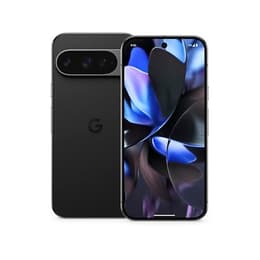
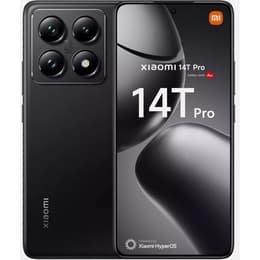


Google Pixel 9 Pro Vs Xiaomi 14T Pro

Google Pixel 9 Pro
Google Pixel 9 Pro
Starting at

Refurbished price:475.00

Versus €1,299.00 new

See options
Xiaomi 14T Pro
Xiaomi 14T Pro
Starting at

Refurbished price:395.00

Versus €1,500.00 new

See options

Ratings

The Google Pixel 9 Pro and the Xiaomi 14T Pro, both released in late 2024, represent distinct approaches to the modern flagship smartphone. While the Pixel 9 Pro emphasizes advanced computational photography and integrated artificial intelligence within a streamlined Android experience, the Xiaomi 14T Pro focuses on raw performance, rapid charging capabilities, and a feature-rich display, running on Android with Xiaomi's HyperOS.

Scores

Durability

When considering the long-term usability of these devices, several factors contribute to their expected lifespan, including software support and physical resilience.

  • Software Longevity: The Google Pixel 9 Pro is designed for extended software support, typically receiving seven years of operating system and security updates from its release in September 2024. This commitment ensures access to the latest Android features and security enhancements for a considerable period. The Xiaomi 14T Pro, launched in September 2024, offers four years of Android updates and five years of security patches, with support extending until at least September 2029.
  • Repairability: The Google Pixel 9 Pro has a repairability index score of 8.4 out of 10, indicating a design that facilitates easier repairs. However, the larger Pixel 9 Pro XL model has been noted for challenges in disassembly, particularly with strong adhesives making screen and battery access difficult. Information regarding the specific repairability score for the Xiaomi 14T Pro is not readily available, but its construction includes Gorilla Glass 5 on the front and Panda X Glass on the back, along with an aluminum frame.
  • Practical Lifespan: Both devices are built with robust materials, including reinforced glass and aluminum frames, contributing to their physical durability. The Pixel 9 Pro's longer software update commitment suggests a potentially longer period of optimal software functionality, while the Xiaomi 14T Pro's build materials offer a solid foundation for physical endurance.

Year of Release

2024

2024

Compatible with latest Update

Yes

Yes

OS

Android

Android

Foldable

No

No

Performance

The performance of a smartphone is crucial for daily tasks, demanding applications, and overall user experience, with both devices offering distinct strengths in this area.

  • Processing Power: The Google Pixel 9 Pro is equipped with Google's Tensor G4 chipset, designed to optimize artificial intelligence features and deliver solid overall performance. While capable for most tasks, some reports indicate that it may experience performance lags under heavy load. The Xiaomi 14T Pro features the MediaTek Dimensity 9300+ processor, which is noted for its snappy performance and efficiency, with users reporting it handles demanding tasks smoothly.
  • Memory and Storage: The Pixel 9 Pro comes with 16GB of RAM, with a portion dedicated to enhancing AI functionalities. Storage options range from 128GB up to 1TB. The Xiaomi 14T Pro offers configurations with 12GB or 16GB of RAM and storage options including 256GB, 512GB, and 1TB.
  • Battery and Charging: The Pixel 9 Pro houses a 4700mAh battery, providing solid battery life that can last through a full day of typical use, with some tests showing over 17 hours of video streaming. It supports 45W wired charging, capable of reaching 70% in 30 minutes, and includes wireless charging. The Xiaomi 14T Pro features a larger 5000mAh battery, offering excellent endurance for moderate to heavy usage, with some tests indicating up to two days of continuous use. A key highlight is its 120W wired fast charging, which can fully recharge the device in under 25 minutes, alongside 50W wireless charging.

Memory (GB)

16 GB

12 GB

Screen quality

The visual experience on a smartphone is largely defined by its display, and both the Pixel 9 Pro and Xiaomi 14T Pro offer high-quality screens with distinct characteristics.

  • Display Technology and Resolution: Both devices feature vibrant OLED displays, known for deep blacks and rich colors. The Google Pixel 9 Pro has a 6.3-inch display with a resolution of 2856 x 1280 pixels, resulting in a pixel density of 495 pixels per inch (ppi). The Xiaomi 14T Pro offers a slightly larger 6.67-inch display with a resolution of 2712 x 1220 pixels and a pixel density of 446 ppi.
  • Brightness and Clarity: The Pixel 9 Pro's display can reach a peak brightness of 2000 nits for HDR content and up to 3000 nits for general use, ensuring good visibility in various lighting conditions. The Xiaomi 14T Pro boasts an impressive peak brightness of 4000 nits, with a High Brightness Mode (HBM) of 1600 nits, making it exceptionally bright for outdoor viewing.
  • Refresh Rate and Smoothness: The Pixel 9 Pro features a 120Hz adaptive refresh rate, which can dynamically adjust down to 1Hz to conserve battery life, providing smooth scrolling and responsiveness. The Xiaomi 14T Pro offers an even higher 144Hz refresh rate, also capable of dynamic adjustment, which contributes to an exceptionally fluid visual experience, particularly noticeable in gaming and fast-paced content.

Resolution

1280 x 2856

1220 x 2712

Screen type

LTPO OLED

AMOLED

Audiovisual

Both smartphones offer advanced camera systems, but they approach photography with different philosophies and strengths.

  • Rear Camera System: The Google Pixel 9 Pro features a triple rear camera setup, including a 50MP main sensor with optical image stabilization (OIS), a 48MP ultrawide sensor with OIS, and a 48MP telephoto lens offering 5x optical zoom and 30x Super Res Zoom. Its strength lies in computational photography and AI-driven enhancements. The Xiaomi 14T Pro comes with a Leica-tuned triple camera system, comprising a 50MP main sensor with OIS, a 50MP telephoto lens with 2.6x optical zoom, and a 12MP ultrawide camera.
  • Photography Performance: The Pixel 9 Pro delivers exceptional photos with natural colors, crisp details, and strong low-light performance, particularly with its Night Sight mode. Its AI features enhance image quality and offer unique editing capabilities. The Xiaomi 14T Pro captures great daylight shots with impressive dynamic range and vibrant colors, and its Leica tuning provides distinct photographic styles. While its low-light performance is decent, some reviews suggest the Pixel 9 Pro may have an edge in challenging conditions.
  • Video and Front Camera: The Pixel 9 Pro supports up to 8K video recording and includes features like Video Boost with AI upscaling. Its 42MP front camera provides clean and flattering selfies, with good microphone quality for video calls. The Xiaomi 14T Pro also records up to 8K video at 30 frames per second and offers good video quality with balanced colors and stabilization. It features a 32MP front camera, capable of sharp and detailed selfies.

Main camera

50 megapixels

50 megapixels

Front camera

42 megapixels

32 megapixels

Miscellaneous

Beyond core performance and camera capabilities, several practical features contribute to the overall user experience of these smartphones.

  • Connectivity and Ports: Both devices support 5G connectivity, modern Wi-Fi standards, and Bluetooth for wireless connections. The Google Pixel 9 Pro includes a Satellite SOS feature for emergency communication in areas without cellular service. Both smartphones utilize a USB-C port for charging and data transfer.
  • Biometric Security: The Pixel 9 Pro offers secure Face Unlock, suitable for banking applications, alongside an ultrasonic fingerprint sensor integrated under the display. The Xiaomi 14T Pro features an optical fingerprint sensor embedded under the display, along with standard accelerometer, gyro, proximity, and compass sensors.
  • Design and Handling: The Pixel 9 Pro is described as a relatively compact device with excellent build quality and an aluminum frame. Its dimensions are approximately 152.8 mm (H) x 72 mm (W) x 8.5 mm (D). The Xiaomi 14T Pro has dimensions of 160.4 mm (H) x 75.1 mm (W) x 8.4 mm (D) and weighs 209 grams. It features Gorilla Glass 5 on the front, Panda X Glass on the back, and an aluminum frame, along with an IP68 rating for dust and water resistance.

Weight

280 g

209 g

Screen size (in)

6.8

6.67

Network

5G

5G

SIM card

Physical SIM + eSIM

Dual Physical SIM

Carrier compatibility

Unlocked

Unlocked

The Google Pixel 9 Pro and Xiaomi 14T Pro cater to different user priorities, each excelling in specific areas based on user feedback and specifications.

The Pixel 9 Pro is frequently praised for its exceptional camera performance, particularly its computational photography and integrated AI features that enhance image quality and offer unique functionalities. Users also appreciate its solid battery life and the promise of long-term software support. However, some users have noted that its performance, while generally solid, might not always match the raw power of some competitors when pushed to its limits.

Conversely, the Xiaomi 14T Pro receives acclaim for its powerful processing capabilities, delivering snappy performance for demanding applications and gaming. Its ultra-fast 120W wired charging and vibrant, high refresh rate display are also significant highlights for many users. Criticisms sometimes revolve around its battery life, which some users find to be good but not exceptional, and occasional software quirks or aggressive background app management within HyperOS.

Users prioritizing a streamlined Android experience with cutting-edge AI features, superior computational photography, and extended software longevity may find the Google Pixel 9 Pro to be a compelling choice. Its compact design also appeals to those seeking a more manageable form factor. On the other hand, individuals who value raw processing power, a large and exceptionally bright display, and industry-leading fast charging capabilities will likely lean towards the Xiaomi 14T Pro. Its versatile camera hardware, tuned by Leica, also offers a distinct photographic experience.

For those considering either of these advanced smartphones, exploring quality-assured refurbished options can provide an eco-friendly alternative, allowing access to premium technology while making a sustainable choice.


See all articles

Our recent comparisons