

Compare models
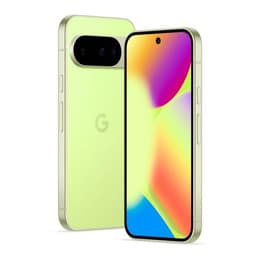
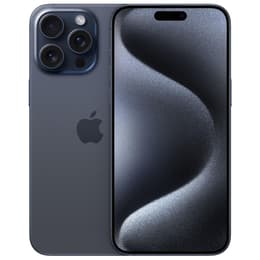
Google Pixel 10 Vs iPhone 15 Pro Max
- 1-year minimum warranty
- Free delivery on all orders
- Free 30-day returns
Differences at a glance
The Google Pixel 10 (released in 2025) and the iPhone 15 Pro Max (released in 2023) represent two distinct approaches to premium smartphone design and ecosystem philosophy. While the Google Pixel 10 offers a newer hardware generation in a compact form factor running Android, the iPhone 15 Pro Max provides a larger-screen iOS experience built within a titanium chassis. These two devices differ primarily in their physical footprint, software ecosystems, and camera configurations, catering to users with divergent preferences for mobile computing.
Available Models
Colour
Storage
Scores
Durability
When evaluating hardware longevity and software support, both devices offer robust multi-year update pathways backed by their respective manufacturers.
- Software lifecycle: The Google Pixel 10 benefits from an extended software support window spanning up to seven major updates, aligning with its recent release year. The iPhone 15 Pro Max typically receives five to six years of major iOS upgrades from its 2023 launch.
- Repairability and durability: Both models feature high-grade aluminum or titanium frames and strong front glass protection, alongside standardized parts availability that facilitates professional maintenance and supports an extended practical lifespan.
- Sustainable choices: Choosing a quality-assured refurbished option for either device extends their operational life cycle while reducing electronic waste.
Year of Release
2025
2023
Compatible with latest Update
Yes
Yes
OS
Android
iOS
Foldable
No
No
Performance
Underneath the exterior, both devices manage demanding applications, gaming, and multitasking smoothly through optimized processors and ample memory allocation.
- Multitasking capacity: The Google Pixel 10 features generous random access memory to handle simultaneous background tasks and on-device processing smoothly, while the iPhone 15 Pro Max utilizes efficient memory management to sustain high system responsiveness.
- Battery behavior: The Google Pixel 10 contains a high-capacity battery designed to navigate a full day of standard tasks, whereas the iPhone 15 Pro Max leverages power-efficient architecture to maintain reliable endurance for media consumption and daily communication.
- Storage configurations: Both smartphones offer multiple internal storage tiers to accommodate large photo libraries, applications, and offline files without supporting expandable memory cards.
Screen quality
Display characteristics differ notably between the two devices in terms of physical dimensions, panel technology, and viewing metrics.
- Panel technology: Both devices employ advanced OLED display panels that deliver deep contrast ratios, true blacks, and wide color reproduction for everyday viewing.
- Size and refresh rates: The Google Pixel 10 utilizes a compact 6.3-inch display with an adaptive refresh rate reaching up to 120Hz for smooth scrolling, while the iPhone 15 Pro Max features a larger 6.7-inch screen equipped with similar high-refresh technology.
- Outdoor visibility: Both screens reach high peak brightness levels, ensuring clear legibility and vibrant visuals even under direct sunlight.
Resolution
1080x2424
1290 x 2796
Screen type
OLED
LTPO Super Retina XDR OLED
Audiovisual
Imaging hardware and audio output shape the multimedia capabilities of both models for creators and casual users alike.
- Camera arrays: The Google Pixel 10 incorporates a versatile triple rear camera system featuring a primary wide lens, an ultrawide sensor, and a dedicated telephoto option. The iPhone 15 Pro Max features a comparable triple setup with an extended optical zoom lens utilizing a tetraprism design.
- Video and low-light performance: Both smartphones capture detailed low-light imagery through advanced computational processing and optical stabilization, while offering high-resolution video recording modes with clear audio capture from built-in microphone arrays.
- Media output: Stereo speaker configurations on both units deliver balanced sound output suitable for hands-free calls and casual media streaming.
Front camera
42 megapixels
12 megapixels
Miscellaneous
Practical daily usability is shaped by physical dimensions, connectivity standards, and biometric security features.
- Build and handling: The Google Pixel 10 offers a more compact and lighter profile that handles easily with one hand, whereas the iPhone 15 Pro Max presents a larger, heavier chassis constructed with textured glass and titanium edges.
- Connectivity and ports: Both devices support 5G cellular networks, modern Wi-Fi standards, and universal USB-C charging ports, replacing older proprietary connectors.
- Security sensors: Biometric authentication is handled via secure facial recognition or fingerprint scanning depending on the model, ensuring rapid device unlocking.
Weight
204 g
221 g
Screen size (in)
6.3
6.7
Network
4G
5G
SIM card
Physical SIM + eSIM
Physical SIM + eSIM
Carrier compatibility
Unlocked
Unlocked
Connector
USB-C
USB-C
What the community thinks
User discussions and community feedback highlight distinct preferences for each device depending on daily workflow requirements. Users frequently praise the Google Pixel 10 for its manageable physical size, intuitive artificial intelligence features, and extended software support timeline. Conversely, users often highlight the iPhone 15 Pro Max for its expansive screen real estate, robust build quality, and seamless integration within the broader Apple ecosystem. Common criticisms for the Pixel occasionally focus on thermal management during extended high-intensity gaming, while some users find the larger iPhone chassis heavy for prolonged one-handed use.
Users prioritizing a compact form factor, integrated artificial intelligence tools, and an Android environment will find the Google Pixel 10 well-suited to their needs. Meanwhile, users prioritizing a larger screen, iOS continuity, and a durable titanium build may lean toward the iPhone 15 Pro Max. Exploring a quality-assured refurbished option provides an eco-friendly alternative for acquiring either device while supporting sustainable technology consumption.