

Compare models

iPhone 12 Pro Vs iPhone 13 Pro

  • 1-year minimum warranty
  • Free delivery on all orders
  • Free 30-day returns
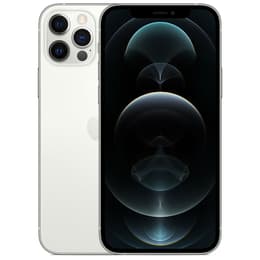
iPhone 12 Pro
iPhone 12 Pro
Starting at

Refurbished price:222.00

Versus €1,039.00 new

See options
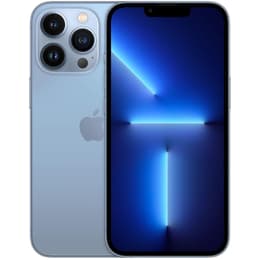
iPhone 13 Pro
iPhone 13 Pro
Starting at

Refurbished price:323.00

Versus €1,149.00 new

See options

Differences at a glance

The iPhone 12 Pro, released in October 2020, and the iPhone 13 Pro, launched in September 2021, are both premium smartphones from Apple. While they share a similar design philosophy and operate on the same iOS ecosystem, the iPhone 13 Pro introduced notable advancements in its camera system, display technology, and battery performance, building upon the foundation set by its predecessor.

Scores

Durability

When considering the long-term usability of these devices, their release timelines and software support are key factors. Both models are built with durable materials and are designed to withstand daily use.

  • Release Timeline: The iPhone 12 Pro was released in October 2020, while the iPhone 13 Pro followed in September 2021. This one-year difference impacts their expected software support duration.
  • OS Support: Apple typically provides several years of major iOS updates. The iPhone 12 Pro is expected to receive software updates until approximately 2027, offering a solid practical lifespan for its operating system. The iPhone 13 Pro, being a year newer, is anticipated to receive major iOS updates until around 2028, extending its software longevity.
  • Repairability: The iPhone 12 Pro received a repairability score of 6 out of 10 from iFixit, indicating a reasonable ease of repair for some components. The iPhone 13 Pro, however, scored 5 out of 10, partly due to increased complexity and software limitations that can complicate third-party repairs, particularly concerning Face ID functionality after screen replacements. Both models feature a Ceramic Shield front cover for enhanced drop protection.

Year of Release

2020

2021

Compatible with latest Update

Yes

Yes

OS

iOS

iOS

Foldable

No

No

Performance

The performance of a smartphone is crucial for handling applications, multitasking, and demanding tasks. Both devices offer robust capabilities, but the newer model brings incremental enhancements.

  • Processing Power: The iPhone 13 Pro features a newer generation processor, which translates to smoother operation and faster processing for intensive applications and graphics-heavy games compared to the iPhone 12 Pro. Users engaging in demanding tasks or mobile gaming will likely notice the improved responsiveness.
  • Battery Behavior: The iPhone 13 Pro offers a notable improvement in battery life, providing approximately 1.5 hours more usage on a daily basis compared to the iPhone 12 Pro. This means the iPhone 13 Pro is more likely to last through a full day of heavy use without needing a recharge.
  • Storage Options: The iPhone 12 Pro was available with storage capacities up to 512GB. The iPhone 13 Pro expanded these options, offering configurations up to 1TB, which is beneficial for users who store large amounts of photos, videos, or applications.

Memory (GB)

6 GB

6 GB

Screen quality

The visual experience is a significant aspect of smartphone usage, and both iPhones offer high-quality displays with some key differences.

  • Display Technology and Size: Both the iPhone 12 Pro and iPhone 13 Pro feature a 6.1-inch Super Retina XDR OLED display, delivering deep blacks and vibrant colors. They share the same resolution of 2532x1170 pixels, resulting in a sharp visual experience.
  • Brightness: While both displays can reach a peak brightness of 1200 nits for HDR content, the iPhone 13 Pro offers a higher typical maximum brightness of 1000 nits, compared to the iPhone 12 Pro's 800 nits. This difference is particularly noticeable when viewing content outdoors in bright conditions.
  • Refresh Rate: A primary distinction is the refresh rate. The iPhone 12 Pro has a standard 60Hz refresh rate. The iPhone 13 Pro introduced ProMotion technology, which provides an adaptive refresh rate that can scale from 10Hz to 120Hz. This results in noticeably smoother scrolling, more fluid animations, and a more responsive feel during interactions.

Resolution

1170 x 2532

1170 x 2532

Screen type

Super Retina XDR OLED

Super Retina XDR OLED

Audiovisual

Both devices are equipped with advanced camera systems, but the iPhone 13 Pro brings several enhancements for photography and videography enthusiasts.

  • Camera System: Both models feature a triple 12-megapixel camera system, including wide, ultra-wide, and telephoto lenses, alongside a LiDAR scanner for improved depth sensing.
  • Low-Light Performance and Zoom: The iPhone 13 Pro features larger sensors and wider apertures on its main and ultra-wide cameras, leading to significantly improved low-light photography. Its telephoto lens also offers 3x optical zoom, an increase from the 2x optical zoom found on the iPhone 12 Pro.
  • Video and Creative Features: The iPhone 13 Pro introduced new video capabilities such as Cinematic mode, which allows for shallow depth of field effects and automatic focus transitions, and ProRes video recording for professional-grade video capture (available on models with higher storage). It also added Photographic Styles and macro photography capabilities.

Main camera

12 megapixels

12 megapixels

Front camera

12 megapixels

12 megapixels

Miscellaneous

Beyond core performance and display, several practical elements differentiate these two iPhone models.

  • Physical Characteristics: The iPhone 12 Pro measures 146.7 x 71.5 x 7.4 mm and weighs 189 grams. The iPhone 13 Pro is slightly thicker and heavier at 146.7 x 71.5 x 7.65 mm and 204 grams, a difference that may be perceptible in hand. Both devices utilize a stainless steel frame and a textured matte glass back.
  • Connectivity and Ports: Both models support 5G cellular connectivity, along with modern Wi-Fi and Bluetooth standards. They both feature a Lightning port for charging and data transfer.
  • Biometric Security: Both devices rely on Face ID for secure authentication and feature a LiDAR scanner, which enhances augmented reality experiences and improves autofocus in low-light conditions.

Weight

187 g

203 g

Width

7.15 cm

7,15 cm

Height

14.67 cm

14,67 cm

Depth

0.74 cm

0,76 cm

Screen size (in)

6.1

6.1

Network

5G

5G

SIM card

Physical SIM + eSIM

Physical SIM + eSIM

Carrier compatibility

Unlocked

Unlocked

Connector

Lightning

Lightning

What the community thinks

User feedback for the iPhone 12 Pro often highlights its continued capability for everyday tasks and its solid camera system, even several years after its release. Some users, however, noted that its battery life could be improved and that the 60Hz display felt less fluid compared to newer devices. The iPhone 13 Pro generally receives praise for its significantly improved battery life, the smooth and responsive ProMotion display, and its versatile camera system, particularly the new creative video features and enhanced low-light performance. A common point of discussion for the 13 Pro has been its slightly increased weight and the challenges associated with third-party repairs.

For users who prioritize a highly responsive display for scrolling and gaming, along with extended battery life and advanced camera features for creative pursuits, the iPhone 13 Pro may be the more suitable choice. Its newer processor also provides a bit more headroom for future software updates and demanding applications. Conversely, users who need a capable and reliable smartphone for general use, photography, and who are content with a standard display refresh rate, will find the iPhone 12 Pro still performs well. Both devices offer a premium experience, and choosing between them often comes down to how much value a user places on the specific enhancements introduced with the iPhone 13 Pro. Considering a quality-assured refurbished option for either model can be an eco-friendly alternative to purchasing new.