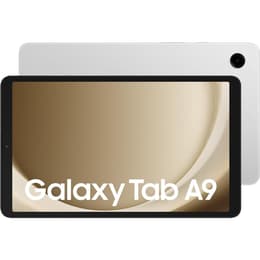
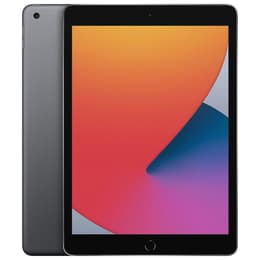


Galaxy Tab A9 (8.7", 2023) Vs iPad 8 (2020, A12 series)

Galaxy Tab A9 (8.7", 2023)
Starting at

Refurbished price:153.00

Versus €255.86 new

See options
iPad 8 (2020, A12 series)
Starting at

Refurbished price:127.00

Versus €399.00 new

See options

Ratings

The Samsung Galaxy Tab A9, released in October 2023, and the Apple iPad (8th generation), launched in September 2020, are two distinct tablet offerings designed for different user ecosystems. While the Galaxy Tab A9 runs on Android, providing a versatile and open platform, the iPad operates on Apple's optimized iPadOS, known for its seamless integration within the Apple ecosystem. These devices cater to users seeking portable computing solutions, with key differences in their display sizes, processing power, and overall user experience.

Scores

Durability

The longevity of a tablet is often determined by its release timeline, software support, and physical durability. These two tablets offer different expectations in terms of their practical lifespan.

  • Release Timeline: The Galaxy Tab A9 is a more recent device, released in October 2023, making it newer than the iPad (8th generation) which launched in September 2020.
  • Software Support: Apple typically provides iPadOS updates for 5-6 years, meaning the iPad (2020) is still receiving updates in 2026 and can be expected to continue for some time. Samsung generally offers around two major Android OS updates for its A-series tablets, with the Tab A9 expected to receive updates until Android 15.
  • Practical Lifespan: Both tablets are built to withstand everyday use, with the iPad featuring an aluminum back and the Galaxy Tab A9 sporting a metal body. The newer release of the Galaxy Tab A9 suggests a slightly longer period before its hardware might feel outdated for general tasks, though Apple's extended software support often balances this for the iPad.

Year of Release

2023

2020

Compatible with latest Update

Yes

Yes

OS

Android

iPadOS

Performance

Performance is a critical aspect of any tablet, influencing how smoothly applications run and how effectively multitasking can be handled. Both devices offer capabilities suited to their respective platforms.

  • Everyday Tasks: The iPad (2020) is equipped with a capable processor that handles common applications, web browsing, and light gaming with fluidity. Users report a smooth experience for daily activities and moderate multitasking. The Galaxy Tab A9's processor provides sufficient power for casual use, including streaming, social media, and less demanding games.
  • Multitasking and Responsiveness: The iPad (2020), with its optimized iPadOS, offers responsive performance even with multiple apps open, making it suitable for productivity tasks and educational use. The Galaxy Tab A9, particularly models with higher RAM configurations, can manage several applications simultaneously, though performance may vary with very demanding apps.
  • Storage Options: The iPad (2020) comes with fixed internal storage options of 32GB or 128GB, without expansion capabilities. The Galaxy Tab A9 offers more flexible storage, with options for 64GB or 128GB, and includes a microSD card slot for expansion up to 1TB.

Memory (GB)

4 GB

3 GB

Screen quality

The display is the primary interface for tablet interaction, and differences in technology, resolution, and brightness can significantly impact the viewing experience.

  • Display Technology and Size: The iPad (2020) features a 10.2-inch Retina IPS LCD, known for its wide viewing angles and accurate color reproduction. The Galaxy Tab A9 has a smaller 8.7-inch TFT LCD.
  • Resolution and Clarity: The iPad offers a higher resolution of 2160 x 1620 pixels, resulting in a sharper image with 264 pixels per inch (PPI). The Galaxy Tab A9 has a resolution of 1340 x 800 pixels, with a lower pixel density of 179 PPI, which means individual pixels may be more discernible.
  • Brightness and Refresh Rate: Both tablets feature a standard 60Hz refresh rate. The iPad (2020) typically reaches 500 nits of brightness, providing good visibility in various lighting conditions. The Galaxy Tab A9 can achieve a peak brightness of around 486 nits.

Resolution

800 x 1340

2160 x 1620

Screen type

TFT LCD

Retina display

Pixel density

180ppp

264ppp

Audiovisual

While tablets are not typically primary photography devices, their cameras are useful for video calls, document scanning, and casual photo capture. Both tablets include front and rear cameras with varying capabilities.

  • Rear Camera Performance: Both the iPad (2020) and the Galaxy Tab A9 feature an 8-megapixel rear camera with autofocus. The iPad's camera is noted for producing decent images in good lighting, suitable for general use. The Tab A9's rear camera is also adequate for capturing documents and notes.
  • Front Camera and Video Calls: For video conferencing, the iPad (2020) includes a 1.2-megapixel FaceTime HD camera. The Galaxy Tab A9 has a 2-megapixel front camera, which is suitable for video calls.
  • Audio Experience: The iPad (2020) offers stereo speakers, providing a good audio experience for media consumption. The Galaxy Tab A9 also features stereo speakers with Dolby Atmos support, enhancing the audio for movies and music.

Miscellaneous

Beyond core specifications, several practical elements contribute to the overall usability and convenience of a tablet, including connectivity, physical design, and security features.

  • Connectivity and Ports: The iPad (2020) supports Wi-Fi 5 (802.11ac) and Bluetooth 4.2, with an optional Gigabit-class LTE model available. It uses a Lightning port for charging and data transfer, and includes a 3.5mm headphone jack. The Galaxy Tab A9 features Wi-Fi 5 (802.11 a/b/g/n/ac) and Bluetooth 5.3, with optional LTE connectivity. It utilizes a USB-C 2.0 port and also retains a 3.5mm headphone jack.
  • Dimensions and Handling: The Galaxy Tab A9 is a more compact and lighter device, weighing around 332-333 grams and measuring 211 x 124.7 x 8.0 mm, making it easy to hold in one hand. The iPad (2020) is larger and heavier at approximately 490-495 grams and 250.6 x 174.1 x 7.5 mm.
  • Security and Build Materials: Both tablets feature an aluminum back for a solid feel. The iPad (2020) includes Touch ID for secure fingerprint recognition. The Galaxy Tab A9 offers face unlock for security.

Weight

332 g

490 g

Width

21,1 cm

17.41 cm

Height

12,47 cm

25.06 cm

Depth

0,8 cm

0.75 cm

Screen size (in)

8.7

10.2

Network

Wi-Fi

Wi-Fi

Carrier compatibility

Without SIM Port

Without SIM Port

Choosing between the Galaxy Tab A9 and the iPad (2020) depends largely on individual priorities and ecosystem preferences. Users often praise the iPad (2020) for its robust performance, especially for its age, and its long-term software support, which ensures it remains functional and secure for many years. Its strong app ecosystem and consistent battery life are also frequently highlighted as significant advantages. However, some users note its dated design with larger bezels and the non-laminated display as areas for improvement.

The Galaxy Tab A9 is generally commended for its compact size, solid build quality, and expandable storage, which is a notable benefit for users who need more space for media and files. Its more recent release date also means it benefits from newer hardware in some aspects. Criticisms sometimes point to its lower screen resolution and basic camera performance compared to higher-end tablets.

Users prioritizing a compact form factor, expandable storage, and the Android ecosystem may find the Galaxy Tab A9 well-suited to their needs. Conversely, users who value a larger, sharper display, a highly optimized operating system with extensive app support, and longer software updates may lean toward the iPad (2020). Both devices offer reliable performance for everyday tasks, and considering a quality-assured refurbished option for either model can be a sustainable choice for budget-conscious consumers.

See all articles

Our recent comparisons