

Google Pixel 9 Vs iPhone 16e

Google Pixel 9
Google Pixel 9
Starting at

Refurbished price:410.00

Versus €1,066.71 new

See options
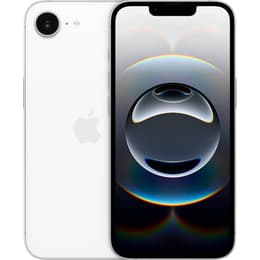
iPhone 16e
iPhone 16e
Starting at

Refurbished price:393.00

Versus €719.00 new

See options

Ratings

The Google Pixel 9, released in August 2024, and the iPhone 16E, launched in February 2025, represent distinct approaches to modern smartphones from their respective manufacturers. While both devices offer advanced features and robust performance, they cater to different user priorities through their operating systems, camera philosophies, and design choices. The Pixel 9 operates on Android, emphasizing Google's AI integration, while the iPhone 16E runs on Apple's iOS, focusing on a streamlined user experience and a powerful, efficient chip.

Scores

Durability

When considering the long-term usability of these devices, their release timelines and software support policies are key factors.

  • Release and Discontinuation: The Google Pixel 9 was introduced in August 2024. The iPhone 16E, while released in February 2025, was notably discontinued in March 2026, a relatively short period on the market, being succeeded by the iPhone 17e.
  • Software Longevity: Google has committed to providing seven years of OS and security updates for the Pixel 9, extending support until at least August 2031. The iPhone 16E launched with iOS 18.3 and supports iOS 26, aligning with Apple's typical multi-year software support for its devices.
  • Durability Features: Both devices offer robust build quality. The Pixel 9 features a 100% recycled aluminum frame and Corning Gorilla Glass Victus 2 on both the front and back, along with an IP68 rating for dust and water resistance. The iPhone 16E boasts a Ceramic Shield front cover and durable back glass, also carrying an IP68 rating for splash, water, and dust resistance.

Year of Release

2024

2025

OS

Android

iOS

Foldable

No

No

Performance

Both smartphones are equipped with custom-designed processors that handle daily tasks and demanding applications efficiently, though with differing architectural focuses.

  • Processing Power: The Google Pixel 9 is powered by Google's Tensor G4, a chip designed with a strong emphasis on artificial intelligence and machine learning capabilities, ensuring smooth multitasking and efficient handling of complex applications. The iPhone 16E features Apple's A18 chip, which provides fast and smooth performance across various tasks, from everyday use to graphically intensive mobile gaming.
  • Multitasking and Storage: The Pixel 9 comes with 12GB of RAM, contributing to responsive performance, particularly when managing multiple applications simultaneously. The iPhone 16E includes 8GB of RAM, which is sufficient for fluid app switching and general usage. Both devices offer storage options up to 512GB, with the Pixel 9 starting at 128GB and 256GB, and the iPhone 16E offering 128GB, 256GB, and 512GB configurations.
  • Battery Endurance: The Pixel 9 is equipped with a 4700 mAh battery, designed to provide over 24 hours of typical use, with an Extreme Battery Saver mode extending this significantly. The iPhone 16E features a 4005 mAh battery and is noted for offering up to 26 hours of video playback, making it a strong performer in its size category. Both support fast charging and wireless charging.

Memory (GB)

12 GB

8 GB

Screen quality

The visual experience on both devices is delivered through high-quality OLED displays, though with some distinctions in their specifications and features.

  • Display Technology and Clarity: The Google Pixel 9 features a 6.3-inch Actua OLED display with a resolution of 1080x2424 pixels, resulting in a pixel density of 422 ppi. The iPhone 16E sports a 6.1-inch Super Retina XDR OLED display with a resolution of 2532 x 1170 pixels, offering a pixel density of 460 ppi. Both displays provide deep blacks and vibrant colors, suitable for media consumption and daily use.
  • Brightness and Refresh Rate: The Pixel 9's display can reach up to 1800 nits for local brightness and a peak of 2700 nits, and it supports an adaptive refresh rate ranging from 60Hz to 120Hz for smoother scrolling and animations. The iPhone 16E offers a typical maximum brightness of 800 nits and a peak HDR brightness of 1200 nits, with a standard 60Hz refresh rate. The iPhone 16E also maintains the traditional notch design.
  • Viewing Experience: Both screens support HDR content, enhancing the viewing of compatible videos and images. The Pixel 9's higher refresh rate provides a more fluid visual experience, particularly noticeable during gaming or fast-paced content. The iPhone 16E's display, while at 60Hz, still delivers a sharp and color-accurate picture.

Resolution

1080 x 2424

2532x1170

Audiovisual

Both the Google Pixel 9 and the iPhone 16E offer capable camera systems, each leveraging their respective software and hardware strengths for photography and videography.

  • Rear Camera Systems: The Pixel 9 features a dual-camera setup on the rear, including a 50MP main sensor with optical image stabilization and a 48MP ultrawide camera with autofocus and macro capabilities. The iPhone 16E comes with a single 48MP Fusion main camera that utilizes in-sensor cropping to provide an optical-quality 2x zoom. The Pixel 9 offers a dedicated ultrawide lens, while the iPhone 16E achieves wider shots through its main sensor.
  • Photography Features: The Pixel 9 integrates advanced computational photography features such as Night Sight, Astrophotography, Portrait Mode, and AI-powered editing tools like 'Add Me' and 'Magic Editor'. The iPhone 16E includes features like Smart HDR 5, Photonic Engine, Deep Fusion, and Night Mode, delivering consistent image quality. Both devices are capable of recording 4K video at up to 60 frames per second.
  • Front Camera and Audio: For selfies and video calls, the Pixel 9 has a 10.5MP front camera with autofocus. The iPhone 16E features a 12MP TrueDepth front camera, also with autofocus. Both phones offer quality microphone performance for calls and video recording, and their speakers provide a clear audio experience for media consumption.

Front camera

10.5 megapixels

TrueDepth 12MP

Miscellaneous

Beyond core performance and display, several practical features contribute to the overall user experience of these smartphones.

  • Connectivity and Ports: Both the Pixel 9 and iPhone 16E support 5G connectivity and modern Wi-Fi standards for fast internet access. The Pixel 9 includes a USB-C port for charging and data transfer. The iPhone 16E also features a USB-C port, though it operates at USB 2.0 speeds.
  • Biometric Security and Navigation: The Pixel 9 incorporates an ultrasonic fingerprint sensor for secure unlocking and authentication. The iPhone 16E relies on Face ID for biometric security. Both devices offer precise location services through multiple satellite systems.
  • Design and Ergonomics: The Pixel 9 measures 152.8 x 72.0 x 8.5mm and weighs 198g. The iPhone 16E is slightly more compact and lighter at 146.7 × 71.5 × 7.8 mm and 167g. The iPhone 16E also features an Action Button, offering customizable quick access to various functions.

Weight

198 g

167 g

Screen size (in)

6.3

6.1

Network

5G

5G

SIM card

Physical SIM + eSIM

eSIM

Carrier compatibility

Unlocked

Unlocked

Connector

USB-C

USB-C

The Google Pixel 9 and iPhone 16E each present a compelling package, but their strengths align with different user preferences. The Pixel 9 is often praised for its exceptional camera capabilities, particularly its advanced AI-driven photography features and long-term software support. Users frequently highlight its clean Android experience and the utility of Google's intelligent features. Some common criticisms, however, have historically pointed to the Tensor chip's raw performance sometimes lagging behind competitors in synthetic benchmarks, though real-world usage is generally smooth.

The iPhone 16E, despite its short market availability, was noted for its robust battery life, especially for a 6.1-inch device, and the consistent performance delivered by its A18 chip. Its integration with the Apple ecosystem and the reliability of iOS are often cited as strong points. However, the 60Hz display and the single rear camera setup, lacking a dedicated ultrawide lens, were points of comparison with other devices in its segment.

Users prioritizing a long-supported Android experience with cutting-edge computational photography and deep AI integration may find the Google Pixel 9 well-suited to their needs. Its extended software update commitment makes it a practical choice for those who keep their devices for many years. Conversely, users who value a compact, lightweight device with strong battery life, a powerful and efficient processor for everyday tasks, and the seamless integration of the Apple ecosystem might lean towards the iPhone 16E, understanding its shorter market presence. Both devices offer a quality-assured refurbished option, providing an eco-friendly alternative for consumers seeking reliable technology.