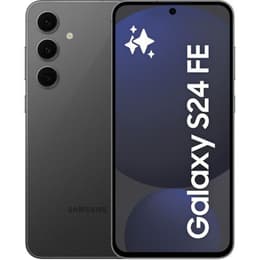
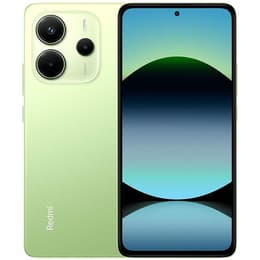


Galaxy S24 FE Vs Xiaomi Redmi Note 14 4G

Galaxy S24 FE
Galaxy S24 FE
Starting at

Refurbished price:329.00

Versus €991.15 new

See options
Xiaomi Redmi Note 14 4G
Starting at

Refurbished price:162.00

Versus €229.99 new

See options

Ratings

The Samsung Galaxy S24 FE and the Xiaomi Redmi Note 14 4G are both Android smartphones released in late 2024 and early 2025, respectively. While both devices offer a modern smartphone experience, they cater to slightly different user priorities, with the Galaxy S24 FE emphasizing a more premium feature set and extended software support, and the Redmi Note 14 4G focusing on a robust battery and a capable main camera for its segment. Both run on Android 14, but with distinct user interfaces.

Scores

Durability

When considering the long-term usability of a smartphone, factors like release timeline, software support, and physical resilience are important. The Galaxy S24 FE and Redmi Note 14 4G offer different propositions in these areas.

  • Release Timeline and Software Support: The Samsung Galaxy S24 FE, released in October 2024, benefits from Samsung's commitment to seven generations of OS updates and seven years of security updates, offering a significantly longer software lifespan. The Xiaomi Redmi Note 14 4G, launched in January 2025, promises four years of major Android updates and six years of security updates, which is also a substantial period for its category.
  • Physical Durability: The Galaxy S24 FE features Corning Gorilla Glass Victus+ on the front and Gorilla Glass 5 on the rear, providing enhanced protection against drops and scratches. It also boasts an IP68 rating for dust and water resistance, indicating a high level of protection against environmental elements. The Redmi Note 14 4G comes with Corning Gorilla Glass 5 on its display and an IP54 rating, offering protection against dust and splashes.
  • Expected Practical Lifespan: Users can expect both devices to remain functional for several years. The Galaxy S24 FE's extended software support means it will receive new features and security patches for a longer duration, potentially making it a more future-proof option for those who keep their phones for many years. The Redmi Note 14 4G's robust battery management system is designed to maintain over 80% of its original capacity even after 1600 charge cycles over four years, contributing to its practical longevity.

Year of Release

2024

2025

OS

Android

Android

Foldable

No

No

Performance

The performance of a smartphone is crucial for daily tasks, app usage, and multitasking. Both the Galaxy S24 FE and Redmi Note 14 4G are equipped to handle common demands, though with differing capabilities.

  • Processor Capabilities: The Samsung Galaxy S24 FE is powered by a Samsung-designed processor, which capably handles both light and demanding tasks. It provides smooth performance for everyday use, including resource-intensive applications and AI features, with efficient thermal management. The Xiaomi Redmi Note 14 4G features a current-generation MediaTek processor, which offers decent performance for daily tasks and casual gaming. While it represents an upgrade over its predecessor, it may experience occasional stutters during heavy usage.
  • Multitasking and Responsiveness: With 8GB of RAM as standard, the Galaxy S24 FE provides a responsive experience for multitasking, allowing users to switch between applications smoothly. The Redmi Note 14 4G is available with 6GB or 8GB of RAM, with the 8GB variant offering better fluidity for managing multiple apps simultaneously.
  • Battery Behavior: The Galaxy S24 FE houses a 4700mAh battery, which, combined with its efficient processor, can easily last a full day for moderate users and offers over 16 hours of video streaming. The Redmi Note 14 4G features a larger 5500mAh battery, providing extended usage, often lasting two days with normal use or a full day with heavy use. Both devices support fast charging, with the Galaxy S24 FE offering 25W wired charging and the Redmi Note 14 4G supporting 33W wired charging.

Memory (GB)

8 GB

6 GB

Screen quality

The display is a primary interface for smartphone interaction, and both devices offer vibrant viewing experiences with distinct characteristics.

  • Display Technology and Clarity: Both the Samsung Galaxy S24 FE and the Xiaomi Redmi Note 14 4G feature AMOLED displays, known for their deep blacks and vibrant colors. The Galaxy S24 FE utilizes a Dynamic AMOLED 2X panel, providing rich and engaging visuals. Both offer Full HD+ resolutions, ensuring sharp and clear images for typical viewing.
  • Brightness and Outdoor Visibility: The Galaxy S24 FE has a peak brightness of 1900 nits, which, while lower than some flagship models, still offers good visibility in various lighting conditions, including outdoors. The Redmi Note 14 4G boasts a peak brightness of 1800 nits, also ensuring good outdoor readability.
  • Refresh Rate and Smoothness: Both smartphones feature a 120Hz refresh rate, contributing to smoother scrolling and a more fluid visual experience. The Galaxy S24 FE's non-LTPO panel switches between 60Hz and 120Hz, while the Redmi Note 14 4G also maintains a consistent high refresh rate for a responsive feel.
  • Screen Size and Viewing Experience: The Galaxy S24 FE has a 6.7-inch display, offering a large canvas for content consumption. The Redmi Note 14 4G features a 6.67-inch display, providing a similarly expansive viewing area.

Resolution

1080 x 2340

1080x2400

Audiovisual

Camera capabilities are a significant consideration for many users, and both the Galaxy S24 FE and Redmi Note 14 4G offer versatile camera systems for capturing moments.

  • Rear Camera System: The Samsung Galaxy S24 FE features a triple-camera setup with a 50MP main sensor with optical image stabilization (OIS), a 12MP ultrawide lens, and an 8MP telephoto lens with 3x optical zoom and OIS. This configuration provides flexibility for various shooting scenarios, including zoomed shots. The Redmi Note 14 4G primarily relies on a 108MP main camera, often accompanied by 2MP macro and depth sensors. It's worth noting that some iterations of the Redmi Note 14 4G may not include an ultrawide camera, focusing instead on the high-resolution main sensor.
  • Photography Performance: In daylight, the Galaxy S24 FE's main camera produces sharp, well-balanced photos with vibrant colors. Its 3x optical zoom is effective for capturing distant subjects with clarity. The Redmi Note 14 4G's 108MP main sensor also delivers sharp and detailed images in good lighting conditions. Both devices may show some limitations in low-light environments, with the Galaxy S24 FE struggling due to smaller sensors and the Redmi Note 14 4G exhibiting noticeable noise.
  • Video Recording Quality: The Galaxy S24 FE offers advanced video capabilities, including 4K recording at 60 frames per second (fps) and even 8K at 30fps, with effective image stabilization for smooth footage. The Redmi Note 14 4G records video at a maximum of 1080p at 60fps, with good stabilization for its class.
  • Front Camera and Audio: The Galaxy S24 FE has a 10MP front camera that supports 4K video recording at 60fps. The Redmi Note 14 4G features a 20MP front camera. Both devices offer stereo speakers, with the Galaxy S24 FE providing clear and well-balanced audio, and the Redmi Note 14 4G featuring Dolby Atmos support for an immersive media experience.

Miscellaneous

Beyond core performance and display, several practical features contribute to the overall user experience of these smartphones.

  • Connectivity and Ports: The Samsung Galaxy S24 FE supports 5G connectivity, offering faster mobile data speeds where available. It includes a USB Type-C port for charging and data transfer. The Xiaomi Redmi Note 14 4G, as its name suggests, is limited to 4G connectivity. It also features a USB Type-C port and notably retains a 3.5mm headphone jack, which is absent on the Galaxy S24 FE.
  • Security and Sensors: Both devices incorporate modern security features. The Galaxy S24 FE includes an in-display fingerprint sensor for secure unlocking. The Redmi Note 14 4G also features an in-display fingerprint sensor. The Galaxy S24 FE also integrates Galaxy AI features, offering advanced intelligent functionalities. The Redmi Note 14 4G includes an infrared port, allowing it to function as a universal remote control.
  • Build Materials and Handling: The Galaxy S24 FE measures 6.38 by 3.04 by 0.31 inches and weighs 7.51 ounces (213 grams), offering a sleek and comfortable feel. Its construction includes Gorilla Glass Victus+ on the front and Gorilla Glass 5 on the back. The Redmi Note 14 4G has dimensions of 163.25 x 76.55 x 8.16 mm and weighs 196.5 grams, with a design that includes flat edges for a secure grip and a plastic back panel.

Weight

213 g

196 g

Screen size (in)

6.7

6.67

Network

5G

4G

SIM card

Dual Physical SIM

Physical SIM + eSIM

Carrier compatibility

Unlocked

Unlocked

The Samsung Galaxy S24 FE and Xiaomi Redmi Note 14 4G each present a compelling package for different user needs. User feedback for the Galaxy S24 FE often praises its robust performance, extended software support, and the inclusion of advanced AI features, making it a strong contender for those seeking a premium Android experience without the absolute top-tier cost. Some users note that while its camera is capable, it might not always match the performance of more expensive flagship models in challenging conditions.

The Redmi Note 14 4G is frequently lauded for its exceptional battery life, vibrant AMOLED display, and a main camera that delivers impressive results in good lighting. Common observations include its reliable everyday performance and the continued presence of a 3.5mm headphone jack and expandable storage, features valued by many. However, some users have pointed out the absence of an ultrawide camera in certain versions and occasional performance stutters under heavy load.

Users prioritizing long-term software updates, advanced AI capabilities, and a higher level of dust and water resistance may find the Samsung Galaxy S24 FE well-suited to their needs. Its balanced performance and premium build offer a refined experience. Conversely, individuals who value extended battery life, a high-resolution main camera, and features like expandable storage and a headphone jack might lean towards the Xiaomi Redmi Note 14 4G. This device offers a strong value proposition for everyday use and media consumption. Both devices are available as quality-assured refurbished options, providing an eco-friendly alternative for consumers.

See all articles

Our recent comparisons






