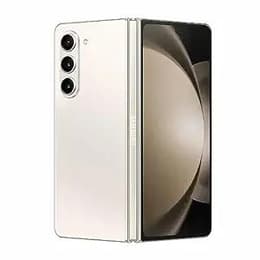
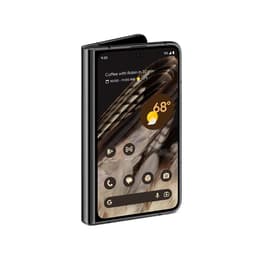


Galaxy Z Fold5 Vs Google Pixel Fold

Galaxy Z Fold5
Galaxy Z Fold5
Starting at

Refurbished price:591.00

Versus €1,899.99 new

See options
Google Pixel Fold
Google Pixel Fold
Starting at

Refurbished price:454.00

Versus €1,750.29 new

See options

Ratings

The Samsung Galaxy Z Fold5 and the Google Pixel Fold represent two distinct approaches to the foldable smartphone experience. Released in August 2023, the Galaxy Z Fold5 is Samsung's fifth generation in the foldable form factor, building on years of refinement. The Google Pixel Fold, launched slightly earlier in June 2023, marks Google's debut in the foldable market, bringing its unique software philosophy to the segment. While both devices offer a large internal display that folds for portability, they differ significantly in their external screen design, internal processing power, and camera capabilities.

Scores

Durability

The longevity of a smartphone is influenced by its physical resilience and the duration of software support it receives.

  • Release Timeline and Software Support: The Google Pixel Fold, released in June 2023, is expected to receive five years of both OS and security updates from its release date. The Samsung Galaxy Z Fold5, released in August 2023, is slated for four major Android OS upgrades and five years of security updates. This means the Pixel Fold may offer a slightly longer period of major OS updates, while both provide comparable security update timelines.
  • Physical Durability: Both devices feature an IPX8 water resistance rating, indicating protection against submersion but not dust ingress. The Galaxy Z Fold5 incorporates Gorilla Glass Victus 2 for its outer panels, an upgrade over the Gorilla Glass Victus found on the Pixel Fold, potentially offering enhanced drop resistance. The Z Fold5 also features a refined hinge mechanism that allows it to fold completely flat, contributing to a more compact closed profile. User experiences suggest the Z Fold5's hinge is sturdier and more resilient to extreme bending tests compared to the Pixel Fold, which has shown vulnerabilities in such scenarios.
  • Expected Practical Lifespan: Given their flagship status and robust build materials, both devices are designed for extended use. The Z Fold5's more refined hinge and slightly newer glass protection may offer a marginal advantage in physical resilience over time. The Pixel Fold's longer OS update commitment could mean a slightly extended period of new feature introductions, though both will receive security patches for a considerable duration.

Year of Release

2023

2023

Compatible with latest Update

Yes

Yes

OS

Android

Android

Foldable

Yes

Yes

Performance

Performance in foldable smartphones is crucial for seamless transitions between modes and handling demanding applications.

  • Processing Power and Responsiveness: The Galaxy Z Fold5 is equipped with a current-generation processor optimized for its ecosystem, which contributes to its overall speed and efficiency. This results in smooth app loading, fluid multitasking, and consistent performance even during intensive gaming sessions. The Pixel Fold utilizes a processor designed by its manufacturer, which delivers a capable experience for everyday tasks and integrates well with its software features. However, some users have reported that the Pixel Fold's processor can run warm under heavy load, potentially leading to minor performance throttling.
  • Multitasking and RAM: Both devices come with 12GB of RAM, providing ample capacity for running multiple applications simultaneously. The Galaxy Z Fold5's software is noted for its advanced multitasking capabilities, allowing users to run up to three applications in split-screen mode and up to five in floating windows, offering a highly flexible workspace. The Pixel Fold supports split-screen multitasking, typically with two apps, and offers a more streamlined approach to its Android experience.
  • Battery Behavior and Efficiency: The Pixel Fold houses a larger battery capacity at 4,821mAh compared to the Galaxy Z Fold5's 4,400mAh. Despite this, the Galaxy Z Fold5 often demonstrates comparable or even superior battery endurance in real-world usage, attributed to its more power-efficient processor. Users of the Pixel Fold have sometimes noted faster battery drain, particularly when off Wi-Fi, which some attribute to modem efficiency.

Memory (GB)

12 GB

12 GB

Screen quality

The display experience is central to foldable phones, encompassing both the large internal screen and the external cover display.

  • Display Technology and Clarity: Both the Galaxy Z Fold5 and the Pixel Fold feature OLED technology for both their main and cover displays, providing deep blacks and vibrant colors. The Galaxy Z Fold5's main display measures 7.6 inches with a resolution of 2176x1812 pixels (374 ppi), while the Pixel Fold's main display is also 7.6 inches with a resolution of 2208x1840 pixels (380 ppi). The Pixel Fold's main screen has been described as having a softer, almost plasticky coating compared to the Z Fold5's more glass-like feel.
  • Brightness and Refresh Rate: Both devices offer a 120Hz adaptive refresh rate on both their internal and external screens, ensuring smooth scrolling and responsive interactions. The Galaxy Z Fold5 achieves a higher peak brightness of 1,750 nits on its main display, surpassing the Pixel Fold's 1,450 nits, which can be beneficial for outdoor visibility.
  • Screen Size and Form Factor: The Galaxy Z Fold5 features a taller and narrower 6.2-inch cover screen (904x2316 pixels) when folded, which some users find easier for one-handed operation. The Pixel Fold offers a wider, more traditional 5.8-inch cover screen (2092x1080 pixels), providing a more conventional smartphone experience when closed. The Z Fold5 generally has smaller bezels on its internal display, while the Pixel Fold has more noticeable bezels, particularly around the internal camera. The crease on the Z Fold5's internal screen is often noted as less prominent than on the Pixel Fold.

Resolution

1812 x 2176

1840 x 2208

Screen type

Foldable Dynamic AMOLED 2X

Foldable OLED

Audiovisual

The camera systems on both foldable phones aim to deliver versatile photography experiences, leveraging their unique form factors.

  • Rear Camera System: The Galaxy Z Fold5 features a triple camera setup: a 50MP main sensor, a 12MP ultrawide, and a 10MP telephoto lens with 3x optical zoom. The Pixel Fold also has a triple rear camera system, comprising a 48MP main sensor, a 10.8MP ultrawide, and a 10.8MP telephoto lens that offers 5x optical zoom. The Pixel Fold's higher optical zoom capability can be advantageous for distant subjects.
  • Photography Performance: The Galaxy Z Fold5 is known for producing images with vibrant colors and good overall reproduction, characteristic of its manufacturer's tuning. The Pixel Fold, consistent with its brand's photography philosophy, tends to deliver more natural and true-to-life colors, often excelling in computational photography for details and dynamic range. In low-light conditions, both devices perform well, with the Pixel Fold often praised for its specific low-light modes.
  • Selfie and Video Capabilities: For selfies, the Z Fold5 has a 10MP camera on the cover screen and a 4MP under-display camera on the internal screen. The Pixel Fold includes a 9.5MP cover camera and an 8MP internal camera located within the bezel. Both devices allow users to utilize the higher-quality rear cameras for selfies by using the cover screen as a viewfinder. Both offer capable video recording, with the Z Fold5 supporting 8K video at 30 frames per second.

Main camera

50 megapixels

48 megapixels

Front camera

4 megapixels

8 megapixels

Miscellaneous

Beyond core performance and display, several practical elements contribute to the overall user experience of these foldable devices.

  • Connectivity and Ports: Both the Galaxy Z Fold5 and the Pixel Fold support 5G connectivity and modern Wi-Fi standards (Wi-Fi 802.11 a/b/g/n/ac/ax for Z Fold5, Wi-Fi 802.11 ax for Pixel Fold). They both utilize USB-C for charging and data transfer. The Pixel Fold has been noted by some users for modem performance issues, particularly with 5G, which could affect cellular connectivity and battery drain.
  • Biometric Security and Sensors: Both devices incorporate fingerprint sensors for secure unlocking. The Galaxy Z Fold5's fingerprint reader is integrated into the power button, while the Pixel Fold's is also side-mounted. Both also support face recognition. The Pixel Fold includes a Titan M2 security co-processor, enhancing its security features.
  • Physical Characteristics: The Galaxy Z Fold5 weighs 253 grams, making it noticeably lighter than the Pixel Fold, which weighs 283 grams. In terms of dimensions, the Z Fold5 is taller and narrower when folded (154.9 x 67.1 x 13.4mm) and thinner when unfolded (154.9 x 130.1 x 6.1mm). The Pixel Fold has a wider, more compact form factor when folded (139.7 x 79.5 x 12.1mm) and is slightly thinner when unfolded (139.7 x 158.7 x 5.8mm). The Z Fold5 also offers S Pen stylus support, which the Pixel Fold does not.

Weight

253 g

283 g

Screen size (in)

7.6

7.6

Network

5G

5G

SIM card

Dual Physical SIM + eSIM

Physical SIM + eSIM

Carrier compatibility

Unlocked

Unlocked

The Samsung Galaxy Z Fold5 and the Google Pixel Fold each offer a compelling vision for the future of foldable smartphones, catering to different user preferences. User feedback often highlights the Z Fold5's refined hardware, particularly its hinge mechanism and lighter build, as significant advantages. Its powerful processor and advanced multitasking features are frequently praised for delivering a smooth and efficient user experience.

Conversely, the Pixel Fold receives considerable acclaim for its camera system, which consistently produces high-quality, natural-looking images. Its wider cover screen is also a common point of praise, as it provides a more traditional smartphone feel when the device is closed. However, some users have expressed concerns regarding the Pixel Fold's battery life, especially when relying on cellular data, and occasional reports of its processor running warm.

Users prioritizing a highly refined and durable foldable design with robust performance and extensive multitasking capabilities may find the Galaxy Z Fold5 better suited to their needs. Its S Pen support also appeals to those who value stylus input. On the other hand, users who prioritize an exceptional camera experience, a more conventional external display, and a pure Android software experience may lean towards the Google Pixel Fold. Both devices represent significant advancements in foldable technology, and choosing between them often comes down to these specific priorities. For those considering these advanced devices, exploring quality-assured refurbished options can provide an eco-friendly alternative.


See all articles

Our recent comparisons