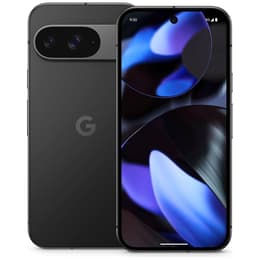
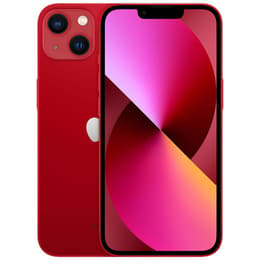


Google Pixel 9 Vs iPhone 13

Google Pixel 9
Google Pixel 9
Starting at

Refurbished price:410.00

Versus €1,066.71 new

See options
iPhone 13
iPhone 13
Starting at

Refurbished price:232.00

Versus €769.00 new

See options

Ratings

The Google Pixel 9, released in August 2024, and the Apple iPhone 13, launched in September 2021, represent different generations and operating system philosophies in the smartphone market. While both are capable devices, the Pixel 9 benefits from more recent technological advancements and Google's Android ecosystem, contrasting with the iPhone 13's established performance within Apple's iOS environment. Key differentiators include their respective release timelines, processor generations, and camera capabilities.

Scores

Durability

When considering the long-term usability of these devices, their release dates and manufacturer support policies play a significant role.

  • Release Timeline: The Google Pixel 9 was released in August 2024, making it a considerably newer device compared to the iPhone 13, which launched in September 2021. This age difference directly impacts their expected software support and hardware relevance.
  • Software Longevity: Google has committed to providing 7 years of OS, security, and Pixel Drop updates for the Pixel 9, extending its software lifespan well into the future. The iPhone 13, while still receiving updates (compatible with iOS 18 as of 2026), typically receives 5-6 years of major iOS updates from its release date. This means the Pixel 9 offers a longer guaranteed period of software support.
  • Practical Lifespan: Both devices are built with durable materials and feature IP68 ratings for dust and water resistance. However, the Pixel 9's newer components and extended software support suggest it will remain current and perform optimally for a longer duration, offering a more extended practical lifespan for users seeking the latest features and security.

Year of Release

2024

2021

Compatible with latest Update

Yes

Yes

OS

Android

iOS

Foldable

No

No

Performance

The performance of these smartphones is largely driven by their internal processing power and how efficiently they manage tasks.

  • Processing Capabilities: The Google Pixel 9 is powered by the Google Tensor G4, a more recent processor designed for advanced AI features and efficient multitasking. This allows for smooth handling of demanding applications and complex computational tasks. The iPhone 13 features the A15 Bionic chip, which, while older, still delivers robust performance for everyday use, gaming, and creative applications.
  • System Responsiveness and Multitasking: The Pixel 9 comes with 12 GB of RAM, contributing to fluid app switching and efficient background process management. The iPhone 13 has 4 GB of RAM, which is optimized by iOS for smooth performance, though it may show limitations in very heavy multitasking scenarios compared to the Pixel 9's higher RAM capacity.
  • Battery Behavior: The Pixel 9 is equipped with a 4700 mAh battery, designed to provide over 24 hours of typical use, with an Extreme Battery Saver mode extending this significantly. The iPhone 13 offers up to 19 hours of video playback, with efficient power management from its A15 Bionic chip. Both devices support fast charging and wireless charging, with the Pixel 9 also offering reverse wireless charging.

Memory (GB)

12 GB

4 GB

Screen quality

The visual experience on a smartphone is heavily influenced by its display technology and specifications.

  • Display Technology and Clarity: Both the Google Pixel 9 and the iPhone 13 feature OLED displays, known for their deep blacks and vibrant colors. The Pixel 9 has a 6.3-inch Actua OLED display with a resolution of 1080 x 2424 pixels, resulting in a pixel density of 422 PPI. The iPhone 13 sports a 6.1-inch Super Retina XDR OLED display with a resolution of 1170 x 2532 pixels at 460 PPI, offering slightly higher pixel density.
  • Brightness and Outdoor Visibility: The Pixel 9 offers impressive brightness levels, reaching up to 1800 nits in HDR and a peak brightness of 2700 nits, which enhances visibility in bright outdoor conditions. The iPhone 13 provides 800 nits of typical maximum brightness and 1200 nits for HDR content, also ensuring good readability in various lighting environments.
  • Refresh Rate and Smoothness: A notable difference lies in the refresh rate. The Pixel 9 features a Smooth Display with an adaptive refresh rate that can range from 60Hz to 120Hz, providing a smoother scrolling experience and more fluid animations. The standard iPhone 13 has a fixed 60Hz refresh rate, which is consistent but does not offer the same level of visual fluidity as a higher refresh rate display.

Resolution

1080 x 2424

1170 x 2532

Screen type

OLED

Super Retina XDR OLED

Audiovisual

Both devices offer advanced camera systems, though their approaches to photography and video capabilities differ.

  • Rear Camera System: The Google Pixel 9 features a dual-camera setup including a 50 MP wide camera with optical image stabilization and a large sensor, alongside a 48 MP ultrawide camera with autofocus and macro capabilities. It excels in computational photography with features like Night Sight, Astrophotography, and Super Res Zoom up to 8x. The iPhone 13 also has a dual 12 MP camera system, comprising a wide camera with sensor-shift optical image stabilization and an ultrawide lens. Its wide camera captures significantly more light than its predecessor, improving low-light performance.
  • Photography Features: The Pixel 9 includes a suite of AI-powered features such as Portrait Mode, Face Unblur, Long Exposure, Action Pan, Real Tone, and innovative tools like 'Add Me' for group photos. The iPhone 13 offers Portrait mode with Depth Control, Cinematic mode for video, Smart HDR 4, and Photographic Styles, allowing for personalized image capture.
  • Video Recording and Audio: Both phones are capable of high-quality video recording. The Pixel 9 supports 4K video at 60fps, with features like Cinematic blur and various stabilization modes. The iPhone 13 records HDR video with Dolby Vision up to 4K at 60fps and includes Cinematic mode, which adds a shallow depth of field effect to videos. Both provide clear audio recording and offer good speaker output for media consumption.

Main camera

50 megapixels

12 megapixels

Front camera

10.5 megapixels

12 megapixels

Miscellaneous

Beyond core performance, several practical elements contribute to the overall user experience of these smartphones.

  • Connectivity and Ports: The Google Pixel 9 supports 5G connectivity, Wi-Fi 6, and Bluetooth, and features a USB Type-C port for charging and data transfer. The iPhone 13 also offers 5G, Wi-Fi 6, and Bluetooth 5.0, but utilizes Apple's proprietary Lightning connector. Both include NFC for contactless payments.
  • Biometric Security: The Pixel 9 incorporates an in-display ultrasonic fingerprint sensor for secure unlocking, alongside face recognition. The iPhone 13 relies solely on Face ID, Apple's facial recognition system, for biometric authentication.
  • Design and Handling: The Pixel 9 measures 152.8 x 72.0 x 8.5 mm and weighs 198 g, offering a comfortable in-hand feel. It features Corning Gorilla Glass Victus 2 for screen protection. The iPhone 13 has dimensions of 146.7 x 71.5 x 7.65 mm and weighs 173-174 g, making it slightly more compact and lighter. It features a Ceramic Shield front cover for enhanced durability.

Weight

198 g

173 g

Screen size (in)

6.3

6.1

Network

5G

5G

SIM card

Physical SIM + eSIM

Physical SIM + eSIM

Carrier compatibility

Unlocked

Unlocked

Connector

USB-C

Lightning

The Google Pixel 9 and iPhone 13 cater to users with distinct priorities, reflecting their different release years and operating system ecosystems. User feedback for the Pixel 9 often praises its advanced computational photography, extended software support, and the integration of Google's AI features, which enhance daily tasks and camera performance. Some users appreciate its adaptive refresh rate display and the shift to a USB-C port. Conversely, common criticisms might revolve around the learning curve for new AI features or the design aesthetic compared to previous Pixel models.

The iPhone 13, despite being an older model, is frequently lauded for its consistent performance, the intuitive nature of iOS, and its robust build quality. Users often highlight its reliable camera system and strong ecosystem integration. Some common concerns for the iPhone 13 might include its 60Hz display, which feels less fluid than newer high-refresh-rate screens, and the continued use of the Lightning port.

Users prioritizing the latest Android innovations, a longer software support window, and advanced AI-driven camera features may find the Google Pixel 9 well-suited to their needs. Its modern processor and high refresh rate display offer a contemporary smartphone experience. On the other hand, individuals who value the established Apple ecosystem, consistent performance, and a familiar user interface might lean towards the iPhone 13. It remains a capable device for everyday use and photography, especially for those already invested in Apple's services.

For those considering either device, exploring quality-assured refurbished options can provide an eco-friendly alternative, extending the life of these products and offering a sustainable choice.









