
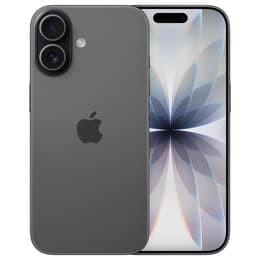


Google Pixel 8 Pro Vs iPhone 17

Google Pixel 8 Pro
Google Pixel 8 Pro
Starting at

Refurbished price:293.00

Versus €1,099.00 new

See options
iPhone 17
iPhone 17
Starting at

Refurbished price:685.00

Versus €979.00 new

See options

Ratings

The Google Pixel 8 Pro, released in October 2023, and the iPhone 17, launched in September 2025, represent distinct approaches to flagship smartphone design and functionality. While both devices offer advanced mobile experiences, they differ in their operating systems, core hardware philosophies, and specific feature sets. This comparison aims to highlight these practical differences to assist users in making an informed decision.

Scores

Durability

When considering the longevity of these devices, both the Pixel 8 Pro and the iPhone 17 offer substantial software support and robust build quality, though their release timelines place them at different points in their update cycles.

  • Release Timeline: The Google Pixel 8 Pro was released in October 2023, making it a mature device in the market. The iPhone 17, released in September 2025, is a more recent model. [1, 9, 13]
  • Software Support: Google has committed to an extensive seven years of operating system and security updates for the Pixel 8 Pro, providing long-term software longevity. [9, 13] Apple typically offers 5-6 years of major iOS updates for its devices, meaning the iPhone 17 will likely receive support for a comparable, if not slightly longer, duration from its release date. [14]
  • Physical Durability: Both phones feature an IP68 rating for dust and water resistance. [16, 19, 34, 39] The Pixel 8 Pro uses Corning Gorilla Glass Victus 2 for screen protection, while the iPhone 17 incorporates Ceramic Shield 2, which Apple states offers enhanced scratch resistance. [5, 16, 23, 25, 34]

Year of Release

2023

2025

Compatible with latest Update

Yes

Yes

Foldable

No

No

Performance

The performance of a smartphone is central to its daily usability, influencing everything from app responsiveness to demanding tasks like gaming and video editing. Both the Pixel 8 Pro and iPhone 17 are equipped with powerful internal components designed for smooth operation.

  • Processing Power: The Google Pixel 8 Pro is powered by the Google Tensor G3, designed with a focus on machine learning and AI-driven features, which contributes to efficient handling of complex computational tasks. [5, 7] The iPhone 17 features the Apple A19 SoC, which includes a multi-core CPU and a GPU with Neural Accelerators, providing robust performance for applications and system-wide responsiveness. [1, 2, 21]
  • Multitasking and Storage: The Pixel 8 Pro typically comes with 12 GB of RAM, facilitating smooth multitasking across numerous applications. [5, 7] The iPhone 17 is equipped with 8 GB of RAM. [1, 16] Both devices offer various internal storage options, utilizing fast NVMe storage for quick app loading and data access. [1, 16, 29, 40]
  • Battery Behavior: The Pixel 8 Pro houses a 5050 mAh battery, designed to provide over 24 hours of use for many users, with 30W wired and 23W wireless charging capabilities. [5, 34, 39] The iPhone 17 has a 3692 mAh battery, with real-world usage often yielding 8-9 hours of active screen time, and supports 40W wired fast charging and 25W MagSafe wireless charging. [1, 10, 16, 19]

Memory (GB)

12 GB

8 GB

Screen quality

The display is a primary interface for smartphone interaction, and both the Pixel 8 Pro and iPhone 17 offer high-quality viewing experiences with distinct characteristics.

  • Display Technology and Clarity: The Google Pixel 8 Pro features a 6.7-inch LTPO OLED display, which Google refers to as 'Super Actua', offering a resolution of 1344 x 2992 pixels. [5, 29] The iPhone 17 comes with a 6.3-inch Super Retina XDR OLED display, providing a resolution of 2622 x 1206 pixels. [1, 2] Both displays deliver vibrant colors and deep blacks.
  • Brightness and Refresh Rate: The Pixel 8 Pro's display can reach a peak brightness of 2400 nits, and it features an adaptive refresh rate ranging from 1 Hz to 120 Hz for smooth scrolling and efficient power use. [5, 29] The iPhone 17's display offers an impressive peak outdoor brightness of 3000 nits and also includes ProMotion technology for an adaptive refresh rate up to 120 Hz, along with an Always-On display feature. [2, 4, 23, 25]
  • Viewing Experience: Both phones provide HDR support for enhanced contrast and color in compatible content. The Pixel 8 Pro's larger screen offers an expansive viewing area, while the iPhone 17's display, while slightly smaller, benefits from high pixel density and advanced brightness for clear visibility in various lighting conditions. [2, 5, 23, 29]

Resolution

1344 x 2992

2622x1206

Screen type

LTPO OLED

Super Retina XDR

Audiovisual

Both the Google Pixel 8 Pro and the iPhone 17 are equipped with advanced camera systems, each leveraging their respective strengths in computational photography and hardware to capture detailed images and videos.

  • Rear Camera Systems: The Pixel 8 Pro features a versatile triple-camera setup, including a 50 MP main sensor, a 48 MP ultrawide lens with autofocus, and a 48 MP telephoto lens capable of 5x optical zoom. [3, 5, 20] The iPhone 17 utilizes a dual-camera system, comprising a 48 MP main sensor with sensor-shift optical image stabilization and a 48 MP ultrawide lens. The main camera also enables a 2x optical-quality telephoto zoom through sensor cropping. [1, 2, 19, 28]
  • Photography Features: The Pixel 8 Pro offers a Pro mode with manual controls, 50 MP full-resolution capture, and advanced AI-driven editing tools like Magic Editor and Audio Eraser. [8, 17, 20, 35] The iPhone 17's camera system includes features like Photonic Engine, Deep Fusion, and Smart HDR 5, focusing on image processing for various lighting conditions. [2]
  • Video Capabilities: Both devices support 4K video recording at up to 60 frames per second. [20, 27, 39] The iPhone 17 further offers Cinematic mode up to 4K Dolby Vision and Action mode for stabilized video, along with spatial video recording. [2, 27] The Pixel 8 Pro also includes Night Sight for video, enhancing low-light recording. [17]

Main camera

50 megapixels

48 megapixels

Front camera

10.5 megapixels

18 megapixels

Miscellaneous

Beyond core performance and display, several practical elements contribute to the overall user experience and daily convenience of a smartphone.

  • Connectivity and Ports: Both the Pixel 8 Pro and iPhone 17 support 5G connectivity for fast mobile data. [1, 2, 19, 34] The Pixel 8 Pro features Bluetooth 5.3, while the iPhone 17 has Bluetooth 6 and Wi-Fi 7, offering potentially faster and more stable wireless connections. [2, 18, 19, 21, 27] The iPhone 17 has transitioned to a USB-C port, aligning with modern standards, while the Pixel 8 Pro also uses USB-C. [16, 19]
  • Biometric Security and Navigation: The Pixel 8 Pro includes an in-display optical fingerprint sensor and Face Unlock for secure access. [29, 39] The iPhone 17 relies on Face ID for biometric authentication, integrated within its Dynamic Island. [19, 23] The iPhone 17 also features a customizable Action button for quick access to various functions. [23, 25]
  • Design and Handling: The Pixel 8 Pro measures 162.6 x 76.5 x 8.8 mm and weighs 213 g. [7] The iPhone 17 is more compact and lighter at 149.6 x 71.5 x 7.95 mm and 177 g. [1, 16] The Pixel 8 Pro has a polished aluminum frame and matte back glass, while the iPhone 17 features an aluminum frame and a frosted glass back. [25, 39]

Weight

213 g

177 g

Screen size (in)

6.7

6.3

Network

5G

5G

SIM card

Physical SIM + eSIM

eSIM

Carrier compatibility

Unlocked

Unlocked

User feedback for the Google Pixel 8 Pro often praises its exceptional camera capabilities, particularly its computational photography features and the long-term software support commitment from Google. [9, 17, 20, 35] Users appreciate the clean Android experience and the device's AI-driven functionalities. Some criticisms have occasionally pointed to inconsistent Wi-Fi performance or battery life that, while improved, might not always match its predecessor under heavy loads. [38, 40]

For the iPhone 17, common praise highlights its significantly upgraded display with ProMotion and high peak brightness, bringing a more premium visual experience to the base model. [4, 23, 25] The improved camera system, especially the 48 MP main and ultrawide sensors, also receives positive remarks for consistency and detail. [19, 28] Users generally find the battery life to be robust for all-day use. [10, 14] Some users might still desire a dedicated telephoto lens on the non-Pro models. [19]

Users prioritizing an extensive software support lifespan and advanced AI-powered camera features may find the Google Pixel 8 Pro well-suited to their needs. Conversely, users who value a highly responsive display with adaptive refresh rates, a more compact design, and a robust, integrated ecosystem might lean towards the iPhone 17. Both devices offer compelling features, and considering a quality-assured refurbished option for either model can be a sustainable choice for consumers.


See all articles

Our recent comparisons






