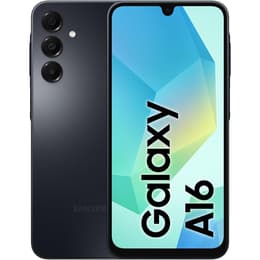
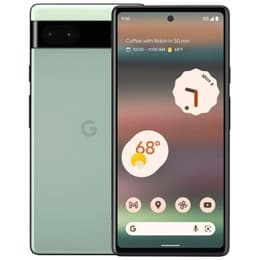


Galaxy A16 Vs Google Pixel 6A

Galaxy A16
Galaxy A16
Starting at

Refurbished price:134.00

Versus €250.00 new

See options
Google Pixel 6A
Google Pixel 6A
Starting at

Refurbished price:143.00

Versus €459.00 new

See options

Ratings

The Samsung Galaxy A16, released in late 2024 and early 2025, and the Google Pixel 6A, launched in mid-2022, represent distinct approaches to the mid-range smartphone market. While both devices operate on the Android platform, they offer different strengths in terms of software longevity, processing power, and camera capabilities. The Galaxy A16 emphasizes a larger, smoother display and extended software support, whereas the Pixel 6A focuses on a compact design and advanced computational photography.

Scores

Durability

The longevity of a smartphone is significantly influenced by its release timeline and the manufacturer's commitment to software updates. These factors determine how long a device remains secure and compatible with new applications.

  • Release Timeline and Age: The Galaxy A16 is a newer device, having been released in late 2024 and early 2025. In contrast, the Pixel 6A was launched in mid-2022, making it a few years older.
  • OS Support Duration: Samsung has committed to providing the Galaxy A16 with six years of OS updates and six years of security patches, with support extending until October 2030. The Pixel 6A, while initially promising three years of OS updates, has had its support extended, now receiving OS updates until at least July 2027 and security updates until July 2027.
  • Practical Lifespan: Users prioritizing the longest possible software support and access to the latest Android features will find the Galaxy A16 offers a more extended practical lifespan due to its newer release and longer update commitment. The Pixel 6A, while still receiving updates, is closer to the end of its official support window.

Year of Release

2024

2022

OS

Android

Android

Foldable

No

No

Performance

Performance in daily use is a key consideration, encompassing how smoothly applications run, the device's responsiveness, and its multitasking capabilities.

  • Processor Capabilities: The Pixel 6A is equipped with a processor designed by Google, which provides robust performance for its class, handling demanding applications and multitasking with notable smoothness. The Galaxy A16 utilizes a MediaTek or Exynos processor, depending on the region, which offers competent performance for everyday tasks and general usage.
  • System Responsiveness: Users often report that the Pixel 6A delivers a consistently zippy experience with faster app loading and smoother transitions, making it well-suited for users who prioritize speed and a fluid interface. The Galaxy A16 provides a reliable experience for most common activities, though some users might notice occasional micro-stutters during graphically intensive tasks or heavy gaming.
  • RAM and Storage: The Pixel 6A comes with 6GB of RAM and 128GB of internal storage, which is not expandable. The Galaxy A16 offers more flexibility with RAM options ranging from 4GB to 8GB and storage options of 128GB or 256GB, alongside a microSDXC card slot for expandable storage, which can be beneficial for users who require more space or frequently run many applications simultaneously.

Memory (GB)

4 GB

6 GB

Screen quality

The display is a primary interface for user interaction, and both devices offer distinct visual experiences.

  • Display Technology and Size: The Samsung Galaxy A16 features a larger 6.7-inch Super AMOLED display, providing vibrant colors and deep blacks. The Google Pixel 6A has a 6.1-inch OLED display, also known for its rich colors and contrast, in a more compact form factor.
  • Refresh Rate: A key difference lies in the refresh rate: the Galaxy A16 provides a smoother 90Hz refresh rate, enhancing scrolling and animations. The Pixel 6A maintains a standard 60Hz refresh rate, which is less fluid for scrolling and animations compared to the A16.
  • Resolution and Brightness: Both phones feature Full HD+ resolutions (2340 x 1080 for A16, 2400 x 1080 for Pixel 6A), offering clear and sharp visuals. The Galaxy A16's Super AMOLED display can reach a peak brightness of 800 nits, which can be beneficial for outdoor visibility, though some users report difficulty in direct sunlight. The Pixel 6A's OLED display also offers good brightness.

Resolution

1080x2340

1080 x 2400

Screen type

Super AMOLED

OLED

Audiovisual

Camera capabilities are a significant factor for many users, with both devices offering different strengths in photography and video recording.

  • Camera System Capabilities: The Pixel 6A is known for its exceptional camera performance, particularly its computational photography features, which are praised for delivering consistent and high-quality images. It includes features like Magic Eraser, Night Sight, Real Tone, and Portrait Mode. The Galaxy A16 comes with a triple camera system, including a 50 MP main camera, a 5 MP ultrawide, and a 2 MP macro camera, offering competent everyday photography.
  • Low-light and Everyday Photography: The Pixel 6A excels in various lighting conditions, leveraging its advanced image processing to produce detailed and well-exposed photos, even in challenging low-light scenarios. The Galaxy A16's camera system, while offering a higher megapixel count on its main sensor, delivers capable results in good lighting but generally falls short of the Pixel 6A's advanced image processing, especially in low light.
  • Video Recording Quality: The Pixel 6A is capable of recording 4K video at both 30 and 60 frames per second, providing more detailed video capture. The Galaxy A16 records video at Full HD (1080p) resolution at 30 frames per second. For selfies, the Pixel 6A has an 8MP front camera, while the Galaxy A16 features a 13MP front camera.

Miscellaneous

Beyond core specifications, several practical features and design elements differentiate the user experience between the Galaxy A16 and the Pixel 6A.

  • Connectivity Options: Both devices support 5G connectivity, enabling faster mobile data speeds. The Galaxy A16 features Wi-Fi 802.11a/b/g/n/ac and Bluetooth 5.3. The Pixel 6A offers Wi-Fi 6E and Bluetooth 5.2.
  • Port Types and Sensors: Both devices utilize a USB-C port for charging and data transfer. The Pixel 6A incorporates an in-display fingerprint sensor for biometric security. The Galaxy A16 features a side-mounted fingerprint scanner.
  • Weight, Dimensions, and Durability: The Pixel 6A is more compact and lighter, weighing 178g with dimensions of 152.2 x 71.8 x 8.7 mm, and features an IP67 rating for dust and water resistance. The Galaxy A16 is larger and heavier at 200g and 164.4 x 77.9 x 7.9 mm, with an IP54 rating for water and dust resistance.

Weight

200 g

178 g

Screen size (in)

6.7

6.1

Network

4G

5G

SIM card

Physical SIM

Physical SIM + eSIM

Carrier compatibility

Unlocked

Unlocked

Connector

USB-C

USB-C

User feedback for the Google Pixel 6A often highlights its exceptional camera performance, particularly its computational photography features, which are praised for delivering consistent and high-quality images. Users also appreciate its compact size and the smooth, clean Android experience provided by its powerful processor. Common criticisms include the 60Hz display refresh rate feeling less fluid compared to newer devices and a mandatory software update that may limit battery capacity after 400 charge cycles to prevent overheating.

For the Samsung Galaxy A16, users frequently commend its large, vibrant Super AMOLED display with a 90Hz refresh rate, offering a more fluid visual experience for scrolling and media consumption. Its extended software support and long-term update commitment are also significant advantages for users seeking device longevity. On the other hand, some user feedback points to occasional performance stutters during demanding tasks and a less capable ultrawide camera compared to its main sensor.

Users prioritizing advanced computational photography, a compact form factor, and a powerful processor for its generation may find the Google Pixel 6A well-suited to their needs. Conversely, those who value a larger, smoother display, expandable storage, and a longer software update commitment might lean towards the Samsung Galaxy A16. Both devices offer compelling features, and choosing between them depends on individual preferences for camera prowess versus display fluidity and long-term software support. For those considering a sustainable choice, quality-assured refurbished options for both models provide an eco-friendly alternative.


See all articles

Our recent comparisons