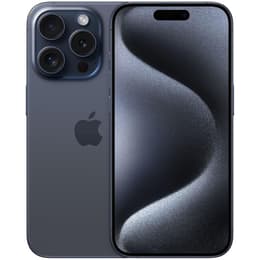



iPhone 15 Pro Vs iPhone 17

iPhone 15 Pro
iPhone 15 Pro
Starting at

Refurbished price:510.00

Versus €1,165.38 new

See options
iPhone 17
iPhone 17
Starting at

Refurbished price:704.00

Versus €979.00 new

See options

Ratings

The iPhone 15 Pro, released in September 2023, and the anticipated iPhone 17, expected in September 2025, represent different generations within Apple's premium smartphone lineup. While both devices offer a high-end user experience, the iPhone 17 is expected to introduce advancements in processing power, display technology, and camera capabilities, building upon the solid foundation established by the iPhone 15 Pro. Both run on Apple's iOS operating system, ensuring a consistent software ecosystem, though the iPhone 17 will launch with a newer version and receive updates for a longer period.

Scores

Durability

When considering the practical lifespan of these devices, several factors come into play, primarily their release timelines and Apple's software support policies.

  • Release Timeline and Age: The iPhone 15 Pro launched in September 2023, making it a current-generation device. The iPhone 17 is expected to arrive in September 2025, positioning it two years newer. This difference directly impacts the duration of software support each device will receive.
  • OS Support Duration: Apple typically provides major iOS updates for five to six years from a device's release. The iPhone 15 Pro, launching with iOS 17, will likely receive updates until around 2028-2029. The iPhone 17, expected to launch with iOS 19, will benefit from an additional two years of software longevity, extending its support well into the late 2020s or early 2030s.
  • Durability and Repairability: Both models feature a Ceramic Shield front cover and are rated for IP68 dust and water resistance. The iPhone 15 Pro utilizes a titanium frame, contributing to its durability. While the iPhone 15 Pro received a repairability score of 7 out of 10 from PBKreviews, iFixit noted challenges with part pairing and battery replacement, giving it a 4 out of 10. The iPhone 17 is expected to feature Ceramic Shield 2, offering improved scratch resistance.

Performance

Performance is a key differentiator between generations, with the newer device typically offering enhancements in speed, efficiency, and multitasking capabilities.

  • Processor Capabilities: The iPhone 15 Pro is powered by a current-generation processor, enabling smooth operation for demanding applications, high-fidelity gaming, and efficient multitasking. The iPhone 17 is expected to feature a next-generation processor, which will likely offer a notable increase in processing speed and graphical performance, along with improved efficiency for handling complex tasks and on-device artificial intelligence features.
  • Memory and Responsiveness: The iPhone 15 Pro includes 8GB of RAM, contributing to its ability to manage multiple applications simultaneously without significant slowdowns. The iPhone 17 (Pro models) is rumored to increase RAM to 12GB, which would further enhance multitasking fluidity and the performance of memory-intensive applications. This additional memory, combined with the newer processor, is expected to result in a more responsive overall system experience.
  • Storage Options and Battery Behavior: Both devices offer a range of storage options, typically starting from 128GB for the iPhone 15 Pro and potentially higher for the iPhone 17, extending up to 1TB or more. The iPhone 15 Pro provides substantial battery life for typical daily use, with up to 23 hours of video playback. The iPhone 17 is anticipated to offer further battery life improvements due to more efficient components and potentially larger battery capacities in its Pro Max variant.

Memory (GB)

8 GB

8 GB

Screen quality

The visual experience is central to smartphone usage, and both models offer high-quality displays, with the iPhone 17 expected to bring further refinements.

  • Display Technology and Resolution: Both the iPhone 15 Pro and the expected iPhone 17 feature Super Retina XDR OLED displays, known for deep blacks, vibrant colors, and excellent contrast. The iPhone 15 Pro has a 6.1-inch display with a resolution of 2556 x 1179 pixels, resulting in a sharp 460 pixels per inch. The standard iPhone 17 is expected to feature a slightly larger 6.3-inch display with a resolution of 2622 x 1206 pixels, maintaining a similar pixel density.
  • Refresh Rate and Smoothness: The iPhone 15 Pro features ProMotion technology, offering an adaptive refresh rate up to 120Hz for smooth scrolling and responsive interactions, along with an Always-On display. A significant upgrade for the iPhone 17 is the expected inclusion of ProMotion (120Hz) and Always-On display technology across all models, not just the Pro variants, enhancing the visual fluidity for a wider range of users.
  • Brightness and Clarity: The iPhone 15 Pro offers a typical brightness of 1000 nits, peaking at 1600 nits for HDR content and 2000 nits for outdoor use. The iPhone 17 is anticipated to further boost peak outdoor brightness to 3000 nits, improving visibility in bright sunlight. Additionally, the iPhone 17 Pro models are rumored to feature anti-reflective displays for better viewing in various lighting conditions.

Audiovisual

Camera systems are a primary focus for smartphone innovation, and both devices offer advanced photographic and videographic capabilities, with the iPhone 17 expected to push boundaries further.

  • Main Camera System: The iPhone 15 Pro features a versatile triple-camera system, including a 48MP main sensor capable of capturing detailed 24MP or 48MP photos, a 12MP ultra-wide lens, and a 12MP telephoto lens with 3x optical zoom. The iPhone 17 (Pro models) is rumored to upgrade to a trio of 48MP lenses across its main, ultra-wide, and telephoto cameras, potentially offering enhanced detail and flexibility. The standard iPhone 17 is also expected to feature a 48MP main and 48MP ultra-wide lens.
  • Zoom and Low-Light Performance: The iPhone 15 Pro's 3x optical telephoto zoom provides clear magnification, and its larger sensors contribute to strong low-light performance across all lenses. For the iPhone 17 Pro, rumors suggest a telephoto lens with either 3.5x optical zoom or a more significant 8x optical zoom, offering greater reach and detail for distant subjects. Both devices benefit from advanced computational photography for improved image quality in challenging conditions.
  • Video Recording and Front Camera: Both phones offer high-quality video recording, with the iPhone 15 Pro supporting 4K video up to 60fps, Cinematic mode in 4K HDR, and ProRes video recording. The iPhone 17 Pro models are rumored to support 8K video recording and dual video capture from front and rear cameras simultaneously, appealing to content creators. The front-facing camera on the iPhone 15 Pro is 12MP. A notable upgrade for all iPhone 17 models is an expected 24MP front-facing camera, providing sharper selfies and improved video call quality.

Miscellaneous

Beyond core performance and camera, several practical features contribute to the overall user experience and daily utility of these smartphones.

  • Connectivity Standards: The iPhone 15 Pro supports Wi-Fi 6E and Bluetooth 5.3, providing fast and reliable wireless connections. The iPhone 17 is expected to upgrade to Wi-Fi 7 and Bluetooth 6.0, enabled by Apple's new N1 networking chip, offering even faster speeds and improved multi-device connectivity. Both support 5G cellular networks.
  • Ports and Biometrics: Both devices feature a USB-C port for charging and data transfer. The iPhone 15 Pro introduced the customizable Action Button, replacing the traditional mute switch. The iPhone 17 is expected to retain the Action Button and may introduce further enhancements or even an additional camera control button. Both rely on Face ID for secure biometric authentication.
  • Design and Durability Features: The iPhone 15 Pro features a lightweight titanium frame and a textured matte glass back. It also includes Emergency SOS via satellite and Crash Detection. The iPhone 17 is expected to continue these safety features and potentially offer next-generation satellite connectivity for everyday navigation and messaging in areas without cellular service. The standard iPhone 17 is slightly larger than its predecessor, with a 6.3-inch display.

Screen size (in)

6.1

6.3

Network

5G

5G

SIM card

eSIM

eSIM

Carrier compatibility

Unlocked

Unlocked

The iPhone 15 Pro and the upcoming iPhone 17 cater to users seeking premium smartphone experiences, though they target slightly different points in the technology cycle. The iPhone 15 Pro is praised for its robust performance, advanced camera system, and durable titanium design, making it a highly capable device for a wide range of users. Users often highlight its smooth operation and the versatility of its camera for both photos and video. Some criticisms have focused on its repairability, particularly regarding part pairing.

The iPhone 17, on the other hand, is anticipated to deliver significant generational improvements. Expected praise points include its even more powerful processor, enhanced display with ProMotion for all models, and substantial camera upgrades, particularly for the front-facing camera and potential telephoto capabilities. Users may appreciate the extended software support and the potential for advanced satellite connectivity for navigation. Potential concerns might revolve around the iterative nature of some design elements or the adoption rate of new connectivity standards like Wi-Fi 7.

Users prioritizing a device with proven, high-end performance and a comprehensive feature set available now may find the iPhone 15 Pro well-suited to their needs. Those who value having the latest technological advancements, extended software longevity, and cutting-edge camera and display features, and are willing to wait for a newer release, may lean toward the iPhone 17. For individuals seeking a more sustainable choice, quality-assured refurbished options for the iPhone 15 Pro offer an eco-friendly alternative that provides premium features with a reduced environmental impact.


See all articles

Our recent comparisons