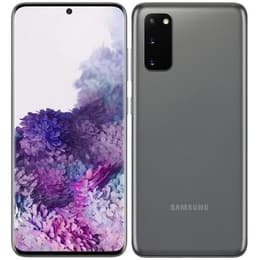
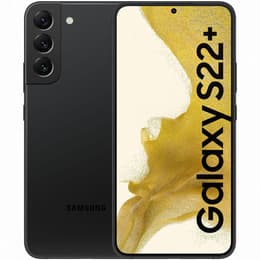


Galaxy S20 Vs Galaxy S22+ 5G

Galaxy S20
Galaxy S20
Starting at

Refurbished price:193.00

Versus €909.00 new

See options
Galaxy S22+ 5G
Galaxy S22+ 5G
Starting at

Refurbished price:194.00

Versus €1,174.01 new

See options

Ratings

The Samsung Galaxy S20, released in March 2020, and the Samsung Galaxy S22 Plus 5G, launched in February 2022, are both flagship Android smartphones from Samsung. While they share the core Android operating system and Samsung's One UI experience, the S22 Plus 5G introduces a more recent processor, an updated camera system, and a brighter display, building upon the foundation laid by its predecessor.

Scores

Durability

When considering the long-term usability of these devices, their release timelines and software support policies are key factors. The Galaxy S20, being an older model, has reached the end of its official software support cycle, while the S22 Plus 5G benefits from a longer update commitment.

  • Release Timeline: The Galaxy S20 was released in March 2020, making it an older device compared to the Galaxy S22 Plus 5G, which launched in February 2022.
  • Software Longevity: The Galaxy S20 series officially ceased receiving software updates and security patches in April 2025, meaning it will no longer get new Android versions or security fixes. The Galaxy S22 Plus 5G, launched with Android 12, is expected to receive four major OS updates and an additional year of security updates, extending its support until around 2027.
  • Repairability: The Galaxy S20 Ultra received a repairability score of 3 out of 10 from iFixit, primarily due to the extensive use of strong adhesive for the back cover and battery, making disassembly challenging. While a specific iFixit score for the S22 Plus 5G isn't readily available, Samsung's flagship devices generally present similar repair challenges due to their construction.

Year of Release

2020

2022

Compatible with latest Update

No

Yes

OS

Android

Android

Foldable

No

No

Performance

The performance of both smartphones is driven by their respective processing units, influencing how smoothly applications run, how quickly tasks are completed, and the overall responsiveness of the user interface. The newer Galaxy S22 Plus 5G features a more advanced processor.

  • Processing Power: The Galaxy S22 Plus 5G incorporates a newer generation processor, which translates to faster application loading times, more fluid multitasking, and enhanced performance in demanding mobile games compared to the Galaxy S20's previous-generation chip.
  • Multitasking and Storage: Both devices offer 8GB of RAM, which is sufficient for handling multiple applications simultaneously. The Galaxy S20 typically comes with 128GB of internal storage, while the S22 Plus 5G offers options for both 128GB and 256GB, providing more space for users with extensive media libraries or numerous applications.
  • Battery Behavior: The Galaxy S20 is equipped with a 4000 mAh battery, while the S22 Plus 5G features a larger 4500 mAh battery. User experiences with the S22 Plus 5G's battery life are varied; some find it sufficient for a full day of moderate use, while heavy users might require more frequent charging. The S20 generally offered reliable battery performance for its time.

Memory (GB)

8 GB

8 GB

Screen quality

The display is a primary interaction point for any smartphone, and both the Galaxy S20 and S22 Plus 5G offer high-quality viewing experiences, though with some notable differences in specifications and practical use.

  • Display Technology and Resolution: Both phones feature Dynamic AMOLED 2X displays, known for vibrant colors and deep blacks. The Galaxy S20 has a 6.2-inch display with a higher QHD+ resolution (1440x3200 pixels), resulting in a sharper image. The Galaxy S22 Plus 5G has a slightly larger 6.6-inch display with an FHD+ resolution (1080x2340 pixels).
  • Brightness and Refresh Rate: The S22 Plus 5G offers a significantly higher peak brightness of up to 1750 nits, making it more visible in bright outdoor conditions compared to the S20's 1200 nits. Both devices support a 120Hz refresh rate for smoother scrolling and animations, though the S20's 120Hz mode is limited to FHD+ resolution, while the S22 Plus 5G offers an adaptive 120Hz refresh rate across its display.
  • Viewing Experience: The S20's higher pixel density provides a very crisp image, which can be beneficial for viewing detailed content. The S22 Plus 5G's larger screen and superior brightness enhance the viewing experience, especially for media consumption and outdoor use.

Resolution

1440 x 3200

1080 x 2340

Screen type

Dynamic AMOLED 2X

Dynamic AMOLED 2X

Audiovisual

Both the Galaxy S20 and S22 Plus 5G are equipped with versatile camera systems designed to capture a wide range of photos and videos, with the S22 Plus 5G introducing advancements in sensor technology and image processing.

  • Rear Camera System: The Galaxy S20 features a triple camera setup with a 12MP main sensor, a 64MP telephoto lens offering 3x hybrid optical zoom, and a 12MP ultrawide lens. The Galaxy S22 Plus 5G also has a triple camera system, but with a higher resolution 50MP main sensor, a 10MP telephoto lens with 3x optical zoom, and a 12MP ultrawide lens.
  • Photography Performance: The S22 Plus 5G's larger main sensor generally results in improved low-light performance and better detail capture in various conditions. Both phones are capable of recording 8K video, providing high-resolution footage.
  • Audio and Media: Both devices offer stereo speakers for an immersive audio experience during media consumption. Microphone quality on both is suitable for calls and video recording. Neither phone includes a traditional 3.5mm headphone jack.

Main camera

12 megapixels

50 megapixels

Front camera

10 megapixels

10 megapixels

Miscellaneous

Beyond the core features, several practical elements differentiate the Galaxy S20 and S22 Plus 5G, impacting daily usability, connectivity, and physical interaction.

  • Connectivity and Ports: Both smartphones support 5G connectivity. The S22 Plus 5G supports the newer Wi-Fi 6E standard, offering potentially faster and more stable wireless connections compared to the S20's Wi-Fi 6. Both devices utilize a USB-C port for charging and data transfer, and neither includes a 3.5mm headphone jack.
  • Physical Design and Durability: The Galaxy S20 is slightly more compact and lighter, measuring 151.7 x 69.1 x 7.9 mm and weighing 163g. The S22 Plus 5G is larger and heavier at 157.4 x 75.8 x 7.6 mm and 195g. Both feature glass front and back panels with an aluminum frame and are rated IP68 for dust and water resistance. The S22 Plus 5G uses Gorilla Glass Victus+ for enhanced screen protection, an upgrade from the S20's Gorilla Glass 6.
  • Biometric Security: Both models incorporate an ultrasonic in-display fingerprint sensor for secure unlocking and authentication.

Weight

163 g

195 g

Screen size (in)

6.2

6.6

Network

4G

5G

SIM card

Dual Physical SIM

Physical SIM + eSIM

Carrier compatibility

Unlocked

Unlocked

Connector

USB-C

USB-C

The Samsung Galaxy S20 and Galaxy S22 Plus 5G cater to slightly different user needs, primarily due to their generational differences in technology and software support. User sentiment often highlights the S20's once-impressive display resolution and capable camera system for its time. However, a frequent criticism for older models like the S20 is the eventual cessation of software updates, which impacts security and access to new features.

For the Galaxy S22 Plus 5G, users generally praise its brighter display, improved camera performance, and the enhanced speed of its newer processor. Some users, however, note that while the battery capacity is larger than the S20, real-world battery life might not always be a significant leap for heavy usage. The removal of the microSD card slot in the S22 Plus 5G was also a point of concern for some users who valued expandable storage.

Users prioritizing long-term software support, a brighter screen for outdoor visibility, and the latest advancements in camera technology and processing power will find the Galaxy S22 Plus 5G well-suited to their needs. Its larger size also appeals to those who prefer a more expansive viewing experience. Conversely, users who value a slightly more compact device and a higher display resolution, and who are comfortable with an older software ecosystem, might still find the Galaxy S20 to be a functional device, particularly as an eco-friendly, quality-assured refurbished option. When making a decision, consider which features align best with your daily usage patterns and priorities.


See all articles

Our recent comparisons