
Compare models
Google Pixel 7A Vs iPhone Air
- 1-year minimum warranty
- Free delivery on all orders
- Free 30-day returns
Differences at a glance
The Google Pixel 7A (2023) and the iPhone Air (2025) are distinctive smartphones representing different eras and design philosophies in mobile technology. While the Pixel 7A focuses on accessible, everyday reliability within the Android ecosystem, the iPhone Air introduces an ultra-slim profile and runs on iOS. These two devices diverge significantly in form factor, release year, and operating system, catering to very distinct user preferences.
Available Models
Colour
Storage
Scores
Durability
When examining longevity and durability, both smartphones feature robust build standards while offering different software support timelines and hardware resilience.
- Software support timeline: The iPhone Air benefits from a later release year, positioning it to receive iOS updates further into the future compared to the Google Pixel 7A, which launched two years prior.
- Build and materials: The Pixel 7A utilizes an aluminum frame with a plastic back and Gorilla Glass protection, whereas the iPhone Air incorporates a rigid titanium frame paired with reinforced glass panels.
- Repair infrastructure: Both manufacturers provide structured repair programs, though the prevalence of local service options varies depending on whether users choose standard retail channels or an eco-friendly refurbished option.
Year of Release
2023
2025
Performance
Under everyday workloads, both devices deliver responsive task management, though they utilize different hardware architectures to handle daily apps and multitasking.
- Multitasking efficiency: Both models manage standard daily tasks, web browsing, and social media smoothly, though the iPhone Air features a higher RAM capacity that assists with keeping multiple background apps active simultaneously.
- Storage configurations: The Pixel 7A comes with a fixed storage tier suitable for moderate media libraries, while the iPhone Air provides higher baseline storage options to accommodate larger file collections.
- Thermal and battery behavior: The Pixel 7A relies on a moderate battery capacity to power its compact frame through a standard day, whereas the iPhone Air balances its exceptionally thin chassis with power-efficient internal components.
Screen quality
Visual output and display engineering differ notably between the two models in terms of physical dimensions, panel fluidity, and outdoor visibility.
- Display size and panel technology: The Pixel 7A features a compact 6.1-inch OLED screen, while the iPhone Air offers a larger 6.5-inch Super Retina XDR OLED display for more expansive media viewing.
- Refresh rate and smoothness: The Pixel 7A supports a 90Hz refresh rate for fluid scrolling, whereas the iPhone Air scales up to a 120Hz adaptive refresh rate for heightened visual responsiveness.
- Brightness performance: The iPhone Air reaches higher peak outdoor brightness levels compared to the Pixel 7A, aiding readability under direct sunlight.
Audiovisual
Multimedia capture and audio output capabilities vary, reflecting different engineering priorities in lens configuration and speaker design.
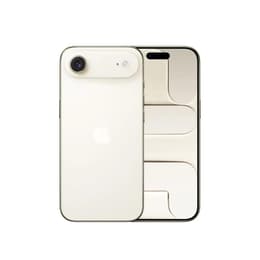
- Camera hardware setup: The Pixel 7A features a dual-lens rear camera system including a wide and an ultra-wide sensor, whereas the iPhone Air utilizes a single high-resolution main camera housed within a raised camera plateau.
- Video and low-light processing: Both devices offer reliable stabilization and clarity for evening photography, with Apple's processing excelling in recorded video smoothness and Google leaning into computational photography algorithms.
- Audio reproduction: The Pixel 7A includes stereo speakers for balanced media playback, while the iPhone Air implements a simplified speaker configuration tailored to its slim internal layout.
Miscellaneous
Practical everyday features such as connectivity standards, physical dimensions, and security sensors shape the daily handling experience of both handsets.
- Physical dimensions and weight: The Pixel 7A is heavier and features a thicker profile, whereas the iPhone Air prioritizes an ultra-thin 5.6 mm depth and a lighter overall weight for pocketability.
- Biometric security: The Pixel 7A provides both face unlock and an in-display fingerprint sensor, while the iPhone Air relies exclusively on advanced facial recognition.
- Connectivity and ports: Both devices support modern 5G networks and utilize USB-C charging ports, integrating seamlessly into current tech accessories.
Screen size (in)
6.1
6.5
Network
5G
5G
SIM card
Physical SIM + eSIM
eSIM
Carrier compatibility
Unlocked
Unlocked
What the community thinks
Choosing between the Google Pixel 7A and the iPhone Air depends largely on individual ecosystem preferences and hardware priorities. Users prioritizing a compact, traditional form factor with flexible biometric options and a dual-lens camera system often find the Pixel 7A well-suited to their daily routines. Conversely, users who prefer the iOS operating system, a larger and brighter display, and an exceptionally lightweight, ultra-slim chassis frequently lean toward the iPhone Air. Real-world feedback notes that while the Pixel 7A delivers dependable everyday performance in a sturdy frame, the iPhone Air stands out for its modern design and expansive screen estate.
For consumers seeking sustainable technology choices, selecting a quality-assured refurbished option provides a reliable way to acquire either device while minimizing environmental impact. Ultimately, evaluating personal preferences regarding screen size, operating system features, and physical handling will guide the right decision for your daily needs.