
Compare models
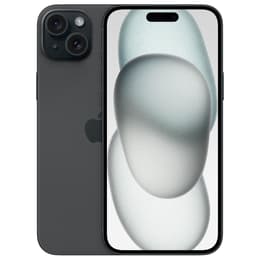
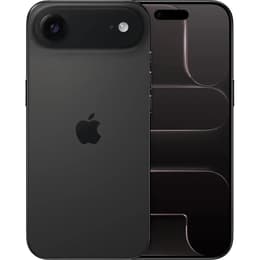
iPhone 15 Plus Vs iPhone Air
- 1-year minimum warranty
- Free delivery on all orders
- Free 30-day returns
Differences at a glance
The iPhone 15 Plus (2023) and the iPhone Air (2025) represent two distinct approaches to large-screen smartphone design within Apple's ecosystem. While the iPhone 15 Plus focuses on established utility with a traditional build, the iPhone Air introduces a radically slim profile and updated internals. Both run iOS and offer large displays, but they diverge significantly in physical dimensions, camera layouts, and performance capabilities.
Available Models
Colour
Storage (GB)
Scores
Durability
When evaluating structural longevity and software support, both models benefit from Apple's extended update cycles, though their release timelines create a natural offset in active lifespans.
- Release timeline and software longevity: The iPhone 15 Plus debuted in late 2023, whereas the iPhone Air launched two years later in late 2025. Consequently, the iPhone Air maintains an extended window for future software updates and security patches.
- Build durability and repairability: The iPhone 15 Plus utilizes an aluminum frame with glass back construction, while the iPhone Air features a lightweight titanium enclosure reinforced with newer glass protection layers. Both models provide reliable everyday durability and standard repair frameworks.
Year of Release
2023
2025
Compatible with latest Update
Yes
Yes
OS
iOS
iOS
Foldable
No
No
Performance
Underneath the exterior, these devices handle daily computing tasks, demanding applications, and multitasking with distinct generational capabilities.
- System responsiveness and multitasking: The iPhone Air handles intensive applications, advanced graphics, and heavy background multitasking with noticeable speed enhancements thanks to its newer-generation processor and expanded memory capacity. The iPhone 15 Plus manages daily apps, streaming, and standard navigation smoothly, though it relies on older internal hardware.
- Storage configurations and battery behavior: The iPhone Air starts with double the base storage of its counterpart and relies on a physical design optimized for all-day efficiency. Meanwhile, the iPhone 15 Plus features a larger physical battery capacity that delivers consistent endurance for media consumption, though real-world longevity varies based on individual usage intensity.
Screen quality
Visual output across both screens delivers crisp details and vivid imagery, though their refresh rates and physical dimensions create different viewing experiences.
- Display technology and fluidity: The iPhone Air introduces an adaptive refresh rate reaching up to 120Hz for smoother scrolling and animations, alongside a higher peak outdoor brightness level. The iPhone 15 Plus utilizes a standard refresh rate display that remains bright and clear for media viewing and web browsing.
- Screen size and physical format: The iPhone 15 Plus features a 6.7-inch display within a slightly wider body, whereas the iPhone Air offers a compact 6.5-inch panel housed inside an exceptionally thin chassis.
Resolution
1290 x 2796
2736x1260
Screen type
Super Retina XDR OLED
Super Retina XDR
Audiovisual
Photography and media recording capabilities highlight different design choices, balancing multi-lens versatility against streamlined single-lens setups.
- Camera system configuration: The iPhone 15 Plus features a dual-lens rear camera setup offering main and ultra-wide perspectives for everyday snapshots. The iPhone Air employs a single high-resolution main camera system paired with advanced computational photography tools and an upgraded front-facing camera for video calls.
- Video and audio output: Both devices record stable, high-resolution video with clear stereo audio capture during calls and media playback, though their internal speaker designs project sound profiles tailored to their respective chassis thicknesses.
Main camera
48 megapixels
48 megapixels
Front camera
12 megapixels
18 megapixels
Miscellaneous
Physical handling characteristics and connectivity standards define how each device integrates into daily routines and travel setups.
- Dimensions and handling: The iPhone Air prioritizes portability with a remarkably thin profile and lightweight titanium frame that reduces hand fatigue during prolonged use. The iPhone 15 Plus is thicker and heavier, offering a substantial grip that accommodates its larger internal battery.
- Connectivity and ports: Both models use a universal USB-C charging port and support modern wireless standards, with the iPhone Air shifting entirely to digital eSIM configurations globally.
Weight
201 g
165 g
Screen size (in)
6.7
6.5
Network
5G
5G
SIM card
Physical SIM + eSIM
eSIM
Carrier compatibility
Unlocked
Unlocked
Connector
USB-C
USB-C
What the community thinks
User discussions and community feedback indicate that buyers appreciate the iPhone 15 Plus for its reliable battery endurance and familiar layout, while praising the iPhone Air for its exceptionally thin form factor and fluid display technology. Common criticisms note that the iPhone 15 Plus feels heavy during extended one-handed use, whereas users point out that the iPhone Air trades away physical dual-lens versatility and a traditional SIM card slot in pursuit of its slim profile.
Users who prioritize a lightweight, ultra-thin physical design and smooth screen refresh rates will find the iPhone Air well-suited to their daily preferences. Conversely, users who value a traditional dual-camera system and familiar ergonomics may lean toward the iPhone 15 Plus. For those exploring sustainable tech choices, a quality-assured refurbished option provides a practical and environmentally conscious path to acquiring either device.