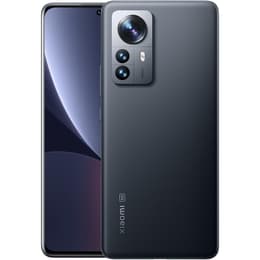



Xiaomi 12T Pro Vs Xiaomi Redmi Note 12 Pro

Xiaomi 12T Pro
Xiaomi 12T Pro
Starting at

Refurbished price:201.00

Versus €1,199.00 new

See options
Xiaomi Redmi Note 12 Pro
Starting at

Refurbished price:106.00

Versus €399.00 new

See options

Ratings

The Xiaomi 12T Pro and the Xiaomi Redmi Note 12 Pro 5G are two smartphones from the same manufacturer, released in late 2022 and early 2023, respectively. While both devices offer a comprehensive smartphone experience, they cater to slightly different user priorities. The 12T Pro emphasizes high-end performance and advanced camera capabilities, whereas the Redmi Note 12 Pro 5G focuses on delivering a balanced experience with a strong main camera and efficient performance for everyday use. Both run on the Android operating system with Xiaomi's MIUI interface.

Scores

Durability

When considering the practical lifespan of these devices, several factors come into play, including their release timelines, software support, and physical resilience.

  • Release Timeline and Software Support: The Xiaomi 12T Pro was launched in October 2022, while the Redmi Note 12 Pro 5G followed in January 2023. Both devices typically receive several years of Android version updates and security patches. The 12T Pro is expected to receive approximately three years of major OS updates and four years of security updates, potentially extending its usable software life slightly longer than the Redmi Note 12 Pro 5G due to its positioning.
  • Physical Durability: Both smartphones feature Corning Gorilla Glass 5 protection on their displays, offering a degree of resistance against scratches and minor drops. The Xiaomi 12T Pro has an IP53 rating for dust and splash resistance, a feature also present in the Redmi Note 12 Pro 5G. This rating indicates protection against limited dust ingress and water spray.
  • Expected Practical Lifespan: Users can generally expect both devices to remain functional and receive essential software support for a considerable period. The 12T Pro, with its more powerful internal components, might maintain smoother performance for demanding applications over a longer duration, potentially extending its perceived practical lifespan for power users.

Year of Release

2022

2022

Compatible with latest Update

Yes

No

OS

Android

Android

Foldable

No

No

Performance

The performance of a smartphone is largely determined by its internal components, impacting everything from app loading to multitasking and gaming.

  • Processing Power: The Xiaomi 12T Pro is equipped with a more advanced processor, which translates to significantly faster application loading times and smoother operation, especially with graphically intensive games or complex productivity apps. The Redmi Note 12 Pro 5G, while capable for daily tasks, offers efficient performance suitable for general use and moderate gaming.
  • Multitasking and Storage: The 12T Pro typically comes with LPDDR5 RAM, offering faster data access compared to the LPDDR4X RAM found in the Redmi Note 12 Pro 5G. This difference can lead to a more fluid experience when switching between multiple applications. Both devices offer various storage configurations, utilizing UFS 3.1 in the 12T Pro and UFS 2.2 in the Redmi Note 12 Pro 5G, meaning the 12T Pro has faster storage read/write speeds.
  • Battery Behavior: Both phones house a 5000mAh battery, providing ample power for a full day of typical use. The Xiaomi 12T Pro supports significantly faster 120W wired charging, allowing for a very rapid recharge, while the Redmi Note 12 Pro 5G offers 67W fast charging, which is still quite quick.

Memory (GB)

8 GB

8 GB

Screen quality

The display is a primary interface for any smartphone, and both devices offer vibrant viewing experiences with some key distinctions.

  • Display Technology and Clarity: Both the Xiaomi 12T Pro and the Redmi Note 12 Pro 5G feature 6.67-inch AMOLED displays, known for their deep blacks and vibrant colors. However, the 12T Pro boasts a higher resolution of 1220 x 2712 pixels, resulting in a sharper image with a higher pixel density compared to the Redmi Note 12 Pro 5G's 1080 x 2400 pixel resolution.
  • Brightness and Refresh Rate: Both screens support a 120Hz refresh rate, contributing to smoother scrolling and more fluid animations. The 12T Pro's display can reach a peak brightness of 900 nits in high brightness mode, similar to the Redmi Note 12 Pro 5G, ensuring good visibility in various lighting conditions. Both also support HDR10+ and Dolby Vision for enhanced media consumption.
  • Viewing Experience: The higher resolution of the 12T Pro provides a slightly more detailed visual experience, which can be noticeable when viewing high-resolution content or fine text. Both offer excellent contrast and color reproduction characteristic of AMOLED panels.

Resolution

1220 x 2712

1080 x 2400

Screen type

AMOLED

AMOLED

Audiovisual

The camera systems on both smartphones are designed to capture a range of moments, with different strengths in their primary sensors.

  • Main Camera Capabilities: The Xiaomi 12T Pro features a 200MP main camera with optical image stabilization (OIS), capable of capturing highly detailed images, especially in good lighting. It also offers in-sensor 2x zoom. The Redmi Note 12 Pro 5G comes with a 50MP main camera, also with OIS, utilizing a Sony IMX766 sensor known for its strong performance in various conditions, including low light.
  • Secondary Cameras and Video: Both devices include an 8MP ultrawide camera and a 2MP macro camera. User feedback suggests that the secondary cameras on both models may not match the quality of their main sensors. The 12T Pro supports 8K video recording, offering higher resolution video capture, while the Redmi Note 12 Pro 5G records up to 4K video.
  • Front Camera and Audio: The 12T Pro has a 20MP front camera, while the Redmi Note 12 Pro 5G features a 16MP front camera. Both phones offer stereo speakers, with the 12T Pro benefiting from Harman Kardon tuning and Dolby Atmos support, which is also present in the Redmi Note 12 Pro 5G.

Main camera

200 megapixels

50 megapixels

Front camera

20 megapixels

16 megapixels

Miscellaneous

Beyond the core specifications, several practical features and design elements differentiate these two Xiaomi smartphones.

  • Connectivity and Ports: Both devices support 5G connectivity and modern Wi-Fi standards (Wi-Fi 6) for fast internet access. They both utilize a USB Type-C port for charging and data transfer. A notable difference is the inclusion of a 3.5mm headphone jack on the Redmi Note 12 Pro 5G, which is absent on the Xiaomi 12T Pro.
  • Biometrics and Design: Both phones feature in-display fingerprint sensors for secure unlocking. The Xiaomi 12T Pro is slightly heavier at 205g and thicker at 8.6mm compared to the Redmi Note 12 Pro 5G, which weighs 187g and measures 7.9mm in thickness. The 12T Pro often features a glass back, while some Redmi Note 12 Pro 5G variants may have a plastic back.
  • Additional Features: Both devices include NFC for contactless payments. The 12T Pro's design is often described as solid and well-put-together, with a flat screen that many users appreciate. The Redmi Note 12 Pro 5G is praised for its sleek design and comfortable handling.

Weight

204 g

187 g

Screen size (in)

6.67

6.67

Network

5G

5G

SIM card

Dual Physical SIM

Dual Physical SIM

Carrier compatibility

Unlocked

Unlocked

User feedback for the Xiaomi 12T Pro often highlights its powerful performance, very fast charging, and the impressive detail captured by its main 200MP camera in good lighting conditions. Some common criticisms include the performance of its secondary cameras and the absence of wireless charging. The Redmi Note 12 Pro 5G is frequently praised for its balanced overall performance, vibrant AMOLED display, reliable main camera with OIS, and solid battery life with fast charging. Concerns sometimes arise regarding the quality of its ultrawide and macro cameras, and some users have noted issues with software experience or microphone quality.

Users prioritizing raw processing power for demanding applications, higher display resolution, and the highest megapixel count in a main camera may find the Xiaomi 12T Pro to be a more suitable choice. Its faster charging and potentially longer software longevity also appeal to those seeking a more premium experience. Conversely, users looking for a well-rounded device that excels in everyday performance, offers a strong main camera, and includes practical features like a 3.5mm headphone jack, might lean towards the Redmi Note 12 Pro 5G. It provides a capable experience for general use and media consumption.

Both devices represent strong options within their respective segments, and considering a quality-assured refurbished option for either model can be a sustainable choice for consumers.


See all articles

Our recent comparisons