


Compare models
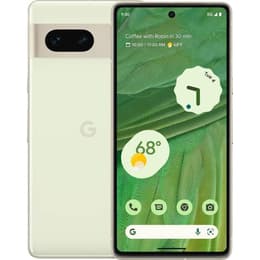
Google Pixel 7 Vs iPhone Air
- 1-year minimum warranty
- Free delivery on all orders
- Free 30-day returns
Differences at a glance
The Google Pixel 7 (2022) and the iPhone Air (2025) represent entirely different generations and engineering approaches within the smartphone market. While the Google Pixel 7 relies on an Android foundation focused on practical utility, the iPhone Air introduces an ultra-thin iOS device designed around portability and minimalist form factors.
Available Models
Colour
Storage
Scores
Durability
When examining hardware longevity and software support, both devices handle ongoing updates differently based on their respective release schedules and manufacturer commitments.
- Software longevity: The Google Pixel 7 receives multi-year system updates extending through 2027, while the iPhone Air benefits from a longer software lifecycle thanks to its newer 2025 launch.
- Build durability: The Google Pixel 7 utilizes durable aluminum and glass construction, whereas the iPhone Air features a lightweight titanium frame paired with advanced scratch-resistant screen protection.
- Repairability: Both models maintain standard industry repairability structures, though choosing a quality-assured refurbished option provides a sustainable choice that extends device usability.
Year of Release
2022
2025
Compatible with latest Update
Yes
Yes
OS
Android
iOS
Foldable
No
No
Performance
Underneath the exterior, these smartphones offer distinct computing capabilities tailored to different multitasking and operational demands.
- System responsiveness: The iPhone Air handles demanding multi-app workflows and graphic-heavy tasks with current-generation fluidity, while the Google Pixel 7 manages everyday applications and routine multitasking smoothly.
- Memory and storage: The iPhone Air provides higher baseline memory configurations to support intensive background processes, whereas the Google Pixel 7 offers reliable everyday storage tiers for standard user media.
- Battery behavior: The Google Pixel 7 maintains dependable power distribution for typical daily routines, while the iPhone Air balances its ultra-slim profile with optimized energy management for all-day usage.
Screen quality
Visual output and panel construction differ notably in size, brightness thresholds, and motion smoothness across both handsets.
- Display technology: The iPhone Air features an expansive OLED panel with an adaptive refresh rate reaching up to 120Hz for fluid scrolling, compared to the Google Pixel 7's 90Hz OLED screen.
- Outdoor visibility: The iPhone Air reaches higher peak outdoor brightness levels for clear viewing under direct sunlight, while the Google Pixel 7 offers comfortable indoor and standard outdoor clarity.
- Viewing dimensions: The iPhone Air provides a larger 6.5-inch viewing area for media consumption, whereas the Google Pixel 7 opts for a more compact 6.3-inch form factor for easier single-handed use.
Resolution
1080 x 2400
2736x1260
Screen type
AMOLED
Super Retina XDR
Audiovisual
Media capture and hardware audio-visual output vary significantly between the single-lens approach of the Apple device and the dual-lens setup of the Google alternative.
- Camera systems: The Google Pixel 7 equips a dual-rear camera configuration with dedicated ultra-wide flexibility, while the iPhone Air features a single high-resolution main sensor with advanced digital zoom capabilities.
- Low-light performance: Both devices deliver clear low-light photography and stable video recording, utilizing software stabilization to reduce blur during movement.
- Audio output: The Google Pixel 7 utilizes a balanced stereo speaker arrangement for media playback, whereas the iPhone Air features an optimized mono speaker output alongside advanced spatial audio recording for video.
Main camera
50 megapixels
48 megapixels
Front camera
10.8 megapixels
18 megapixels
Miscellaneous
Physical dimensions and connectivity standards define the everyday handling characteristics and ecosystem integration of each smartphone.
- Portability: The iPhone Air focuses heavily on an exceptionally slim and lightweight profile at 5.6 millimeters thick, while the Google Pixel 7 presents a standard, slightly thicker chassis with traditional heft.
- Connectivity: Both models support modern high-speed cellular networks, though the iPhone Air incorporates newer wireless standards like Wi-Fi 7 and Bluetooth 6.0.
- Biometrics: The Google Pixel 7 offers both an under-display fingerprint sensor and facial recognition, whereas the iPhone Air relies exclusively on secure facial mapping technology.
Weight
197 g
165 g
Screen size (in)
6.3
6.5
Network
5G
5G
SIM card
Physical SIM + eSIM
eSIM
Carrier compatibility
Unlocked
Unlocked
What the community thinks
User feedback highlights distinct preferences for each device across community discussions. Owners of the Google Pixel 7 frequently praise its reliable day-to-day software experience, robust camera processing, and comfortable physical dimensions. Conversely, users of the iPhone Air often emphasize appreciation for its exceptionally thin profile, lightweight feel in the hand, and smooth high-refresh-rate display, though some note the absence of a secondary optical zoom lens as a limitation for versatile photography.
Users prioritizing an ultra-slim design, a larger high-refresh screen, and a lightweight build will find the iPhone Air well-suited to their needs. Meanwhile, users prioritizing dual-lens camera versatility, biometric fingerprint authentication, and a compact everyday layout may prefer the Google Pixel 7. Exploring a quality-assured refurbished option offers an eco-friendly alternative for acquiring either model while supporting sustainable technology habits.









